What Did German Chancellor Merz Achieve on His First Visit to India?
Synopsis
German Chancellor Friedrich Merz's first visit to India has set a new tone for India-Germany relations. With discussions spanning defense, trade, and cultural ties, the visit signifies a commitment to strengthening bilateral partnerships. Discover how this pivotal trip could reshape future collaborations between the two nations.
Key Takeaways
First official visit of German Chancellor Merz to India.
Strengthening bilateral ties in defense, trade, and investment.
Commitment to collaboration in advanced military technology .
Plans for participation in future military exercises.
Emphasis on cultural and educational exchanges.
New Delhi, Jan 16 (NationPress) Germany’s Ambassador to India, Philipp Ackermann, expressed enthusiasm on Friday regarding German Chancellor Friedrich Merz’s inaugural official visit to India. The discussions covered a wide range of topics, including defence cooperation, trade, investment, and migration.
“What an extraordinary visit we just experienced! Chancellor Merz’s first trip to India was marked by discussions on defence, trade, and migration. He was particularly impressed after conversing in German with a young Indian woman who had just started learning the language four months ago,” the German Ambassador shared on X.
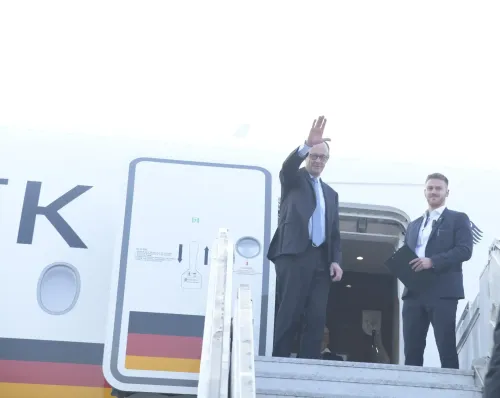
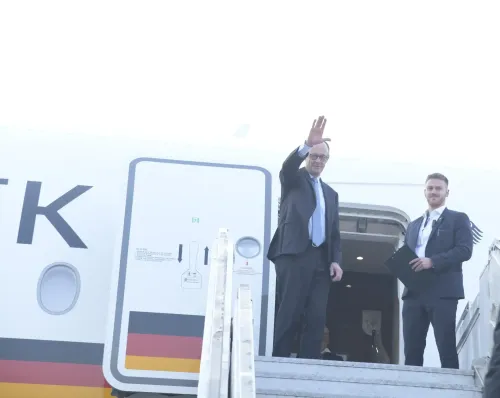
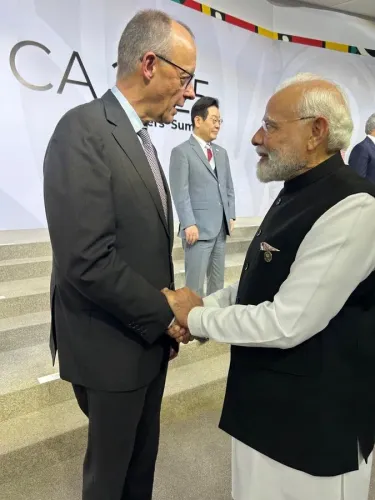
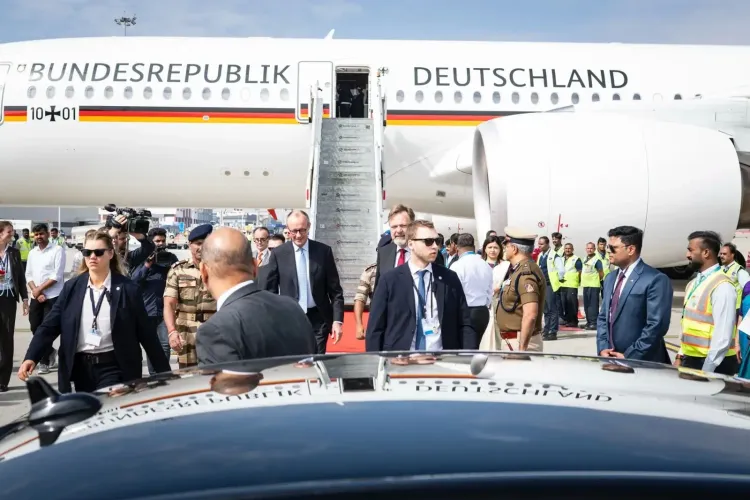
Earlier this week, Chancellor Merz arrived in Gujarat at the invitation of Prime Minister Narendra Modi.
This marked Merz's first official visit to India, designed to strengthen the bilateral relationship between India and Germany.
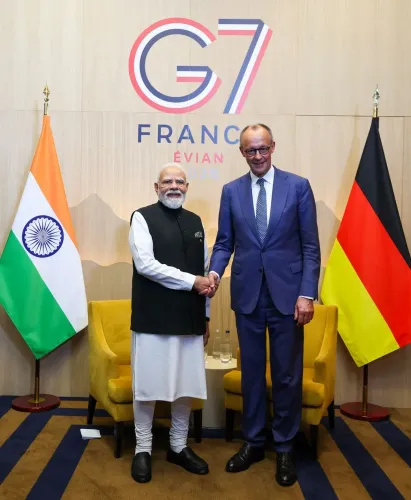
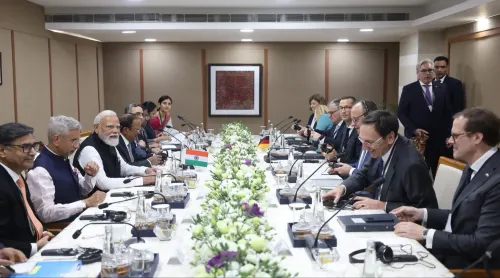
On Monday, Prime Minister Modi and Chancellor Merz reiterated their dedication to enhancing defence and security cooperation. They discussed deepening military cooperation through joint exercises, training, and the exchange of senior officials, while acknowledging regular reciprocal port calls by naval vessels from both nations.
Following their discussions, PM Modi tweeted: "It was a pleasure to host Chancellor Friedrich Merz in Ahmedabad. His visit has injected new energy into India–Germany ties, especially as we celebrate 25 years of our Strategic Partnership and 75 years of diplomatic relations. India is honored that he chose our nation for his first visit in Asia, reflecting his personal commitment to robust India-Germany relations."
"We agreed to elevate our partnership to a higher level, focusing on deeper collaboration in defence, space, and other crucial technologies. Our conversations also touched on joint climate action initiatives, resilient supply chains, education, sports, and enhancing cultural and people-to-people connections," he added.
PM Modi welcomed Germany’s plans to join the Naval Exercise MILAN and the 9th Indian Ocean Naval Symposium (IONS) Conclave of Chiefs in February 2026, along with the Air Combat Exercise 'Tarang Shakti' in September 2026. Germany’s decision to deploy a Liaison Officer to the Information Fusion Centre–Indian Ocean Region (IFC-IOR) was also noted in a joint statement.
The leaders expressed satisfaction with ongoing collaboration between the Defence Research and Development Organisation (DRDO) and the Organisation for Joint Armament Cooperation (OCCAR) for the Eurodrone MALE UAV program, which will facilitate India’s access to advanced military technology and bolster its strategic relationships with Europe.
Point of View
It is crucial to recognize the significance of Chancellor Merz's visit to India. This diplomatic engagement not only reinforces historical ties but also paves the way for collaborative advancements in technology and security. Such interactions are vital for fostering international relationships grounded in mutual respect and shared goals.
NationPress
8 Oct 2026
Frequently Asked Questions
What were the key topics discussed during Chancellor Merz's visit?
The discussions focused on defense cooperation, trade, investment, and migration, highlighting the multifaceted aspects of the India-Germany relationship.
Why is this visit significant?
This visit marks Chancellor Merz's first official trip to India, emphasizing a commitment to strengthen bilateral ties and cooperation in various sectors.
What future collaborations were mentioned?
Future collaborations include joint exercises in defense, participation in naval exercises, and cooperation in advanced military technology.