PM Modi, Chancellor Merz Hold Talks on Trade, Defence, IT
Synopsis
Prime Minister Narendra Modi described his talks with German Chancellor Friedrich Merz as 'very fruitful' on 17 June 2026, with discussions spanning trade, investments, circular economy, defence, IT, and cultural linkages — signalling a broad upgrade of the India-Germany Strategic Partnership.
Key Takeaways
PM Modi called his bilateral talks with Chancellor Friedrich Merz 'very fruitful' on 17 June 2026 .
Discussions covered trade, investments, circular economy, defence, and IT — a wide-ranging agenda.
Boosting cultural linkages between India and Germany was also on the table.
Germany is India's largest trading partner in the EU , making this one of India's most consequential European bilateral relationships.
The talks build on the India-Germany Strategic Partnership established in 2000 and its periodic upgrades.
Follow-up actions may include bilateral MoUs in defence and technology, and momentum for the broader India-EU trade agreement .
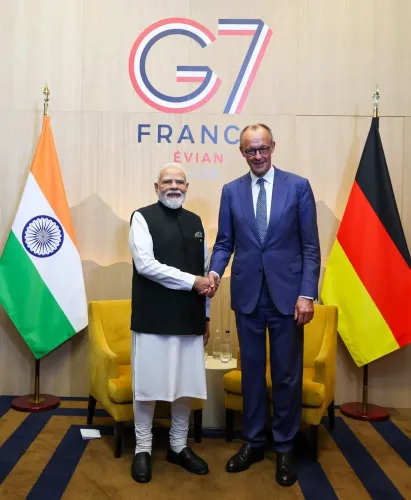
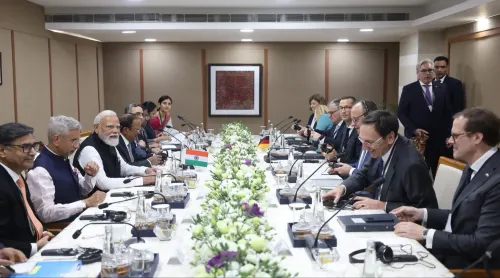
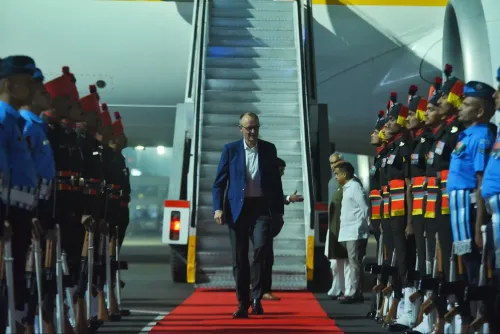
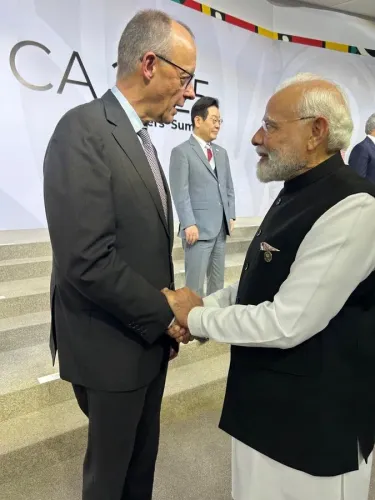
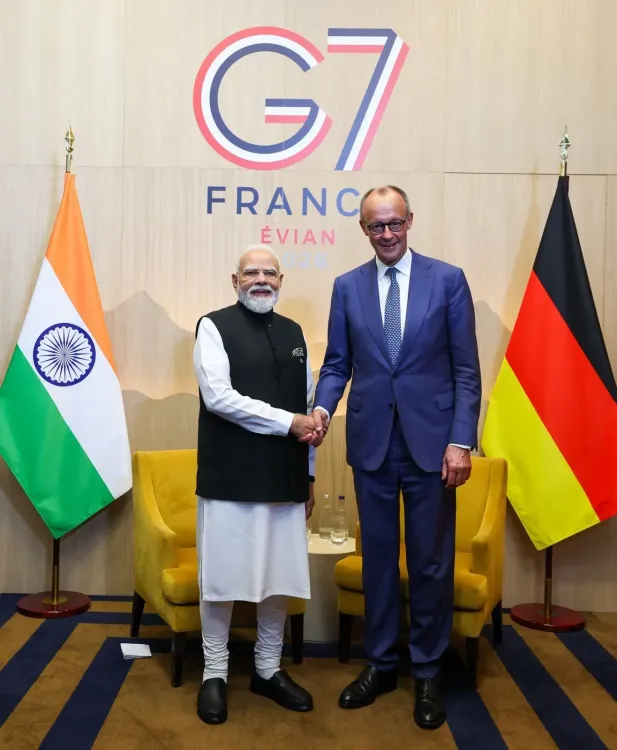
Prime Minister Narendra Modi on Wednesday, 17 June 2026 said his talks with German Chancellor Friedrich Merz were 'very fruitful', covering a broad agenda that included trade, investments, circular economy, defence, information technology, and cultural linkages between the two nations.
Context
Posting on X and tagging the German Chancellor's official handle @bundeskanzler, Modi described the bilateral engagement as productive across multiple sectors. 'We discussed ways to further cement bilateral cooperation by working together in trade, investments, circular economy, defence, IT and more,' he wrote, adding that boosting cultural ties was also on the agenda.
The meeting marks one of the most substantive high-level exchanges between India and Germany in recent years, with the two leaders addressing both economic and strategic dimensions of the relationship.
Policy Backdrop
India and Germany have maintained a Strategic Partnership since 2000, periodically upgraded through intergovernmental consultations that span trade, defence and technology. Germany is India's largest trading partner within the European Union, making the bilateral relationship a cornerstone of India's European economic strategy.
The inclusion of the circular economy on the agenda signals alignment with Germany's industrial sustainability priorities and India's own push for green growth. Defence cooperation reflects India's broader indigenisation drive, while IT collaboration builds on longstanding ties between Indian technology firms and German industry.
These bilateral discussions also complement wider India-EU efforts, including ongoing negotiations on a Broad-based Trade and Investment Agreement, and joint work on critical and emerging technologies.
Stakeholders and Impact
Indian exporters stand to benefit from any deepening of trade frameworks, while domestic defence manufacturers could gain from expanded cooperation on joint production or technology transfers. Indian IT companies with significant operations in Germany are watching for signals on digital partnerships and regulatory alignment.
Cultural linkages, mentioned explicitly by Modi, could translate into expanded academic exchanges, people-to-people programmes, and diaspora engagement — areas where both governments have previously expressed intent to do more.
What's Next
Observers will look for concrete follow-through in the form of bilateral memoranda of understanding, particularly in defence and technology, which are typically formalised at the next round of intergovernmental consultations. Progress on the India-EU trade agreement negotiations will also be a key indicator of how much momentum this summit generates at the multilateral level.
The breadth of topics covered — from circular economy to cultural ties — suggests both sides are positioning this engagement as a comprehensive upgrade of the partnership rather than a narrow transactional meeting.
Point of View
New Delhi is signalling that its European partnerships must serve both green-transition and strategic-autonomy goals simultaneously. The explicit mention of cultural linkages suggests the government is investing in the soft-power dimension of the relationship, not just the transactional. If concrete MoUs follow, this summit could mark a qualitative shift in the India-Germany partnership rather than a routine diplomatic check-in.
NationPress
19 Sept 2026
Frequently Asked Questions
What did PM Modi and Chancellor Merz discuss?
PM Modi said the talks covered trade, investments, circular economy, defence, IT, and cultural linkages between India and Germany.
When did PM Modi meet German Chancellor Friedrich Merz?
PM Modi posted about the meeting on 17 June 2026, describing the talks as 'very fruitful'.
What is the India-Germany Strategic Partnership?
India and Germany established a Strategic Partnership in 2000 that is periodically upgraded through intergovernmental consultations covering trade, defence, and technology.
Why is Germany important for India's trade?
Germany is India's largest trading partner within the European Union, making the bilateral relationship central to India's broader European economic strategy.
What could come out of the Modi-Merz talks?
Likely follow-up steps include bilateral MoUs in defence and technology, and potential momentum for the India-EU Broad-based Trade and Investment Agreement negotiations.