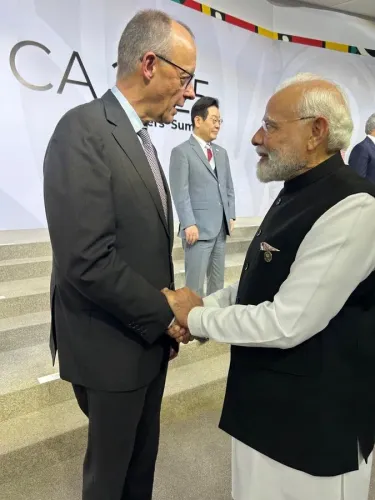
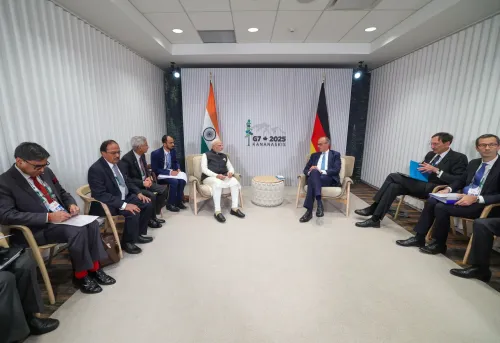
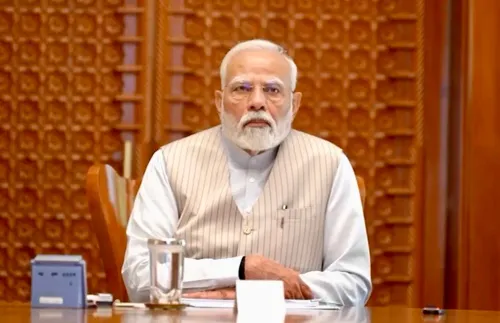
PM Modi Holds Talks With German Chancellor Merz, Eyes Broader Bilateral Ties
Synopsis
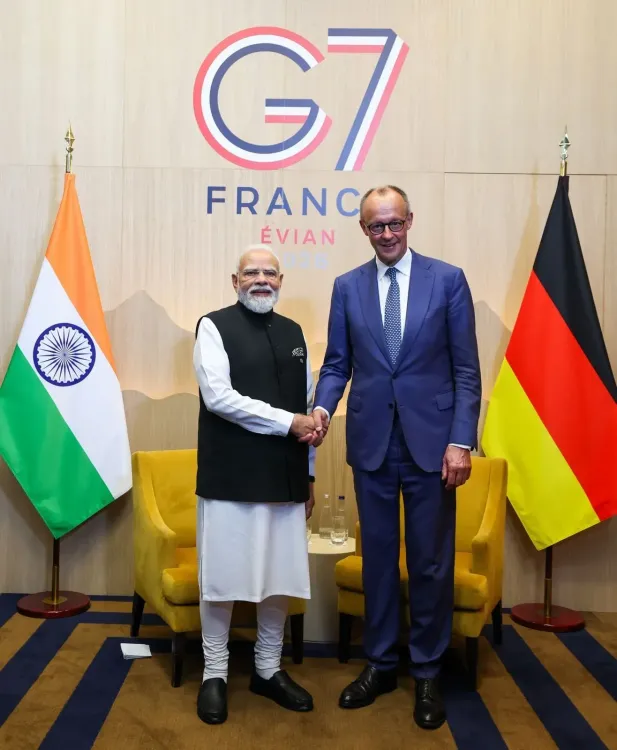
Prime Minister Narendra Modi on June 17, 2026, described his talks with German Chancellor Friedrich Merz as 'very fruitful,' identifying trade, investments, circular economy, defence, and IT as key areas for deeper India-Germany bilateral cooperation.
Key Takeaways
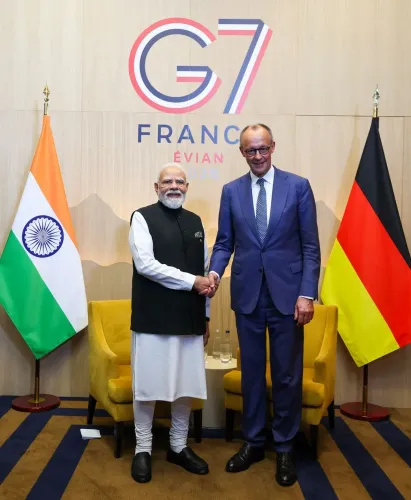
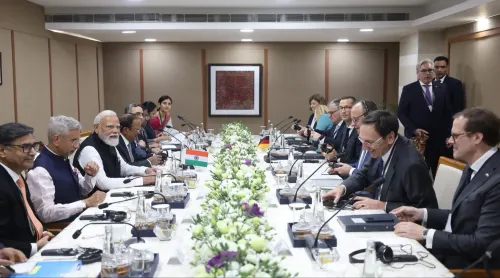
Prime Minister Narendra Modi met German Chancellor Friedrich Merz on June 17, 2026 , describing the talks as 'very fruitful.' The two leaders discussed strengthening cooperation in trade, investments, circular economy, defence, and IT .
Germany is India's largest trading partner in the European Union , with ties spanning manufacturing, green technology, and defence.
The explicit mention of the circular economy marks a notable addition to the bilateral agenda, reflecting shared sustainability goals.
Follow-up announcements on specific agreements in defence manufacturing and circular economy are expected at the next round of intergovernmental consultations.
Deepening ties with Germany supports India's broader strategy of diversifying and strengthening its European partnerships.
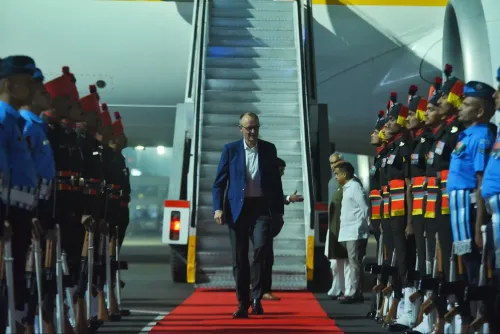
Prime Minister Narendra Modi on Wednesday, June 17, 2026, described his discussions with German Chancellor Friedrich Merz as 'very fruitful,' signalling a renewed push to deepen one of India's most consequential European partnerships across trade, defence, and emerging technology sectors.
Posting in German on X, Prime Minister Modi wrote: 'Die Gespräche mit Bundeskanzler Merz waren sehr fruchtbar' ('The talks with Chancellor Merz were very fruitful'). He noted that the two leaders explored ways to further strengthen bilateral cooperation through joint efforts in trade, investments, circular economy, defence, IT, and other areas.
Context
Germany is India's largest trading partner in the European Union, and the relationship carries decades of industrial, technological, and diplomatic depth. The choice to post in German underscores the personal and diplomatic weight Prime Minister Modi places on the engagement with Berlin.
The meeting with Chancellor Merz, leader of the CDU, represents a continuation of structured high-level dialogue that has characterised India-Germany ties across successive governments in both countries.
Policy Backdrop
India and Germany have held six rounds of Intergovernmental Consultations, a mechanism that covers climate, trade, digital policy, and defence industrial collaboration. The 2019 round under Chancellor Angela Merkel and Modi's 2022 visit to Germany both produced concrete commitments on supply-chain resilience and green technology.
The explicit mention of the circular economy — a framework for reducing industrial waste and maximising resource reuse — marks a notable policy addition to the bilateral agenda, reflecting Germany's leadership in sustainable manufacturing and India's own green transition goals. Defence and IT cooperation have similarly been long-standing pillars, with Indian technology firms maintaining a significant presence in Germany and bilateral defence procurement discussions gaining momentum in recent years.
Stakeholders and Impact
Indian IT firms operating in the EU stand to benefit from any deepened digital cooperation framework, while defence manufacturers on both sides are closely watching for follow-through on co-production or technology-transfer arrangements. Bilateral investors, particularly in Germany's engineering and automotive sectors, have long viewed India as a high-growth destination.
For India, strengthening ties with Germany also carries strategic weight within the EU, given Berlin's outsized influence on bloc-level trade and foreign policy decisions. Progress on the long-pending India-EU Free Trade Agreement is often seen as partly contingent on signals from major EU economies such as Germany.
What's Next
Follow-up announcements on specific agreements — particularly in the circular economy and defence manufacturing domains — are expected during the next round of intergovernmental consultations between the two governments. The breadth of sectors mentioned by Prime Minister Modi suggests a structured outcomes document or joint statement may be forthcoming.
As India continues its strategy of diversifying partnerships across key EU member states, the trajectory of the India-Germany relationship will be closely watched as a bellwether for broader European engagement from New Delhi.
Point of View
Underscoring how seriously New Delhi treats the Berlin relationship. The inclusion of the circular economy alongside the traditional pillars of trade and defence suggests India is consciously aligning its European pitch with sustainability priorities that resonate in Germany. This meeting fits a clear pattern of Modi-era foreign policy: using high-frequency, high-profile leader-level engagement to accelerate outcomes that multilateral forums move too slowly to deliver. With the India-EU Free Trade Agreement still pending, momentum from Berlin could prove strategically decisive.
NationPress
18 Sept 2026
Frequently Asked Questions
What did PM Modi and German Chancellor Merz discuss?
Prime Minister Modi and Chancellor Friedrich Merz discussed strengthening bilateral cooperation in trade, investments, circular economy, defence, IT, and other areas , with Modi describing the talks as 'very fruitful.'
When did PM Modi meet German Chancellor Merz?
The meeting took place on Wednesday, June 17, 2026 , with Prime Minister Modi sharing an update on X the same day.
Why is Germany important to India?
Germany is India's largest trading partner in the European Union , with deep ties in manufacturing, green technology, defence procurement, and IT, making it central to India's European strategy.
What is circular economy cooperation between India and Germany?
The circular economy framework focuses on reducing industrial waste and maximising resource reuse. Germany is a global leader in this area, and its inclusion in the bilateral agenda reflects both countries' green transition priorities.
What is expected to follow the Modi-Merz meeting?
Specific agreements — particularly in circular economy and defence manufacturing — are expected to be announced during the next round of India-Germany Intergovernmental Consultations .