PM Modi Thanks Chancellor Merz, Vows Stronger India-Germany Ties
Synopsis
Prime Minister Narendra Modi on June 10, 2026, publicly thanked German Chancellor Friedrich Merz and pledged to strengthen the India-Germany strategic partnership, signalling continued high-level diplomatic engagement between New Delhi and Berlin across trade, defence and clean energy.
Key Takeaways
PM Modi responded to Chancellor Friedrich Merz on June 10, 2026 , thanking him for 'warm words' in a public exchange on X.
Both leaders reaffirmed commitment to the India-Germany Strategic Partnership , first formalised in 2000 .
Germany is India's largest trading partner in the European Union , making the relationship a cornerstone of India's European engagement.
Priority cooperation areas include green hydrogen , defence manufacturing , digital technology and climate action.
The exchange aligns with India's broader multi-alignment strategy to diversify partnerships amid shifting global supply chains.
Next steps to watch include upcoming India-Germany inter-governmental consultations and joint project announcements.
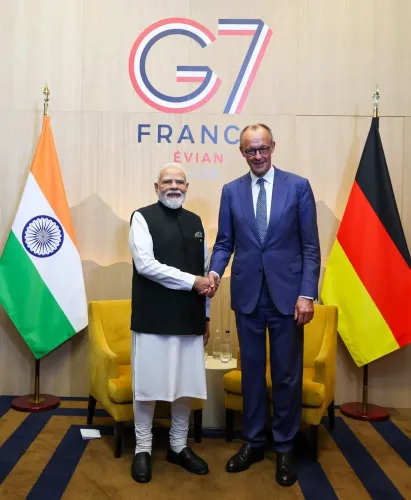
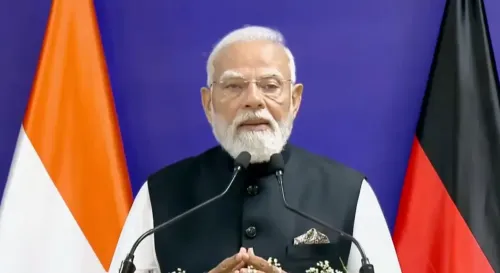
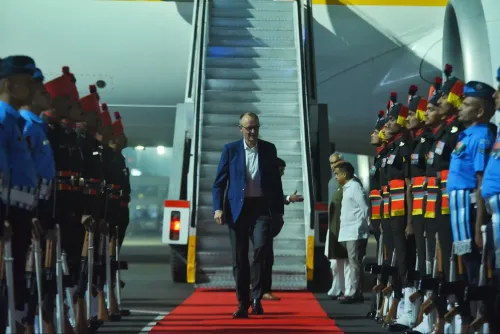
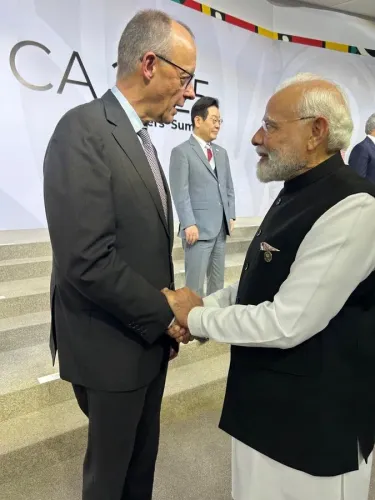
Prime Minister Narendra Modi on Wednesday, June 10, 2026, responded to German Chancellor Friedrich Merz on X, expressing gratitude for his warm words and reaffirming India's commitment to deepening the bilateral strategic partnership.
Context
The exchange came after Chancellor Merz, posting as @bundeskanzler, addressed Prime Minister Modi with what the Indian leader described as 'warm words.' Modi responded by underlining that both nations remain 'fully committed to further strengthening the India-Germany strategic partnership and deepening cooperation across key areas for the benefit of our peoples.'
The public acknowledgement signals continued high-level diplomatic engagement between New Delhi and Berlin at a time when India is actively broadening its partnerships with major European economies.
Policy Backdrop
The India-Germany Strategic Partnership was formalised in 2000 and has been reviewed and upgraded through successive rounds of inter-governmental consultations covering defence, trade, climate action and digital cooperation. Germany remains India's largest trading partner within the European Union, and a significant source of technology transfer and industrial investment.
In 2022, Prime Minister Modi participated in the G7 Summit hosted by Germany, where discussions expanded to include supply chain resilience and green technology collaboration. The two countries have since identified green hydrogen and defence manufacturing as priority sectors for joint development.
Stakeholders and Impact
Indian industry — particularly the manufacturing, renewable energy and defence sectors — stands to benefit from a deepened partnership with Germany, which brings world-class engineering capability and capital through its Mittelstand firms. German industry, in turn, gains access to one of the world's fastest-growing large economies and a strategically located production base.
The engagement also carries significance for European Union decision-making, given Berlin's weight in shaping EU trade and foreign policy. Closer India-Germany ties can ease the path toward a broader India-EU partnership, including the long-negotiated free trade agreement.
What's Next
Observers will watch for the next round of India-Germany inter-governmental consultations and any follow-up announcements on concrete joint projects, particularly in green hydrogen production and defence co-manufacturing. Prime Minister Modi's reaffirmation of commitment at the leadership level typically precedes structured working-group activity between the two governments.
With New Delhi pursuing a deliberate multi-alignment strategy amid shifting global supply chains and geopolitical pressures, the India-Germany axis is expected to grow in strategic weight in the years ahead.
Point of View
High-frequency leadership-level contact with key European capitals. Germany's centrality to EU decision-making means that warm bilateral optics carry multiplier value for India's broader European agenda, including the stalled India-EU free trade talks. Modi's framing — 'for the benefit of our peoples' — is a standard diplomatic signal that the partnership is being positioned for domestic audiences as economically tangible, not merely ceremonial. The timing, amid global supply-chain realignments and European efforts to de-risk from China, gives India-Germany industrial cooperation unusual strategic salience.
NationPress
26 Oct 2026
Frequently Asked Questions
What did PM Modi say to German Chancellor Merz?
PM Modi thanked Chancellor Friedrich Merz for his 'warm words' and stated that India remains 'fully committed to further strengthening the India-Germany strategic partnership and deepening cooperation across key areas for the benefit of our peoples.'
What is the India-Germany Strategic Partnership?
The India-Germany Strategic Partnership was formalised in 2000 and covers defence, trade, climate cooperation and digital collaboration. It is reviewed periodically through inter-governmental consultations between New Delhi and Berlin.
Why is Germany important to India?
Germany is India's largest trading partner within the European Union and a major source of technology, industrial investment and engineering expertise. Cooperation with Germany also influences broader EU policy towards India.
What are the key areas of India-Germany cooperation in 2026?
Key areas include green hydrogen production, defence manufacturing, renewable energy, digital technology and trade. Both governments have identified these as priority sectors for joint development.
How does India-Germany ties fit into India's foreign policy?
India-Germany engagement is part of New Delhi's multi-alignment strategy, which seeks to deepen partnerships with major global economies to diversify trade, technology access and diplomatic support amid shifting geopolitical conditions.