Does Germany Consider India a Key Partner in Trade and Defence?
Synopsis
Germany’s Chancellor Friedrich Merz has made a significant statement during his first official visit to India, affirming the country’s view of New Delhi as a crucial ally in trade and defence. This visit marks a pivotal moment in the evolving relationship between Germany and India, focusing on mutual interests in technology and security.
Key Takeaways
Chancellor Merz emphasized Germany's commitment to India as a key partner.
Significant agreements in defence and trade were made.
Focus on green energy and technology cooperation.
Visa-free transit for Indian passport holders announced.
Joint initiatives aim to strengthen long-term relationships.
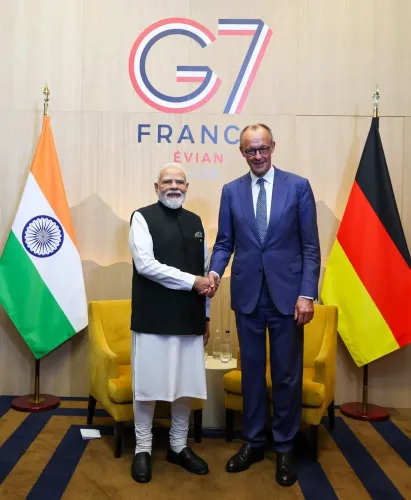
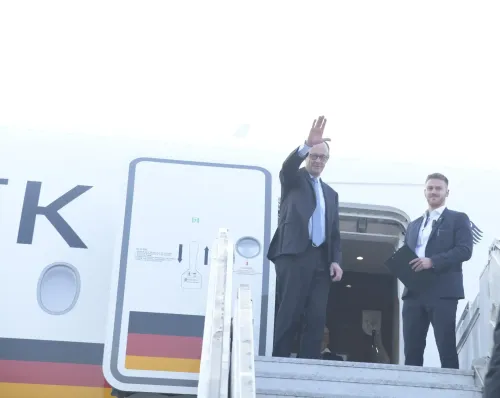
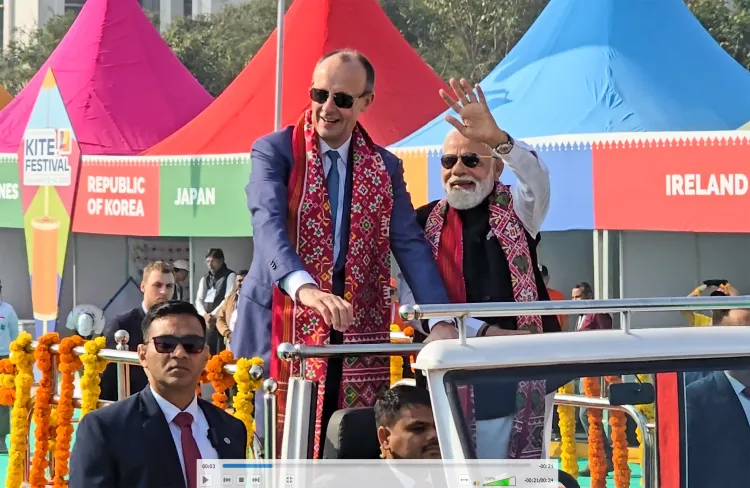
New Delhi, Jan 14 (NationPress) During his inaugural official trip to India, Chancellor Friedrich Merz of Germany emphasized that Berlin considers New Delhi an essential ally in terms of trade, technology, and security amid a fragmented global landscape. His two-day visit to Ahmedabad and Bengaluru interwove significant symbolism with an agenda focused on defence, green initiatives, mobility, and the long-standing India–EU trade agreement, as outlined in an article from India Narrative.
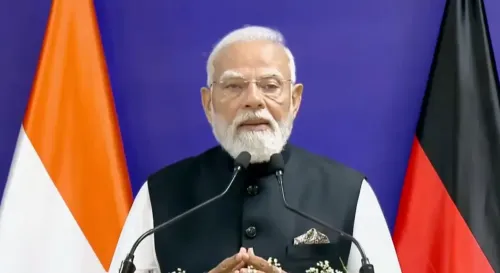
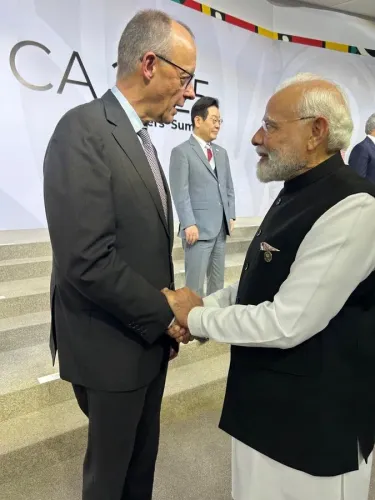
Prime Minister Narendra Modi welcomed Merz in Ahmedabad, where the schedule merged political messaging with cultural engagement. Formal discussions and press releases at Mahatma Mandir in Gandhinagar set the stage for key announcements regarding trade, defence, and technology.
The article points out that economic considerations were the main focus of this visit, with Merz leading a high-powered delegation consisting of 23 top German CEOs and industry figures. Both leaders acknowledged that Germany constitutes over 25% of India’s trade with the EU, and that bilateral trade has reached unprecedented levels since 2024, thereby bolstering the case for a more ambitious agenda.
Merz clearly indicated significant political support for the long-pending India–EU Free Trade Agreement, anticipating its conclusion by the end of January. Both nations also endorsed a new Joint Declaration of Intent aimed at enhancing economic collaboration through a German-Indian CEO Forum, which is positioned as a permanent avenue for deepening investment, technology partnerships, and robust supply chains.
Unusually for a German leader's visit to India, there was a strong emphasis on defence and security industry collaboration. Modi and Merz supported enhanced military-to-military cooperation through joint exercises and senior-level exchanges, as well as a new strategy for defence-industrial collaboration focused on long-term technology alliances and co-development of equipment within India, according to the article.
The discussions included a multi-billion-euro initiative for the joint construction of submarines in India, aligning Germany's defence export ambitions with India's Make in India and Atmanirbhar Bharat initiatives. Beyond defence, the two countries finalized or exchanged 19 MoUs and made eight major announcements covering clean energy, digital technology, and innovation, all framed as strategies for promoting green and sustainable development.
A significant highlight was India’s warm reception of Germany’s decision to enable visa-free transit for Indian passport holders, which is expected to facilitate travel and business connections through German hubs. New agreements pertaining to higher education, skill development, renewable energy training, sports collaboration, maritime heritage, and youth exchanges were showcased as investments in the future of their partnership, the article concluded.
Point of View
I see this visit as a significant step in enhancing bilateral relations between India and Germany. The emphasis on economic cooperation and defence collaboration illustrates a mutual commitment to facing global challenges together. This partnership not only benefits both nations but also contributes positively to the global landscape.
NationPress
17 Sept 2026
Frequently Asked Questions
What was the main focus of Chancellor Merz's visit to India?
The main focus was to enhance trade, technology, and defence cooperation between Germany and India, amidst a changing global order.
What agreements were reached during the visit?
19 MoUs were signed, covering areas such as clean energy, digital technology, and innovation, alongside discussions on the India-EU Free Trade Agreement.
How does this visit impact India-Germany relations?
The visit reinforces the strategic partnership between the two countries, highlighting their commitment to collaborative growth in various sectors.