Should Systemic Reforms Be Implemented to Protect Transfusion-Dependent Patients?
Synopsis
Health experts in New Delhi are calling for urgent reforms to safeguard patients reliant on blood transfusions. In a new position paper, they highlight the need for equitable access to safe blood as a matter of survival and dignity, urging a shift in policy focus to address systemic challenges.
Key Takeaways
Urgent systemic reforms are essential for transfusion-dependent patients.
Equitable access to safe blood is a matter of survival and dignity.
Gaps in screening protocols pose serious health risks.
Nucleic Acid Testing must be mandatory across blood banks.
A comprehensive Blood Safety Act is necessary for patient rights.
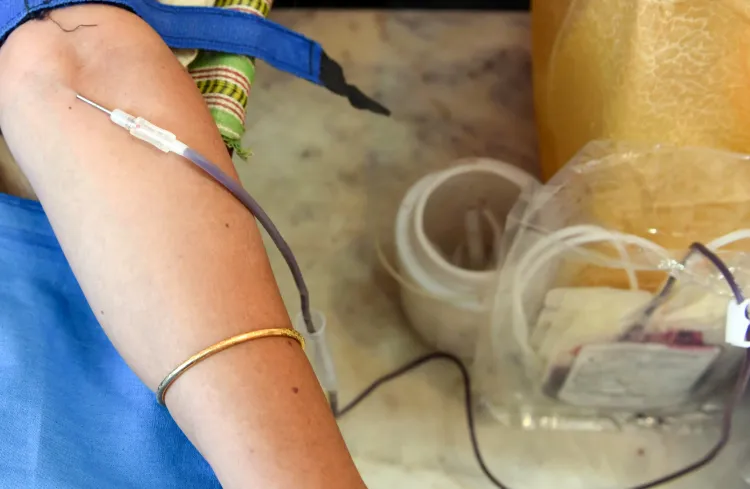
New Delhi, Jan 14 (NationPress) On Wednesday, a coalition of health specialists and advocates in New Delhi underscored the urgent necessity for comprehensive systemic reforms aimed at safeguarding individuals reliant on blood transfusions.
In a newly released position paper from the Thalassemia Patients Advocacy Group (TPAG), these experts highlighted the imperative for secure, timely, and fair access to blood, deeming it a fundamental issue concerning survival, dignity, and constitutional obligations.
"For those with thalassemia who require lifelong, regular blood transfusions, deficiencies in screening protocols, inconsistent access to advanced diagnostic tools, and fragmented regulations create significant and preventable dangers, including transfusion-transmitted infections like HIV and Hepatitis B and C," the experts noted in the document.
The group includes notable figures such as Prof. N.K. Ganguly, Former Director-General of the Indian Council of Medical Research (ICMR); Prof. Bejon Kumar Misra, a Public Health Advocate; Suneha Paul, a Thalassemia Patient Advocate; P.C. Sen, a Senior Advocate at the Supreme Court of India; and Tuhin A. Sinha, National Spokesperson for the Bharatiya Janata Party (BJP).
The paper emphasized that blood safety is a fundamental component of India's healthcare framework that requires proactive rather than reactive measures.
By integrating patient experiences, scientific data, legal insights, and public health knowledge, the document offers a cohesive, action-driven strategy to fortify India's blood safety framework and protect the lives of transfusion-dependent patients, especially those affected by thalassemia.
Through discussions with policymakers, healthcare professionals, scientists, legal experts, and patient advocates, the paper identifies ongoing systemic issues, such as the inconsistent implementation of Nucleic Acid Testing (NAT) across blood banks, the lack of a unified national blood legislation, unequal access to safe blood in rural and marginalized areas, and insufficient transparency and accountability within the transfusion network.
It contended that these deficiencies collectively undermine patient confidence and expose vulnerable groups to unnecessary dangers.
“Our position paper is a clarion call to prioritize patient lives in policy considerations, to elevate blood safety from the periphery to the forefront of healthcare governance, and to ensure that preventable risks are eradicated through science, law, and accountability,” stated Deepak Chopra, Mentor of the Thalassemia Patients Advocacy Group (TPAG).
The paper also put forth recommendations including the mandatory implementation of Nucleic Acid Testing across all blood banks to reduce window-period infections and standardize screening protocols nationwide; the establishment of a comprehensive and enforceable Blood Safety Act to articulate patient rights and institutional duties; and the initiation of a dedicated National Thalassemia Control Programme to unify prevention, screening, and long-term care.
Point of View
It is imperative to acknowledge the critical need for reforms in our healthcare system, particularly regarding blood safety. The insights provided by health experts highlight systemic gaps that can no longer be ignored. Adopting these reforms is essential for ensuring the well-being of transfusion-dependent patients across the nation.
NationPress
20 Sept 2026
Frequently Asked Questions
Why are systemic reforms needed for transfusion-dependent patients?
Systemic reforms are essential to ensure safe, timely access to blood, addressing significant risks such as transfusion-transmitted infections and inequitable access in rural areas.
What issues do thalassemia patients face regarding blood transfusions?
Thalassemia patients experience gaps in screening protocols, inconsistent access to diagnostic technologies, and fragmented regulations, which pose serious health risks.
Who are the key figures behind this call for reform?
Prominent advocates include Prof. N.K. Ganguly, Prof. Bejon Kumar Misra, Suneha Paul, P.C. Sen, and Tuhin A. Sinha.
What recommendations are made in the position paper?
The paper recommends mandatory Nucleic Acid Testing, the enactment of a comprehensive Blood Safety Act, and the establishment of a National Thalassemia Control Programme.
How can these reforms impact patient lives?
Implementing these reforms can significantly enhance blood safety, build patient trust, and reduce preventable health risks for transfusion-dependent individuals.