Has NHAI Introduced a Pilot for Real-Time Safety Alerts on Highways Due to Stray Cattle?
Synopsis
Discover how the NHAI's innovative pilot program aims to safeguard motorists from potential accidents caused by stray cattle on highways. With real-time alerts, this initiative not only enhances road safety but also utilizes advanced telecommunications technology to inform drivers, ensuring a safer journey on India's roads.
Key Takeaways
NHAI's collaboration with telecom companies enhances road safety.
Real-time alerts aim to reduce accidents involving stray cattle.
Alerts are sent in advance to give drivers ample time to respond.
Utilizing advanced technology for effective communication.
Potential for expanding the initiative based on pilot outcomes.
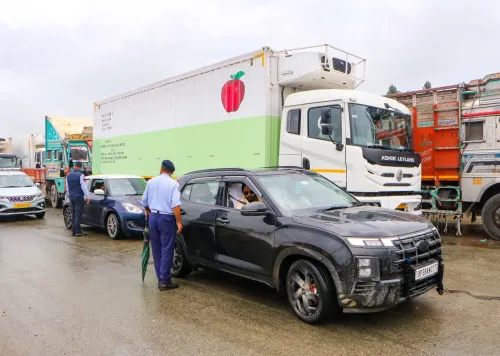
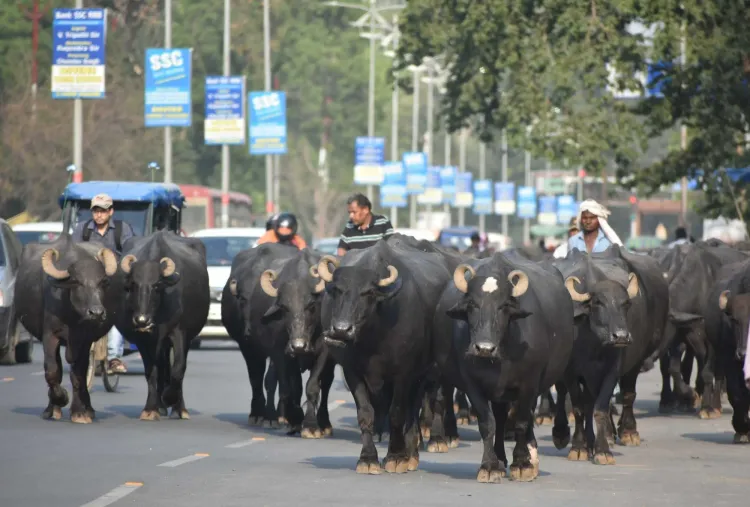
New Delhi, Jan 14 (NationPress) - In an effort to bolster road safety and mitigate risks associated with unexpected cattle movements on National Highways, the NHAI has partnered with telecom firms to initiate a pilot program aimed at sending real-time safety alerts to drivers nearing areas with high occurrences of stray cattle.
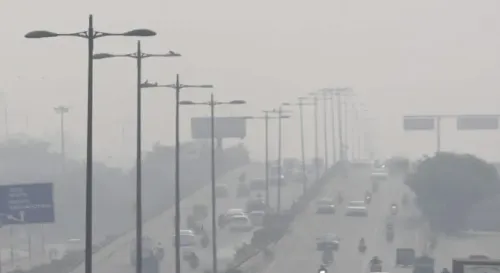
Launched during 'Road Safety Month 2026, this initiative seeks to diminish accidents triggered by unexpected cattle appearances on National Highways, especially in conditions of fog and reduced visibility, as highlighted in a statement released on Wednesday.
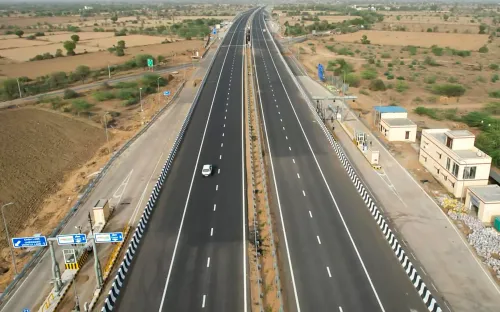
The pilot is currently being tested along the Jaipur–Agra and Jaipur–Rewari National Highway routes, identified as regions with frequent stray cattle incidents. Through this program, location-specific alerts will be generated for travelers on these highways, issuing warnings roughly 10 kilometers prior to designated high-risk zones. This advance notice is intended to provide drivers with adequate time to adopt safety precautions, the statement noted.
To effectively communicate with National Highway users, advisories will be distributed via Flash SMS in Hindi during the pilot phase, urging drivers to reduce speed due to potential cattle movement ahead. This will be succeeded by a voice alert delivering the same warning. To avoid alert fatigue, users will not receive repeated notifications within a 30-minute timeframe.
This initiative will utilize telecommunications technology to offer timely and targeted warnings, thereby enhancing driver awareness and safety on National Highways. Alerts will be triggered based on mapped cattle-prone areas identified through historical accident data and field inputs, utilizing the upgraded telecom systems.
Depending on the results and success of the pilot, the NHAI will analyze the feasibility of extending this initiative to additional zones prone to stray cattle, as part of its continuous efforts to enhance road safety and improve the overall experience for users on National Highways nationwide.
Point of View
This initiative by the NHAI showcases a proactive step towards enhancing road safety. By leveraging technology to address a pressing issue, it reflects a commitment to prioritizing the safety of motorists. Collaborating with telecom companies to deliver real-time alerts is a significant move that could set a precedent for similar initiatives throughout the country.
NationPress
19 Sept 2026
Frequently Asked Questions
What is the purpose of the NHAI's pilot initiative?
The pilot initiative aims to provide real-time safety alerts to motorists about potential cattle movements on National Highways, thereby reducing the risk of accidents.
Where is the pilot program being implemented?
The pilot program is currently being tested on the Jaipur–Agra and Jaipur–Rewari National Highway corridors.
How will the alerts be communicated to drivers?
Alerts will be sent via Flash SMS in Hindi, along with voice alerts, notifying drivers to slow down due to cattle movement ahead.
What technology is being used for this initiative?
The initiative leverages upgraded telecom infrastructure to deliver timely and targeted safety advisories to drivers.
Will the initiative be expanded if successful?
Yes, based on the pilot's outcomes, the NHAI will assess the potential for expanding the program to other stray cattle-prone areas.