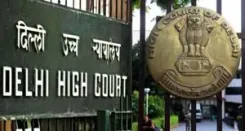
Supreme Court sets aside NGT order on Art of Living Yamuna case, orders ₹5 crore refund
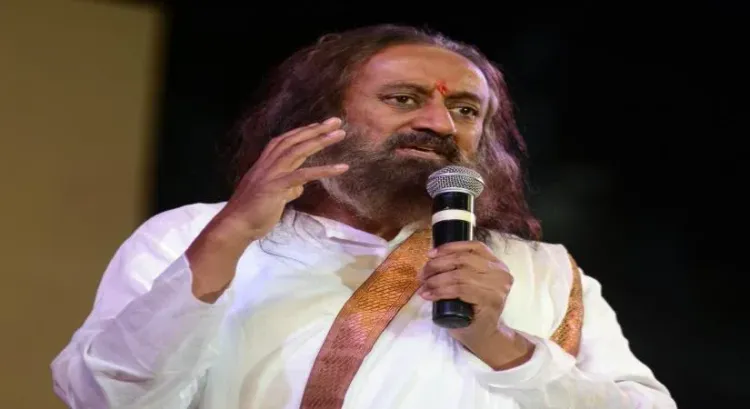
Synopsis
The Supreme Court has overturned the NGT's 2017 verdict that held the Art of Living Foundation liable for damaging the Yamuna flood plains during its 2016 World Culture Festival. The bench ordered the DDA to refund the full ₹5 crore security deposit — a ruling that could reshape how environmental liability is assigned for large events on riverfront land.
Key Takeaways
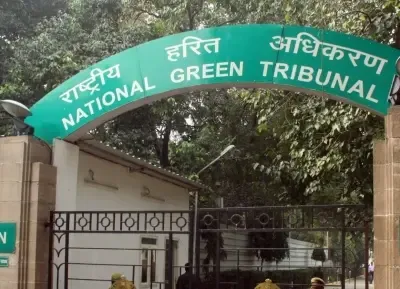
The Supreme Court on 22 August set aside the NGT order holding the Art of Living Foundation guilty of damaging Yamuna flood plains .
The court directed the DDA to refund ₹5 crore in environment compensation to the Foundation.
The bench of Justice S.C.
Sharma and Justice N.K.
Singh accepted the appeal by Vyakti Vikas Kendra India (VVKI) .
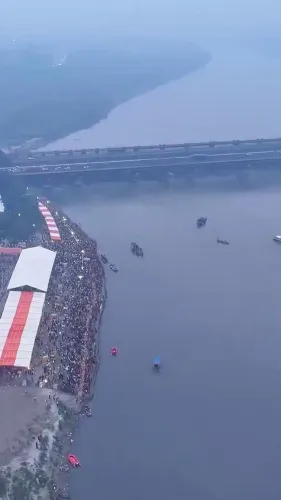
The dispute arose from the World Culture Festival held from 11–13 March 2016 on the Yamuna banks in New Delhi .
The NGT had originally ruled against the Foundation in December 2017 based on an expert panel's findings.
The Foundation had argued the event site was never officially demarcated as a flood plain and that damage could not be scientifically established.
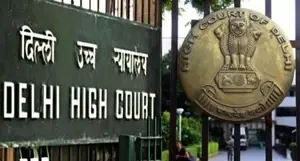
The Supreme Court on Saturday, 22 August set aside a National Green Tribunal (NGT) ruling that had held the Art of Living Foundation responsible for damaging the Yamuna flood plains during a cultural event in 2016, and directed the Delhi Development Authority (DDA) to refund ₹5 crore in environment compensation to the Foundation. The ruling delivers a significant legal victory to the organisation founded by spiritual leader Sri Sri Ravi Shankar.
The Bench's Ruling
A bench comprising Justice S.C. Sharma and Justice N.K. Singh disagreed with the NGT's findings and accepted the appeal filed by Vyakti Vikas Kendra India (VVKI), the Indian entity associated with the Art of Living Foundation. The apex court set aside the NGT judgment in its entirety and ordered the DDA to return the ₹5 crore security deposit that had been confiscated from the Foundation.
Background: The 2016 World Culture Festival
The dispute traces back to the World Culture Festival, organised by the Foundation from 11 to 13 March 2016 on the banks of the Yamuna in New Delhi, after obtaining permission from the DDA. The event involved construction of roads, ramps, and temporary structures, which critics alleged threatened the river's natural flow and ecology.
A complaint was subsequently filed before the NGT by retired Indian Forest Service (IFS) officer Manoj Mishra, who also served as convener of the campaign 'Yamuna Jiye Abhiyaan'. In December 2017, the NGT relied on the findings of an expert panel to hold the Foundation responsible for damage to the flood plains, directing the DDA to confiscate the ₹5 crore security deposit and deploy it toward restoration work.
The Foundation's Arguments
VVKI, appealing on behalf of the Art of Living Foundation, contended before the Supreme Court that the event site had never been officially demarcated as a flood plain. The Foundation further argued that the alleged environmental damage from the three-day event could not be established through scientific evidence. It maintained that the event was organised with due permission from the DDA, the land-owning authority.
What the Ruling Means
The Supreme Court's acceptance of these arguments effectively nullifies the NGT's December 2017 order. The DDA is now required to return the full ₹5 crore security deposit to the Foundation. The case had remained a flashpoint in debates around large-scale events on ecologically sensitive riverfront land in the capital. Notably, this is among the few instances where a Supreme Court bench has directly overturned an NGT environmental liability finding tied to a cultural gathering of this scale. The verdict is likely to inform how future permissions for events near protected water bodies are framed and contested.
Point of View
Designed to be a fast-track environmental court with scientific grounding, relied on that panel — yet the apex court found it insufficient. This outcome does not settle the ecological debate around large events on Yamuna flood plains; it merely shifts the legal burden of proof. For environmental advocates, the verdict underscores the difficulty of establishing causal scientific links between temporary event infrastructure and river damage — a gap that regulators may now need to address through clearer pre-event baseline assessments and post-event audits, rather than after-the-fact litigation.
NationPress
22 Aug 2026
Frequently Asked Questions
What did the Supreme Court rule in the Art of Living Yamuna case?
The Supreme Court set aside the NGT's 2017 order that held the Art of Living Foundation guilty of damaging the Yamuna flood plains. It directed the DDA to refund ₹5 crore in environment compensation to the Foundation.
What was the original NGT order against Art of Living?
In December 2017, the NGT relied on an expert panel's findings to hold the Foundation responsible for damage to the Yamuna flood plains during the 2016 World Culture Festival. It directed the DDA to confiscate the ₹5 crore security deposit and use it for flood plain restoration.
What was the World Culture Festival and why was it controversial?
The World Culture Festival was a three-day cultural event organised by the Art of Living Foundation from 11 to 13 March 2016 on the Yamuna banks in New Delhi. The event involved construction of temporary roads, ramps, and structures, which critics alleged damaged the river's flood plains and threatened its natural flow.
Who filed the original complaint against Art of Living in the NGT?
The complaint was filed by retired Indian Forest Service officer Manoj Mishra, who was also the convener of the environmental campaign 'Yamuna Jiye Abhiyaan'.
What argument did the Art of Living Foundation make before the Supreme Court?
The Foundation, through VVKI, argued that the event site had never been officially demarcated as a flood plain and that the alleged environmental damage could not be established scientifically. It also maintained that the event was held with due permission from the DDA.