China eyes western Pacific hegemony, seeks to redraw Asia's order: Expert
Synopsis
A Japanese maritime policy expert is warning that China's ambitions extend far beyond Taiwan — it is methodically trying to redraw Asia's security architecture and bring the entire western Pacific under Beijing's sphere of influence. With Japan's vigilance reportedly softening and Taiwan-Japan cooperation lacking, the expert argues the window to push back collectively may be narrowing faster than policymakers recognise.
Key Takeaways
Chisako Masuo of Kyushu University warned that China seeks to replace the US-centred international system with a Beijing-anchored regional order in Asia.
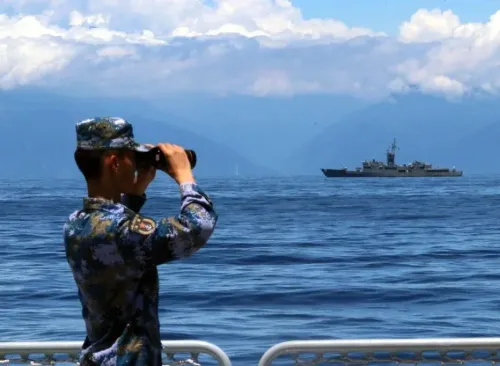
China's maritime 'law enforcement patrols' east of Taiwan will become more sophisticated and will 'absolutely not disappear', she said.
Masuo identified Taiwan , Japan , and the Philippines as sharing common concerns, but noted that Taiwan-Japan cooperation remains insufficient.
The Taiwan issue is a potential 'flashpoint' for a future US-China war , according to the academic.
Khedroob Thondup , nephew of the 14th Dalai Lama , cited Tibet's experience under the 1951 Agreement as a warning against trusting Beijing's autonomy promises.
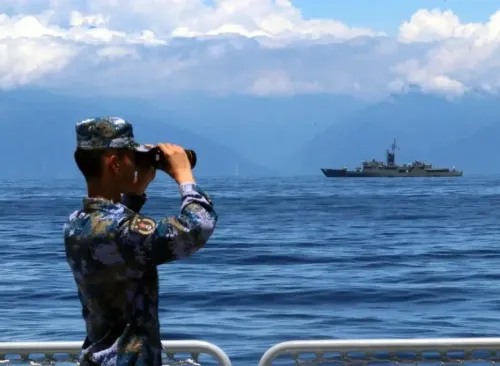
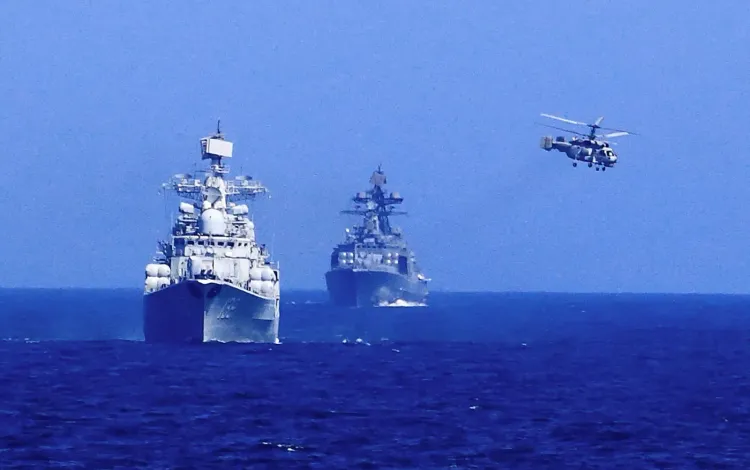
China is actively working to break away from the US-centred international system and establish a separate regional order in Asia anchored in Beijing, with its expanding maritime activities in the Pacific Ocean signalling ambitions to bring the western half of the ocean under its dominance, according to a report published by the Taipei Times citing a Japanese maritime policy specialist.
What the Expert Said
Chisako Masuo, a Professor at Kyushu University's Graduate School of Social and Cultural Studies, said during an interview last week that China's intensifying maritime activities in waters east of Taiwan represent a 'shared concern' for Taiwan, Japan, and the Philippines. She argued that all three sides must cooperate to assess Beijing's strategic intentions and protect their respective interests in the region.
Masuo noted that Taiwan and Japan currently lack close cooperation on maritime security, and that concern within Japan over a potential conflict involving Taiwan has softened amid growing optimism that an armed invasion would not occur. She attributed part of this shift to the removal of senior Chinese military officers from the Chinese Communist Party (CCP), which has reportedly fed a sense of complacency in Tokyo. Attention to maritime issues, she added, has further slackened under Japanese Prime Minister Sanae Takaichi's government.
China's Maritime 'Law Enforcement' Patrols
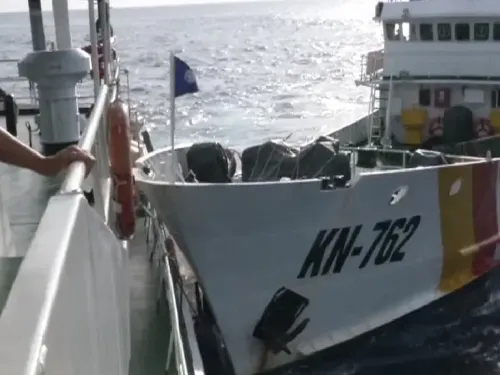
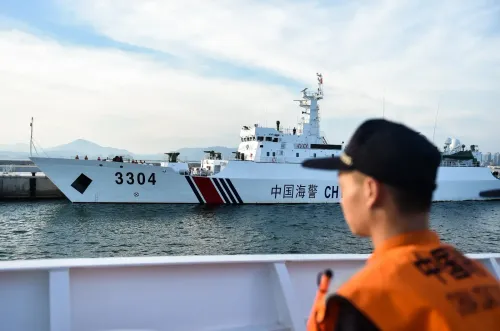
Despite the easing of concern in some quarters, Masuo warned that China's maritime 'law enforcement patrols' east of Taiwan would become increasingly sophisticated and would 'absolutely not disappear.' She further pointed out that Japan's and the Philippines' exclusive economic zones overlap in the same maritime area, directly connecting the issue to Japan's strategic interests.
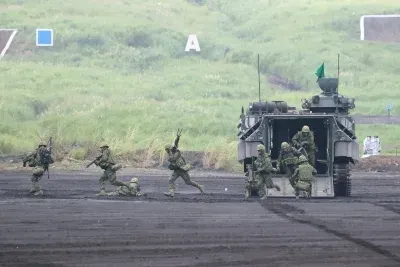
The academic characterised the Taiwan issue as not an 'isolated one', describing it as a potential 'flashpoint' for a future conflict between the United States and China. She acknowledged that in the event of a war involving Taiwan, the Japanese Self-Defense Forces would face legal constraints under domestic Japanese law in directly assisting Taiwan — but stressed that the continued functioning of the Japan-US alliance remains 'extremely important' to Taiwan in practical terms.
Taiwan's Democracy and Strategic Value
This comes amid a broader debate over Taiwan's political identity and its refusal to accept absorption into mainland China. Earlier this month, Khedroob Thondup, nephew of the 14th Dalai Lama, wrote in The Tibet Express that Taiwan will never agree to trade its independence for China's embrace, describing the resistance as rooted in democracy, identity, and hard-won freedom.
Taiwan holds free elections, maintains a vibrant civil society, and operates a robust free press — a sharp contrast to authoritarian governance on the mainland. The island is also the global epicentre of semiconductor manufacturing, giving it outsized importance in international supply chains far beyond the region.
The Tibet Warning
Thondup invoked Tibet's experience as a cautionary precedent for any nation that places trust in Beijing's assurances. Under the 1951 Agreement, China had pledged to respect Tibet's political system and religion. According to Thondup, those promises were broken within years — monasteries were destroyed, language was marginalised, and religious practice came under tight restriction. Critics argue that Tibet's trajectory illustrates precisely why Taiwan categorically rejects the framework of 'one country, two systems.'
With China's maritime assertiveness growing on multiple fronts, observers say the coming months will test whether Taiwan, Japan, and the Philippines can forge a meaningful trilateral security understanding before Beijing's encroachment in the western Pacific advances further.
Point of View
It is attempting to replace the rules-based order in Asia with a Beijing-defined one. What mainstream coverage often misses is the internal contradiction Masuo surfaces — Japan's complacency is growing at exactly the moment China's maritime footprint is expanding. The Japan-US alliance remains Taiwan's practical lifeline, yet alliance cohesion depends on Tokyo sustaining threat perception that appears to be fading. If the trilateral alignment of Taiwan, Japan, and the Philippines fails to crystallise into a concrete security framework, Beijing's incremental strategy of normalising its Pacific patrols may achieve its objectives without a single shot being fired.
NationPress
19 Oct 2026
Frequently Asked Questions
What is China's reported strategy in the western Pacific?
According to a report citing Chisako Masuo of Kyushu University , China is seeking to break from the US-centred international system and establish a Beijing-anchored regional order in Asia, with its expanding maritime activities in the Pacific indicating an intent to bring the western half of the ocean under its hegemony.
Why are Taiwan, Japan, and the Philippines considered to share a common concern?
All three nations have overlapping or adjacent interests in the maritime areas east of Taiwan where China is intensifying its 'law enforcement patrols.' Masuo noted that Japan's and the Philippines' exclusive economic zones also overlap in the same region, directly linking it to Japan's strategic interests alongside Taiwan's security.
What is the significance of the Japan-US alliance for Taiwan?
Masuo argued that even though Japanese domestic law constrains the Self-Defense Forces from directly assisting Taiwan in a conflict scenario, the continued functioning of the Japan-US alliance remains 'extremely important' to Taiwan in practical terms, as it underpins the broader security architecture of the region.
Why is Tibet's experience cited in the context of Taiwan?
Khedroob Thondup, nephew of the 14th Dalai Lama, argued that Tibet's experience under the 1951 Agreement — where China's pledges of autonomy were reversed within years — serves as a direct warning for Taiwan. Critics use this precedent to argue that Beijing's assurances of 'one country, two systems' cannot be trusted.
Has Japan's vigilance over Taiwan decreased?
According to Masuo, concern in Japan over a potential Taiwan contingency has faded amid growing optimism that an armed invasion would not occur, partly following the removal of senior Chinese military officers from the CCP. She also noted that attention to maritime issues has slackened under Prime Minister Sanae Takaichi's government.