China's pressure campaign on Japan: Allies must act, report warns
Synopsis
A report in the European Times, authored by the Dalai Lama's nephew, warns that China's coordinated campaign against Japan — spanning cyber espionage, Senkaku incursions, and economic coercion — is no longer a bilateral problem. It is a test of the rules-based order, and Japan's allies, including the US and EU, must treat it as a collective security challenge before Tokyo's strategic autonomy is incrementally eroded.
Key Takeaways
A European Times report warns that the CCP is running a coordinated pressure campaign against Japan through espionage, maritime aggression, and economic coercion.
Japan's semiconductor and robotics sectors have reportedly faced attacks from Chinese intelligence networks via cyber intrusions and insider recruitment.
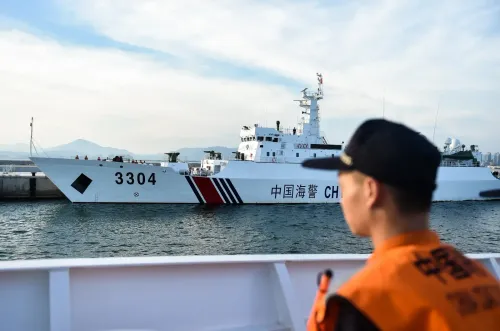
Chinese coast guard and fishing vessels have been regularly entering waters around the Senkaku Islands , the report states.
Author Khedroob Thondup , nephew of the Dalai Lama , calls for a joint Japan-US-EU task force to counter technology theft and coordinated diplomatic-military responses.
Chinese President Xi Jinping and Russian President Vladimir Putin jointly condemned Japan's 'remilitarisation' in a recent statement, calling it a threat to regional stability.
Japan-China ties have been strained since November 2025 , when PM Sanae Takaichi suggested the JSDF could respond to a Chinese attack on Taiwan .
The Chinese Communist Party (CCP) has been waging a sustained pressure campaign against Japan through espionage, maritime aggression, and economic coercion, according to a report published in the European Times. The report argues that China is actively testing Tokyo's strategic resilience and the credibility of its alliance with the United States, and that Japan and its partners must respond with coordinated action.
Technology Theft and Intelligence Threats
Japan's most advanced industrial sectors — including semiconductors and robotics — have reportedly come under sustained attack from Chinese intelligence networks. Cyber intrusions and insider recruitment are said to be eroding Japan's competitive edge in critical technologies.
The report recommends that Japan enhance counter-intelligence resources, tighten oversight of academic exchanges, and establish a joint Japan-US-EU task force to monitor and disrupt technology theft operations.
Maritime Incursions Around the Senkaku Islands
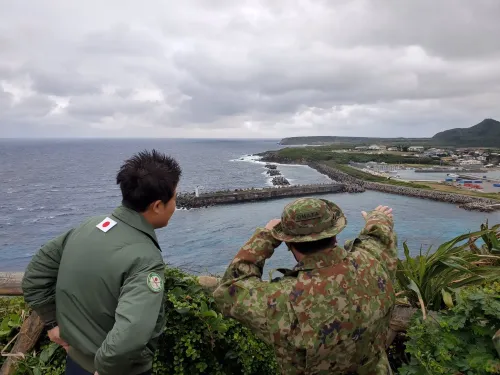
Chinese coast guard and fishing vessels have been regularly entering waters around the Senkaku Islands, according to the report. These incursions, it argues, are not mere provocations but a deliberate strategy to undermine Japan's sovereignty over the disputed territory.
The report calls on Japan to increase maritime patrols, strengthen domain awareness, and conduct joint exercises with allied nations to signal that its territorial waters are non-negotiable.
What the Report's Author Said
Khedroob Thondup, nephew of Tibetan spiritual leader the Dalai Lama, authored the European Times piece. He wrote: 'The CCP's tactics are integrated; the response must be equally coordinated. Japan cannot stand alone. Its allies must recognise that defending Japan also means defending the rules-based order. China's pressure campaign should therefore be treated as a collective security challenge requiring coordinated diplomatic, economic, and military measures.'
Thondup added: 'Japan is facing a sustained campaign designed to weaken its strategic autonomy and test the durability of its alliances. The choice is stark: respond piecemeal and watch sovereignty gradually erode, or act decisively with allies to preserve stability, deter coercion, and defend the rules-based order. The time for hesitation is over.'
Japan's Official Position on Remilitarisation Criticism
This comes amid escalating diplomatic tensions. In May, Japan's Deputy Chief Cabinet Secretary Masanao Ozaki rejected criticism from China and Russia over what they termed Japan's 'remilitarisation', calling the charge 'entirely unfounded.' At a press conference on 21 May, Ozaki stated that Tokyo wants both nations to 'change their behaviour' — citing Beijing's military activities as a 'cause for serious concern for the international community' and Moscow's military action against Ukraine.
His remarks followed a joint statement by Chinese President Xi Jinping and Russian President Vladimir Putin, who condemned Japan's 'current course toward accelerated remilitarisation' as posing 'a serious threat' to regional peace and stability. The two leaders also voiced concern over 'extreme provocations' by Japan's right-wing forces, including moves to revise the country's three nuclear principles — which prohibit Japan from possessing, producing, or permitting the introduction of nuclear weapons.
Taiwan Flashpoint and Bilateral Strains
Ties between China and Japan deteriorated further after Japanese Prime Minister Sanae Takaichi suggested in parliament in November 2025 that a Chinese attack on Taiwan could trigger a response by Japan's Self-Defence Forces (JSDF). Beijing regards Taiwan as part of its territory and has not ruled out the use of force to achieve reunification, making Takaichi's remarks a significant flashpoint in bilateral relations.
As China's pressure on Japan intensifies across military, economic, and intelligence domains, the question of whether Tokyo's alliances — particularly with Washington — will translate into credible deterrence is set to define regional security calculus in the months ahead.
Point of View
Technology espionage, and economic leverage are real and documented, but attributing them to a single integrated strategy is an analytical leap that the report does not fully substantiate. What is harder to dispute is the alliance credibility question: if the US-Japan security treaty cannot deter grey-zone aggression below the threshold of armed conflict, its deterrent value against a Taiwan scenario is also in question. Takaichi's parliament remarks in November 2025 raised the stakes sharply, and Beijing's joint statement with Moscow signals that China is willing to internationalise its pushback. The real test is not Japan's resolve — Tokyo has been quietly expanding defence spending — but whether Washington and Brussels will treat Chinese grey-zone tactics against an ally as a collective trigger, or continue to manage them bilaterally.
NationPress
5 Oct 2026
Frequently Asked Questions
What is China's pressure campaign against Japan?
According to a European Times report, China has been conducting a coordinated campaign against Japan involving cyber espionage targeting semiconductor and robotics industries, regular coast guard incursions around the Senkaku Islands, and economic coercion. The report argues these are not isolated incidents but an integrated strategy to weaken Japan's strategic autonomy.
Who wrote the European Times report on China and Japan?
The report was authored by Khedroob Thondup, the nephew of Tibetan spiritual leader the Dalai Lama. He argues that China's tactics require a coordinated diplomatic, economic, and military response from Japan and its allies, including the US and EU.
What is Japan's position on accusations of remilitarisation?
Japan's Deputy Chief Cabinet Secretary Masanao Ozaki rejected the criticism in May, calling it 'entirely unfounded.' He stated that Tokyo wants China and Russia to change their behaviour, citing Beijing's military activities as a serious international concern.
Why have China-Japan relations deteriorated recently?
Ties worsened significantly after Japanese Prime Minister Sanae Takaichi suggested in parliament in November 2025 that a Chinese attack on Taiwan could trigger a response by Japan's Self-Defence Forces. China considers Taiwan part of its territory and has not ruled out force to achieve reunification.
What does the report recommend Japan and its allies do?
The report recommends Japan enhance counter-intelligence capacity, tighten monitoring of academic exchanges, increase Senkaku patrols, and establish a joint Japan-US-EU task force to disrupt technology theft. It calls on allies to treat China's pressure campaign as a collective security challenge requiring coordinated action.