China fabricated legal basis for EEZ claims, distorted naval exercise facts
Synopsis
China recast a routine international naval passing exercise as proof of sovereignty over waters it has never legally controlled — then falsely implied Indonesia endorsed the claim. Both Jakarta and Taipei have pushed back, exposing a deliberate pattern of conflating UNCLOS resource rights with territorial sovereignty to manufacture geopolitical leverage.
Key Takeaways
The Indo-Pacific Defence Forum report found that China fabricated a legal basis to claim sovereignty over international waters where a routine naval passing exercise took place.
Beijing falsely asserted the exercise occurred within China's sovereign EEZ and implied Indonesia endorsed the claim — both assertions were rejected by Jakarta.
Indonesian Navy First Admiral Tunggul clarified that passing exercises are standard goodwill engagements and carry no endorsement of territorial claims.
Under UNCLOS , an EEZ extending 200 nautical miles does not constitute sovereign territory; foreign navies retain full navigation and exercise rights within it.
Taipei condemned Beijing's framing as political manipulation aimed at creating a false impression of Chinese control over waters east of Taiwan .
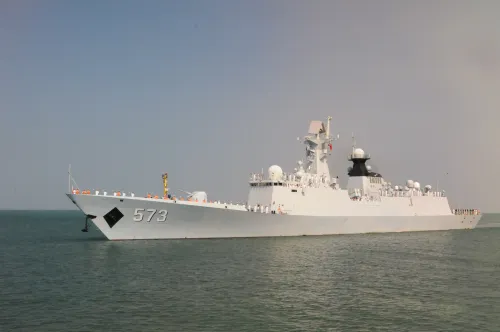
China concocted a false legal premise to assert sovereignty over international waters it has never controlled, misrepresenting a routine naval passing exercise as a joint operation conducted within its own jurisdiction, according to a report by the Indo-Pacific Defence Forum. The incident, which unfolded in open international waters where foreign navies hold full legal authority to train and operate, has drawn sharp rebukes from Indonesia, Taiwan, and international legal observers.
What Beijing Claimed
After the passing exercise concluded, Beijing asserted that the naval drill took place within China's sovereign Exclusive Economic Zone (EEZ) — a claim the Indo-Pacific Defence Forum report described as flatly contradicted by the facts and by international law. Beijing further implied, falsely according to Jakarta, that Indonesia endorsed its expansive territorial assertion over those waters.
The Chinese Communist Party (CCP), the report stated, 'attempted to back its misleading assertion with a mix of lies and distorted legal interpretations. Beijing never has controlled the waters in question and concocted a false legal premise to support its arbitrary claim.'
Indonesia and Taiwan Push Back
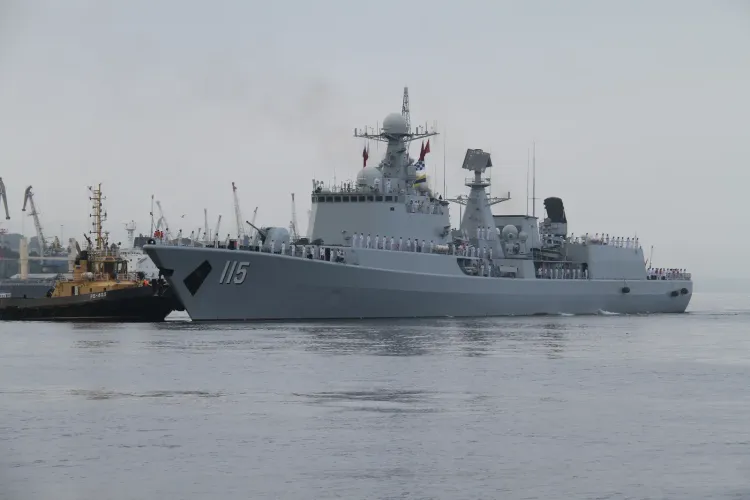
Indonesia categorically refuted any suggestion that it had endorsed Beijing's territorial declaration, while clarifying that one of its freight vessels participated in the passing exercise as it returned home after completing a separate drill in Vladivostok with the Russian Navy. Indonesian Navy First Admiral Tunggul described passing exercises as 'common goodwill engagements conducted by navies worldwide as a manifestation of naval camaraderie and maritime diplomacy inherent in warship operations,' according to the Antara news agency.
Taipei condemned Beijing's characterisation as political manipulation designed to create the false impression that China controls waters east of Taiwan. This comes amid Beijing's longstanding claim that Taiwan is part of China and therefore falls within its EEZ.
What International Law Actually Says
Under the United Nations Convention on the Law of the Sea (UNCLOS), an EEZ extends 200 nautical miles seaward from a nation's coastline, granting it exclusive rights over resources such as fish, fossil fuels, and minerals. Critically, UNCLOS does not designate an EEZ as 'sovereign' territory — foreign vessels, including warships, retain full rights of navigation and military exercises within another country's EEZ.
Beijing's framing, critics argue, deliberately conflates resource rights with territorial sovereignty — a legal sleight of hand that UNCLOS explicitly does not support.
A Broader Pattern of Expansive Claims
This is not an isolated episode. China has repeatedly invoked contested legal interpretations to assert control over large swathes of the South China Sea and waters east of Taiwan, often drawing protests from neighbouring states and rulings against it at international tribunals — most notably the 2016 Permanent Court of Arbitration ruling, which rejected Beijing's nine-dash line claims. Notably, Beijing has refused to recognise that ruling.
The latest episode underscores a recurring pattern: China frames multilateral or routine naval activity as validation of its territorial positions, then uses the resulting narrative to pressure regional partners into implicit acquiescence. As regional navies and international watchdogs push back with greater coordination, the credibility of Beijing's legal arguments faces mounting scrutiny.
Point of View
Reframe it as validation of contested sovereignty, and bank on ambiguity before partners can coordinate a rebuttal. The legal argument is thin — UNCLOS is unambiguous that an EEZ is not sovereign territory — but the reputational damage from the implied Indonesian endorsement was the real target. What is notable is how quickly Jakarta and Taipei pushed back in unison, suggesting regional tolerance for this kind of narrative capture is eroding. The real risk is not this single incident but the cumulative effect of repeated misrepresentations that slowly normalise China's expansive claims in global discourse.
NationPress
1 Oct 2026
Frequently Asked Questions
What did China falsely claim about the naval exercise?
China asserted that a routine naval passing exercise took place within its 'sovereign EEZ,' a claim rejected by the Indo-Pacific Defence Forum report as contradicted by facts and international law. Beijing also falsely implied that Indonesia supported its expansive territorial claim over those waters.
What is an EEZ and does it give China sovereignty over those waters?
An Exclusive Economic Zone (EEZ) extends 200 nautical miles from a nation's coastline and grants exclusive rights over natural resources. Under UNCLOS, an EEZ does not constitute sovereign territory, meaning foreign navies retain full rights to navigate and conduct exercises within it.
How did Indonesia respond to China's claim?
Indonesia categorically denied endorsing China's territorial declaration. Jakarta acknowledged that one of its freight vessels participated in the passing exercise while returning from a separate drill with the Russian Navy in Vladivostok, but stressed this implied no support for Beijing's EEZ sovereignty claim.
Why did Taiwan condemn Beijing's characterisation?
Taipei said Beijing's framing was political manipulation intended to create a false impression that China controls waters east of Taiwan. China claims Taiwan as part of its territory and, by extension, argues those waters fall within its EEZ — a position Taiwan rejects.
Is this part of a broader pattern by China?
Yes. China has repeatedly used contested legal interpretations to assert control over large areas of the South China Sea and surrounding waters, despite a landmark 2016 Permanent Court of Arbitration ruling rejecting its nine-dash line claims — a ruling Beijing refuses to recognise.