China-Russia ties alarm Baltic states, US lawmakers warn at hearing
Synopsis
At a US congressional hearing on Baltic security, State Department officials confirmed that China supplies roughly 80 per cent of dual-use goods to Russia's defence sector — a figure now driving Lithuania, Latvia, and Estonia to actively cool economic ties with Beijing. The Baltics' hawkish pivot could become Europe's new template for China policy.
Key Takeaways
Deputy Assistant Secretary of State Christopher Smith told a House Foreign Affairs Subcommittee hearing on 15 May that China supplies approximately 80 per cent of dual-use goods to Russia's defence industrial base.
Lithuania , Latvia , and Estonia are actively cooling economic ties with Beijing over its support for Moscow in the Ukraine war.
The Baltic states have already removed Chinese components from communications systems and are building secure supply chains with Washington .
Lithuania's 2021 decision to allow Taiwan to open a representative office triggered sharp retaliation from Beijing ; Smith said Vilnius remains 'a leading voice' against Chinese economic coercion.
Lawmakers raised concern that China is studying the Ukraine conflict to calibrate its strategy toward Taiwan .
All three Baltic states — NATO members since 2004 — have exceeded alliance defence spending targets and donated substantially to Ukraine since Russia's full-scale invasion in 2022 .
Senior US lawmakers and State Department officials warned on 15 May that China's deepening support for Russia's defence sector is fundamentally altering how the Baltic states — Lithuania, Latvia, and Estonia — approach economic ties with Beijing, with all three now treating trade relations as a direct national security concern linked to the war in Ukraine.
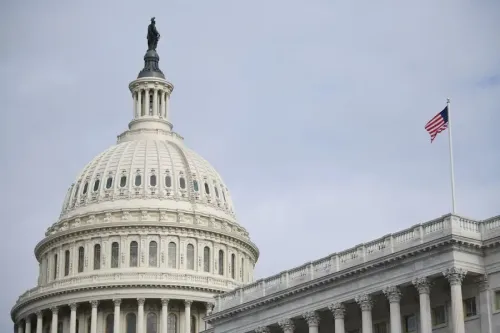
The warnings surfaced during a House Foreign Affairs Subcommittee hearing focused on Baltic security, where lawmakers from both parties described the three NATO frontline nations as among Washington's most committed allies in countering both Russian aggression and Chinese influence across Europe.
China's Role in Russia's War Machine
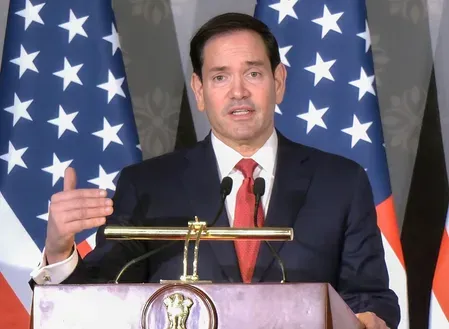
Deputy Assistant Secretary of State Christopher Smith told the subcommittee that China's material contribution to Moscow's war effort is substantial and well-documented. 'China provides about 80 per cent of dual use goods for the Russian defense industrial base,' Smith said. He added that Baltic governments were now 'drawing conclusions and cooling their economic relations with China as a result.'
This comes amid growing alarm across European capitals that Beijing has become an indispensable economic and technological lifeline for Moscow as the Ukraine conflict enters its fourth year. The dual-use goods pipeline — covering components with both civilian and military applications — has drawn particular scrutiny from Western intelligence services and trade regulators.
Taiwan, Lithuania, and Beijing's Retaliation
Republican Rep. Young Kim raised the case of Lithuania, which in 2021 allowed Taiwan to open a representative office under the name 'Taiwanese' — a move that triggered sharp diplomatic and economic retaliation from Beijing. Kim asked whether Vilnius was softening its position following recent comments by Lithuanian leaders about restoring ties with China.
Smith pushed back, saying Lithuania remained 'a leading voice' within Europe against Chinese economic coercion. 'My impression is the Baltic states, as they view their relationships with China, they are looking very carefully at China's support for Russia in Ukraine,' he said.
Baltic States as 'Model Allies'
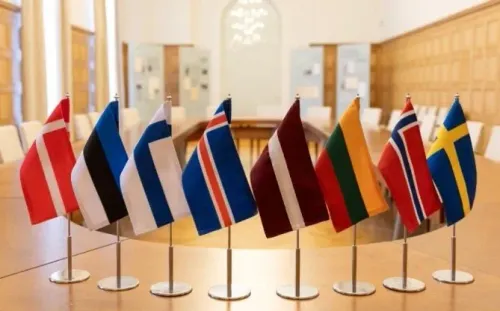
Lawmakers across party lines described Estonia, Latvia, and Lithuania as 'model allies' that have exceeded NATO defence spending benchmarks while providing substantial military and political support to Kyiv. The three countries — former Soviet republics that joined NATO in 2004 — have collectively donated significant portions of their defence budgets to Ukraine since Russia's full-scale invasion in 2022.
Smith confirmed that the Baltic states had already stripped many Chinese components from their communications infrastructure and were working with Washington on securing alternative supply chains.
China Watching Ukraine to Calibrate Taiwan Strategy
Ranking member Rep. William Keating raised the broader strategic dimension, noting that China was closely studying the Ukraine conflict and monitoring NATO's response on its eastern flank. 'Our strategic policy towards China is one of deterrence,' Keating said, asking whether Beijing was drawing lessons from Ukraine and the Baltics to shape its calculus on Taiwan.
Smith agreed, confirming that China was 'certainly studying the war in Ukraine.' Republican Rep. Randy Fine went further, arguing that China was becoming 'an enemy of these countries as well, even though it can seem very, very far away.'
As the Ukraine war continues and European governments reassess supply chain dependencies, the Baltic states' hawkish posture toward Beijing may increasingly serve as a template for broader European policy realignment.
Point of View
If accurate, represents a structural dependency that sanctions alone cannot easily sever — and the Baltic states appear to understand this better than most of Europe. Their decision to treat China ties as a national security variable, not merely a trade question, is a significant doctrinal shift that Brussels has yet to fully replicate. The Taiwan dimension adds a second layer: if Beijing is indeed studying NATO's eastern-flank response as a rehearsal for a Taiwan contingency, then Baltic resolve is not a regional story — it is a preview of the next global flashpoint. The subcommittee's bipartisan tone suggests Washington is coalescing around a harder China line in Europe, but the gap between congressional rhetoric and executive-branch policy bandwidth remains wide.
NationPress
2 Oct 2026
Frequently Asked Questions
Why are Baltic states cooling ties with China?
Lithuania, Latvia, and Estonia are reassessing economic relations with China because of Beijing's substantial support for Russia's defence sector during the Ukraine war. According to State Department officials, China supplies roughly 80 per cent of dual-use goods to Russia's defence industrial base, prompting the Baltic governments to treat trade ties with Beijing as a national security concern.
What did Deputy Assistant Secretary Christopher Smith say about China and Russia?
Smith told the House Foreign Affairs Subcommittee that China provides approximately 80 per cent of dual-use goods to Russia's defence industrial base. He said Baltic governments were 'drawing conclusions and cooling their economic relations with China as a result.'
How have the Baltic states responded to Chinese influence in the region?
Estonia, Latvia, and Lithuania have removed Chinese components from their communications infrastructure and are working with the United States on secure supply chains. They have also exceeded NATO defence spending targets and provided significant military support to Ukraine since Russia's full-scale invasion in 2022.
What is the connection between Ukraine and Taiwan raised at the hearing?
Ranking member Rep. William Keating raised concern that China is closely studying NATO's response to Russia's war in Ukraine to calibrate its own strategy toward Taiwan. Smith agreed that China was 'certainly studying the war in Ukraine,' suggesting the Baltic theatre has direct implications for Indo-Pacific security calculations.
Why did Lithuania face retaliation from China in 2021?
Lithuania allowed Taiwan to open a representative office under the name 'Taiwanese' in 2021, which Beijing viewed as a breach of its one-China policy and responded with sharp diplomatic and economic retaliation. Despite that pressure, State Department officials say Lithuania remains a leading European voice against Chinese economic coercion.