China rethinks education policy as enrolment drops by 17 million
Synopsis
China's classrooms are emptying at the bottom and overflowing at the top. Enrolment from kindergarten to junior high fell by nearly 17 million in 2021-25, yet high-school demand peaks around 2029 and university demand around 2032. Beijing is now moving resources upward and repurposing surplus school buildings instead of closing them.
Key Takeaways
Enrolment in kindergartens, primary and junior high schools in China fell by nearly 17 million between 2021 and 2025 , according to NDRC officials.
The NDRC calls the enrolment imbalance a key challenge for the 15th Five-Year Plan (2026-2030) .
High-school enrolment is expected to peak around 2029 and university entrants around 2032 .
Surplus school buildings may be converted for labour education and arts instead of being closed.
China's population fell for a fourth straight year in 2025, to about 1.405 billion , with 7.92 million births against 11.31 million deaths.
The 16-59 age group fell by about 6.62 million to 60.6 per cent of the population.
China is reworking its education policy as falling birth rates thin out classrooms at the junior level while demand for high-school and university places keeps rising, according to reports. The imbalance has pushed Chinese authorities to move resources away from early education and towards higher learning. The National Development and Reform Commission (NDRC) has flagged it as a key challenge for the 15th Five-Year Plan (2026-2030).
Key Developments
Senior NDRC officials have said that supply-demand pressures in senior high schools and higher education are likely to increase over the plan period, Mekong News reported. The warning marks a shift in how Beijing views its education planning, which must now serve two very different population cohorts at the same time.
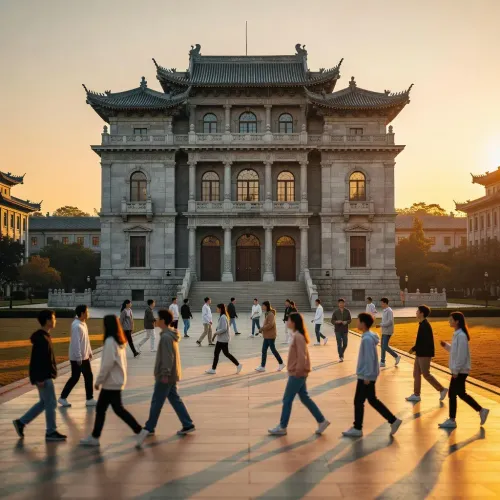
To meet the coming surge, the Chinese government plans to expand high-school capacity through new construction, renovation and more efficient use of existing infrastructure. The number of students seeking university admission is also expected to rise, especially at leading institutions.
Authorities plan to back research-oriented universities and specialised vocational colleges that offer undergraduate degrees, according to the report.
Uneven Impact of the Birth Decline
Although China's birth rate has fallen sharply, its effect on educational institutions has been uneven. High-school enrolment is expected to peak around 2029, while university entrants could reach their highest numbers around 2032, Mekong News reported.
At the lower end, the contraction is already visible. According to NDRC officials, enrolment in kindergartens, primary schools and junior high schools fell by nearly 17 million between 2021 and 2025.
Notably, Chinese authorities are not planning to shut down institutions. They are considering smaller class sizes and converting surplus school buildings into facilities for labour education, arts and other activities.
Population Decline Deepens
The education rethink comes amid a broader demographic contraction. China's population fell for a fourth consecutive year in 2025, according to data released by the National Bureau of Statistics (NBS), as reported by Asia Times.
Births in 2025 stood at 7.92 million, while deaths rose to 11.31 million. That produced a net population drop of 3.39 million, leaving China with a year-end population of about 1.405 billion.
Impact on the Workforce
People aged 16-59 years made up 60.6 per cent of China's population in 2025, compared with 60.9 per cent a year earlier, according to Asia Times. The total in this age group fell by about 6.62 million year on year.
The figures point to a structural challenge for Chinese authorities. Labour supply is tightening even as the country records gains in education, skills and productivity.
What Happens Next
With high-school demand set to peak around 2029 and university demand around 2032, the coming years will test whether Beijing can expand capacity at the top without overbuilding for cohorts that will shrink soon after. How the 15th Five-Year Plan balances these pressures will shape China's talent pipeline for the next decade.
Point of View
Which still has a young population, the lesson is to plan school infrastructure for cohort cycles rather than permanent expansion. The sharper story is the working-age squeeze, because more graduates cannot fully offset a labour pool losing 6.62 million people a year.
NationPress
26 Nov 2026
Frequently Asked Questions
Why is China changing its education policy?
China is changing its education policy because falling birth rates have cut enrolment in early schooling while demand for high-school and university places keeps rising. Authorities are shifting resources from early education towards higher learning.
How much has school enrolment fallen in China?
Enrolment in kindergartens, primary schools and junior high schools fell by nearly 17 million between 2021 and 2025, according to NDRC officials.
When will China's high-school and university demand peak?
High-school enrolment is expected to peak around 2029, while university entrants could reach their highest numbers around 2032, according to reports.
What will China do with surplus school buildings?
Chinese authorities are considering converting surplus school buildings into facilities for labour education, arts and other activities instead of closing them. Smaller class sizes are also being considered.
How much did China's population fall in 2025?
China's population fell by 3.39 million in 2025, its fourth consecutive annual decline, to about 1.405 billion. Births stood at 7.92 million against 11.31 million deaths, according to National Bureau of Statistics data.