China widens export curbs on AI, drones and biotech to build geopolitical leverage

Synopsis
China is no longer just the target of Western export controls — it has become a practitioner, expanding restrictions to AI, biotech, drones, and rare earths to coerce rivals. India, Japan, and the EU are all in its crosshairs, raising the spectre of a world economy split into competing industrial blocs.
Key Takeaways
China has expanded its export-control regime to cover AI , advanced drones , biotechnology , photovoltaic manufacturing , and tunnel-boring machinery , according to an analysis in The Diplomat .
Beijing's near-monopoly on rare-earth processing gives it leverage over EVs , wind turbines , electronics , and defence manufacturing globally.
China has reportedly restricted key exports to India to hinder its rise as an alternative manufacturing hub.
Export curbs targeting Japan are aimed at undermining Tokyo's defence industry build-up, while the EU faces risks to its EV and renewable energy sectors.
Analysts warn the controls could backfire by accelerating global supply-chain diversification away from China.
The normalisation of economic coercion by both China and the US risks splitting the global economy into rival technological blocs.
China has significantly expanded its export-control regime to cover a sweeping range of civilian and strategic technologies, mirroring tactics long used by the United States — but now deployed as an instrument of geopolitical coercion, according to an analysis published in The Diplomat. The move signals that Beijing is no longer merely reacting to Washington's technology restrictions; it is actively weaponising its own industrial dominance.
What the New Controls Cover
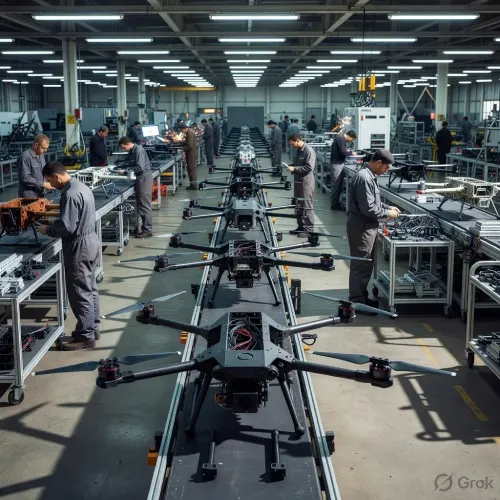
The expanded controls, announced last month, extend well beyond traditional military and dual-use categories. They now encompass artificial intelligence, tunnel-boring and excavation machinery, specialised maritime and dredging equipment, photovoltaic manufacturing technologies, advanced drones and navigation systems, and biotechnology — including cell and gene therapies and genetic-modification processes.
Virtually any industrial capability that gives China a competitive edge is being recast as a national-security asset and subjected to export curbs, according to the analysis. The breadth of the new regime suggests a deliberate strategy to convert commercial dominance into diplomatic leverage.
China Mirrors the US Playbook
The irony is striking: Beijing has repeatedly accused Washington of strengthening its own 'technological hegemony' in violation of free-trade principles. Yet China's export-control architecture is, in key respects, modelled on the very US system it criticises. Just as the US leverages its market size and technological leadership for geopolitical ends, China is now leveraging its stranglehold over critical minerals, industrial inputs, and specialised capital goods.
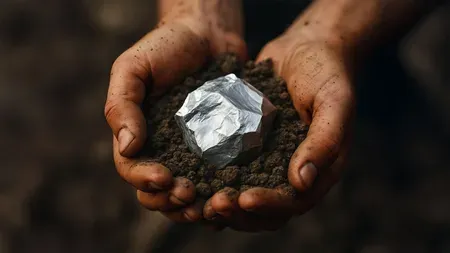
China's near-monopoly on rare-earth processing and refining is the clearest example of this leverage. It gives Beijing outsized influence over vital high-tech industries, including electric vehicles (EVs), wind turbines, advanced electronics, and defence manufacturing, across multiple economies simultaneously.
India and Japan in the Crosshairs
China is not reserving these trade weapons solely for the US, according to the analysis. It has reportedly restricted exports of critical minerals, manufacturing equipment, tunnel-boring machines, industrial components, battery technologies, and lithium-ion-related inputs to India — in what analysts describe as a deliberate attempt to block India's emergence as an alternative global manufacturing hub.
Similarly, China has imposed export restrictions on Japan, often targeting Japanese firms with ties to the defence industry, with the apparent aim of undermining Tokyo's efforts to rebuild its military capability. The European Union is also vulnerable, with potential disruptions to EV production, renewable energy projects, defence manufacturing, and major infrastructure investments, the analysis warns.
Long-Term Risks and Global Supply Chain Fallout
Analysts cited in The Diplomat piece caution that China's expanding export-control regime could ultimately prove counterproductive. By wielding economic coercion so visibly, Beijing is accelerating the global effort to reduce dependence on its industrial ecosystem. Governments are intensifying investments to diversify mineral supply chains, build domestic processing capacity, subsidise strategic industries, and shift manufacturing to what they consider more reliable partners.
However, considerable damage may occur in the interim. The normalisation of economic coercion by both China and the United States is threatening to fracture a global trading system built on interdependence. Fragile supply chains are already the first casualty, and the longer-term risk is a world economy divided into competing technological and industrial blocs — a scenario with no clear winners.
As both Washington and Beijing entrench their rival control regimes, the countries caught in the middle — including India, Japan, and the EU — face mounting pressure to pick sides or accelerate self-sufficiency at significant economic cost.
Point of View
Targeting India with restrictions on critical minerals and battery inputs is a direct play to stifle a competitor before it reaches escape velocity — suggesting China's industrial policy and its foreign policy are now one and the same instrument. The long-run irony is that the more aggressively China deploys these controls, the faster it accelerates the very diversification drive it seeks to prevent. The real question for New Delhi is whether India's domestic mineral-processing and battery-manufacturing push is moving quickly enough to outrun the squeeze.
NationPress
20 Nov 2026
Frequently Asked Questions
What new export controls has China announced?
China has expanded its export-control regime to cover artificial intelligence, tunnel-boring machinery, maritime and dredging equipment, photovoltaic manufacturing technologies, advanced drones, navigation systems, and biotechnology including gene therapies. The controls go well beyond traditional military categories, recasting virtually any area of Chinese industrial competitive advantage as a national-security asset.
Why is China imposing these export restrictions?
According to an analysis in The Diplomat, China is leveraging its dominance in critical minerals, industrial inputs, and specialised capital goods as geopolitical tools — mirroring US export-control tactics while publicly criticising them. The controls are used to coerce rivals, punish strategic competitors, and block the rise of alternative manufacturing hubs.
How do China's export curbs affect India?
China has reportedly restricted exports of critical minerals, manufacturing equipment, tunnel-boring machines, battery technologies, and lithium-ion-related inputs to India. Analysts say this is a deliberate effort to block India's emergence as an alternative global manufacturing hub that could reduce dependence on Chinese supply chains.
Which other countries are affected by China's export controls?
Japan and the European Union are also affected. China has targeted Japanese firms linked to the defence industry to pressure Tokyo's military build-up. The EU faces potential disruptions to EV production, renewable energy projects, defence manufacturing, and major infrastructure investments due to China's control over critical mineral supplies.
Could China's export restrictions backfire?
Analysts cited in The Diplomat argue that Beijing's expanding controls could prove counterproductive in the long run, as they accelerate global efforts to diversify mineral supplies, build domestic processing capacity, and shift manufacturing away from China. However, significant economic damage may occur before those alternative supply chains are fully established.