China youth unemployment crisis: AI adoption displaces millions of programmers
Synopsis
China's programmer workforce — once 7 to 9.4 million strong — is being hollowed out by AI that now writes up to 90 per cent of code at major tech firms. With no retraining schemes and allegedly obscured unemployment data, the CCP's AI triumphalism is producing a structural jobs crisis for the very generation that built China's digital economy.
Key Takeaways
China has an estimated 7 to 9.4 million programmers , millions of whom face obsolescence as AI takes over coding tasks.
By mid-2026 , AI-generated code reached 90 per cent of total output at some major Chinese tech firms, up from 20–30 per cent in 2025.
Mass layoffs have been reported across Alibaba , Tencent , ByteDance , Meituan , and JD.com .
The CCP has no parallel policy to retrain displaced workers or expand social safety nets, according to the report.
Displaced programmers are reportedly retraining as electricians, plumbers, and carpenters, echoing Nvidia CEO Jensen Huang 's prediction about trade demand in the AI era.
China's slowing economy, declining real estate sector, and shifting supply chains further limit re-employment options for new graduates.
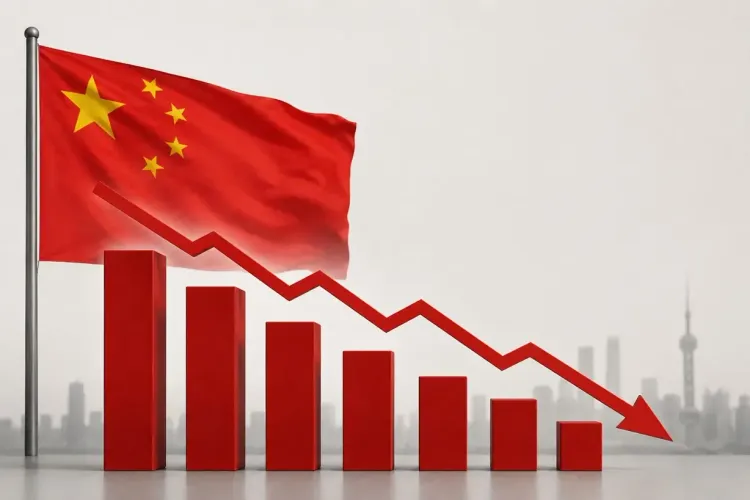
China's youth unemployment crisis has evolved from a cyclical downturn into a structural transformation, as runaway artificial intelligence (AI) adoption hollows out the country's once-thriving programmer workforce — while the Chinese Communist Party (CCP) offers no meaningful retraining programmes, alternative employment pathways, or expanded social safety nets, according to a new report.
The Scale of Displacement
China is home to an estimated 7 to 9.4 million programmers. As recently as 2025, large internet companies reported that between 20 and 30 per cent of their code was AI-generated. By mid-2026, that share had surged to 90 per cent in some firms, rendering the skills of millions of human programmers effectively obsolete almost overnight.
According to the report, platforms including Alibaba, Tencent, ByteDance, Meituan, and JD.com have made mass layoffs routine. “What was once a respected, high-paying career path has become a precarious existence, marked by layoffs, shrinking opportunities, and a pervasive sense of despair,” the report noted.
Government Inaction and Obscured Data
Critics argue the CCP has prioritised technological advancement as a symbol of national prestige without a parallel policy framework to absorb the human cost. The report alleges that Beijing “obscures real unemployment figures, presenting an overly optimistic picture while millions of young professionals spiral into uncertainty.”
Notably, China's official youth unemployment data has faced persistent questions from economists and analysts, who argue that the headline numbers exclude key categories of jobseekers, including rural migrants and those who have stopped looking for work.
Where Displaced Workers Are Turning
Faced with repeated layoffs, a portion of former programmers have reportedly returned to their hometowns and retrained in trades such as electrical work, plumbing, and carpentry — a shift that echoes Nvidia chief executive Jensen Huang's widely cited prediction that tradespeople will be among the highest-demand workers in the AI era.
However, the report cautions that China's slowing economy, a declining real estate sector, and shifting global supply chains collectively narrow the opportunities available even to those willing to pivot careers.
A Generation Under Pressure
Beyond unemployment statistics, the report points to a broader psychological toll. The atmosphere of collective anxiety has, it argues, transformed workplaces “into pressure cookers, where survival depends not on skill but on whether someone else is forced out first.”
The CCP's embrace of AI as a flagship of national progress, critics contend, has come at the direct expense of the graduate generation that powered China's digital economy — a cohort now confronting diminished prospects with little institutional support. As AI capabilities continue to advance, the structural pressures on China's young workforce are unlikely to ease without deliberate intervention.
Point of View
But without Beijing's additional layer of data opacity and absence of independent trade unions to represent displaced workers.
NationPress
10 Oct 2026
Frequently Asked Questions
Why is China's youth unemployment considered a structural crisis rather than a temporary problem?
China's youth unemployment crisis is described as structural because AI adoption has permanently displaced millions of programmers, not merely paused their employment. With AI generating up to 90 per cent of code at some firms by mid-2026 and no government retraining programmes in place, the job losses are unlikely to reverse as the economy recovers.
How many programmers in China are affected by AI-driven job losses?
China has between 7 and 9.4 million programmers, and a significant portion of their roles have reportedly been rendered obsolete by AI tools. The transition from AI writing 20–30 per cent of code in 2025 to 90 per cent at some firms by mid-2026 has dramatically accelerated displacement.
Which Chinese tech companies have been linked to mass programmer layoffs?
Mass layoffs have been reported across major platforms including Alibaba, Tencent, ByteDance, Meituan, and JD.com, where AI tools have taken over a growing share of software development tasks.
What are displaced Chinese programmers doing after losing their jobs?
Reportedly, many displaced programmers have returned to their hometowns and retrained in trades such as electrical work, plumbing, and carpentry — consistent with Nvidia CEO Jensen Huang's widely cited view that tradespeople will be in high demand in the AI era.
How has the Chinese government responded to the youth unemployment crisis?
According to the report, the CCP has not introduced parallel policies to retrain displaced workers, create new employment avenues, or strengthen social safety nets. Critics also allege that official unemployment figures understate the true scale of the crisis by obscuring real data.