China's Tibet autonomy breach: How the 1951 Seventeen Point Agreement collapsed
Synopsis
Seventy years on, the Seventeen Point Agreement of 1951 remains a live indictment. Critics and analysts say Beijing signed explicit autonomy guarantees for Tibet — then spent eight years systematically dismantling them, culminating in the 1959 Lhasa Uprising and decades of cultural repression. The debate over whether this constitutes a violated international commitment is far from settled.
Key Takeaways
The Seventeen Point Agreement of May 1951 guaranteed Tibet regional autonomy, preservation of its political system, and protection of the Dalai Lama's authority under Chinese sovereignty.
Critics and analysts argue that Beijing systematically dismantled every major assurance between 1951 and 1959 through military coercion and political restructuring.
The Lhasa Uprising of March 1959 marked the definitive collapse of the autonomy framework, placing Tibet under direct CCP control.
During the Cultural Revolution , monasteries were reportedly destroyed en masse, religious practice was criminalised, and Tibetan cultural expression was severely restricted.
Beijing has since reframed the agreement in official narratives as evidence of Tibet's voluntary 'peaceful liberation,' marginalising references to unfulfilled autonomy guarantees.
According to a Eurasia Review report, the legacy of the broken agreement continues to shape global debates on human rights and self-determination.
China's handling of Tibet's autonomy is facing renewed international scrutiny, with critics and analysts arguing that Beijing systematically dismantled every major commitment enshrined in the Seventeen Point Agreement of May 1951 — a signed political document formally titled the Agreement of the Central People's Government and the Local Government of Tibet on Measures for the Peaceful Liberation of Tibet. According to a report by Eurasia Review, the collapse of those guarantees underpins contemporary arguments that China reshaped Tibet's political and cultural identity through 'force rather than consent.'
What the 1951 Agreement Promised
The Seventeen Point Agreement, signed in May 1951, contained explicit commitments: regional autonomy under Chinese sovereignty, preservation of Tibet's existing political system, protection of the Dalai Lama's authority, respect for religious beliefs and customs, and a guarantee that internal reforms would not be imposed by force. Beijing presented the agreement as a 'peaceful' framework for Tibet's incorporation into the People's Republic of China.
'Communist China presented the agreement as a peaceful framework for Tibet's incorporation into the People's Republic, and it contained explicit commitments... Yet within less than a decade, nearly every major assurance had been dismantled through military coercion, political restructuring, and systemic repression,' the Eurasia Review report stated.
The Road to the 1959 Lhasa Uprising
The Eurasia Review report traces a deliberate pattern of erosion between 1951 and 1959. Rather than a gradual drift, analysts argue the dismantling was systematic — driven by military coercion and political restructuring that progressively stripped Tibet's nominally autonomous institutions of any real authority.
The culmination came with the Lhasa Uprising of March 1959, which the report describes as a watershed moment that transformed Tibet 'from a nominally autonomous region into one subjected to direct Chinese Communist Party (CCP) control.' The direction of Tibetan political history from 1951 to 1959, the report argues, 'demonstrates that Beijing's guarantees of autonomy were not merely eroded over time but deliberately dismantled.'
Cultural Revolution and the Destruction of Tibetan Identity
Following the 1959 uprising, Beijing escalated political campaigns and accelerated Tibet's full integration into the Chinese state apparatus. The period of the Cultural Revolution proved particularly devastating — monasteries were reportedly destroyed on a vast scale, religious practice was criminalised, and Tibetan cultural expression was severely curtailed.
Critics argue that the governance pattern established during this period — marked by surveillance, cultural suppression, and restrictions on religious freedom — persists in various forms to the present day.
Beijing's Reinterpretation of History
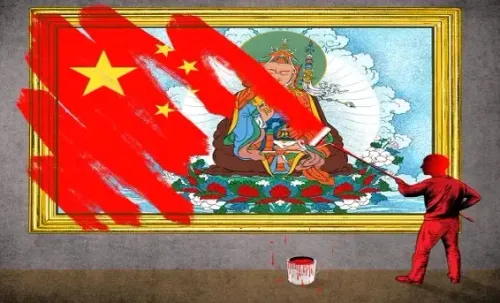
A significant dimension highlighted by the Eurasia Review report is Beijing's subsequent reframing of the agreement itself. Official Chinese narratives have increasingly portrayed the document not as a negotiated autonomy arrangement but as evidence of Tibet's voluntary acceptance of 'peaceful liberation.'
'References to the guarantees protecting Tibet's political system and the Dalai Lama's authority were marginalised or reframed as temporary transitional measures, reshaping the historical memory of the document to legitimise centralised CCP control rather than acknowledging unfulfilled commitments,' the report noted.
Global Implications
According to the report, the legacy of the broken agreement continues to shape international debates on Tibet, human rights, and self-determination. The question of whether the Seventeen Point Agreement constitutes evidence of a violated international commitment — or, as Beijing maintains, a completed transitional arrangement — remains a live fault line in diplomatic and human rights discourse. With global attention on China's governance record intensifying, Tibet's status is unlikely to recede from international agendas anytime soon.
Point of View
Then spent eight years unwinding. What the Eurasia Review analysis surfaces, and mainstream coverage often flattens, is the distinction between erosion and deliberate dismantlement: the report's case is that this was policy, not drift. Beijing's subsequent rewriting of the agreement's purpose — from negotiated autonomy to voluntary liberation — is itself a second-order violation, one that forecloses accountability by erasing the original terms of the deal. The broader pattern matters: if signed commitments can be retrospectively reframed as transitional measures, the precedent has implications well beyond Tibet for how China negotiates autonomy arrangements elsewhere.
NationPress
23 Sept 2026
Frequently Asked Questions
What was the Seventeen Point Agreement of 1951?
The Seventeen Point Agreement, signed in May 1951, was a political document between the Central People's Government of China and the Local Government of Tibet. It guaranteed Tibet regional autonomy, preservation of its existing political system, protection of the Dalai Lama's authority, and a commitment that internal reforms would not be imposed by force.
How did China allegedly violate the Seventeen Point Agreement?
According to a Eurasia Review report, Beijing dismantled nearly every major assurance in the agreement within a decade through military coercion, political restructuring, and systemic repression. The process culminated in the Lhasa Uprising of March 1959, after which Tibet was placed under direct CCP control.
What happened to Tibet during the Cultural Revolution?
During the Cultural Revolution, monasteries in Tibet were reportedly destroyed on a vast scale, religious practice was criminalised, and Tibetan cultural expression was severely restricted. Critics argue this period entrenched a governance pattern — marked by surveillance and cultural suppression — that persists in various forms today.
How has Beijing reinterpreted the 1951 agreement?
Official Chinese narratives have increasingly portrayed the Seventeen Point Agreement not as a negotiated autonomy arrangement but as evidence of Tibet's voluntary acceptance of 'peaceful liberation.' References to autonomy guarantees and the Dalai Lama's authority have been marginalised or reframed as temporary transitional measures, according to the Eurasia Review report.
Why does the 1951 Tibet agreement still matter today?
The legacy of the agreement continues to shape international debates on Tibet, human rights, and self-determination. The question of whether Beijing violated binding commitments — or completed a transitional arrangement, as it maintains — remains a contested issue in diplomatic and human rights discourse globally.