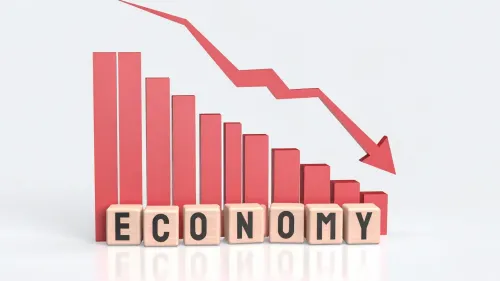
China's consumer-led growth has failed, says ex-Morgan Stanley economist
Synopsis
China's household consumption share of GDP in 2024 is almost identical to 2005 levels — the very benchmark that Premier Wen Jiabao flagged as a crisis two decades ago. Former Morgan Stanley chief economist Stephen Roach argues that nothing has changed, and that Beijing's failure to rebalance could push China's global manufacturing share to 45 per cent by 2030, triggering a protectionist backlash worldwide.
Key Takeaways
China's retail sales fell 0.6 per cent year-on-year in May 2026 — the first monthly decline in three and a half years .
Former Morgan Stanley Chief Economist Stephen Roach argues China's consumer-led growth pivot has definitively failed.
Household consumption as a share of GDP was 39.9 per cent in 2024 , barely above the 39.8 per cent level Premier Wen Jiabao flagged as a structural problem in 2005 .
Roach warns China's manufacturing share of global output could reach 45 per cent by 2030 , risking a global protectionist backlash, particularly from Europe .
China faces compounding headwinds: a property crisis, low household income share, post-Covid scarring, demographic pressure, and high youth unemployment.
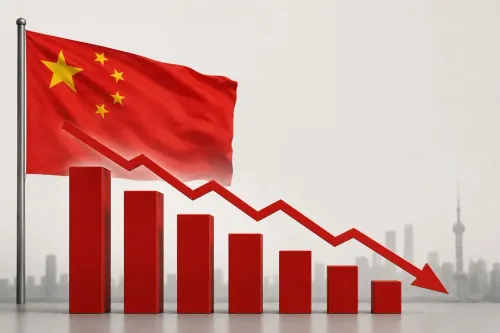
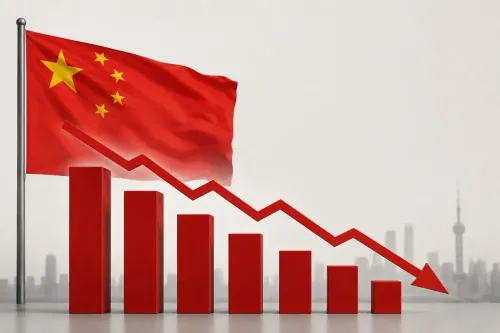
China's retail sales contracted 0.6 per cent year-on-year in May 2026 following a weak April, marking the first monthly decline in three and a half years — a data point that Stephen Roach, former Chief Economist and Asia Chair at Morgan Stanley, says confirms what policymakers have long resisted acknowledging: China's decade-long pivot toward consumer-led growth has failed.
Roach made the assessment in a post on his Substack account, offering one of the sharpest critiques yet of Beijing's structural rebalancing effort.
Why the Growth Model Broke Down
According to Roach, the failure stems from a fundamental income distribution problem. The Chinese state, state-owned enterprises (SOEs), and private firms have captured a disproportionate share of national income, leaving ordinary households with too little to spend. The result is a consumption base too narrow to sustain domestic demand.
The numbers bear this out. Household consumption as a share of nominal GDP stood at 39.9 per cent in 2024 — nearly identical to the 39.8 per cent recorded in 2005, the very level that then-Premier Wen Jiabao identified as a critical structural weakness of the Chinese economic model. Two decades of reform have produced no measurable shift.
Roach went further, arguing that given the 'protracted weakness in Chinese consumption in 2025 and early 2026, there is good reason to believe that the current ratio of household consumption to GDP has fallen below the Wen 2005 benchmark,' according to the post.
The Export Dependency Trap
Weak domestic consumption, Roach argues, will compel China to lean even harder on exports and fixed investment to hit its growth targets. He warned that this trajectory could push China's share of global manufacturing to 45 per cent by 2030 — a concentration that would be unprecedented in modern economic history.
Such an outcome, he contended, would leave the rest of the world — particularly Europe — with little option but to pursue anti-China protectionism. This comes amid an already fractious global trade environment, with tariff tensions between major economies running high.
What Should Have Happened
Roach argued that a structural shift away from export-led growth was warranted long ago. The prescription he outlined involves redirecting China's excess savings toward 'saving absorption' — policies that would reduce the current account surplus and fund a larger social safety net, thereby giving households both the means and the confidence to spend.
That transition never materialised. Instead, China faces what Roach describes as a convergence of structural headwinds: a protracted property crisis, a low household income share of GDP, post-Covid scarring effects, adverse demographic shifts, and persistently high youth unemployment.
Pushback and Counterarguments
Roach acknowledged that some analysts dismiss the consumer-led rebalancing failure as a 'statistical mirage,' arguing that official figures exclude government support for education, healthcare, cultural amenities, and subsidised food — support that effectively supplements household welfare even if it does not show up in consumption data. He did not find this rebuttal persuasive, given the persistence of the underlying ratios.
What to Watch
With retail sales now contracting and the household consumption-to-GDP ratio potentially below its 2005 floor, the pressure on Beijing to deliver a credible domestic demand stimulus is intensifying. Whether China responds with structural income redistribution or doubles down on export and investment-led growth will have significant consequences for global trade balances and protectionist sentiment well beyond its borders.
Point of View
And European protectionism would be the least of the consequences. What mainstream coverage tends to underplay is that this is not a cyclical stumble — it is a policy choice, repeated across administrations, to protect state and corporate income at the expense of household purchasing power. Until that distribution problem is addressed, no stimulus package will substitute for a social safety net that gives Chinese households the security to spend.
NationPress
29 Jun 2026
Frequently Asked Questions
What did Stephen Roach say about China's economy?
Stephen Roach, former Chief Economist and Asia Chair at Morgan Stanley, argued in a Substack post that China's prolonged effort to shift toward consumer-led growth has failed. He cited the May 2026 retail sales contraction and a two-decade stagnation in the household consumption share of GDP as evidence.
How much did China's retail sales fall in May 2026?
China's retail sales declined 0.6 per cent year-on-year in May 2026, following a weak April. This marked the first monthly contraction in three and a half years, according to Roach's analysis.
What is the significance of China's household consumption share of GDP?
China's household consumption accounted for 39.9 per cent of nominal GDP in 2024 — almost unchanged from 39.8 per cent in 2005, the level Premier Wen Jiabao identified as a major structural problem. Roach argues the ratio may have fallen even further given weakness in 2025 and early 2026.
Why does China's manufacturing growth concern the rest of the world?
If weak domestic consumption forces China to rely on exports and investment, its share of global manufacturing could reach 45 per cent by 2030, according to Roach. This would likely prompt anti-China protectionist responses, particularly from Europe, with ripple effects across global trade.
What structural reforms does Roach say China should have pursued?
Roach argued that China should have redirected excess savings toward policies that reduce the current account surplus and fund a broader social safety net, giving households both the income and the security to consume more. That transition, he contends, was never meaningfully implemented.