China treats Iran as second-tier partner, not ally: West Asia conflict exposes limits
Synopsis
When Israel and the US struck Tehran’s top leadership, China sent nothing — no ships, no missiles, no soldiers. A new analysis lays out why: Beijing’s 25-year partnership with Iran has no mutual defence clause, over 60% of Chinese arms go to Pakistan, and China quietly built a 1.2-billion-barrel oil reserve on discounted Iranian crude. The conflict didn’t reveal a betrayal — it revealed the architecture was never an alliance to begin with.
Key Takeaways
China did not deploy any military assets after strikes killed Iran’s then-Supreme Leader Ayatollah Ali Khamenei , exposing the limits of their partnership.
The 25-year Comprehensive Strategic Partnership between China and Iran contains no mutual defence clause .
More than 60% of Chinese arms exports from 2020 to 2024 went to Pakistan , not Iran.
China reportedly stockpiled an estimated 1.2 billion barrels of oil — roughly 109 days of import cover — largely from sanctioned Iranian crude at discounts of $5–$15 per barrel below Brent.
Iran is expected to seek J-10C fighters , HQ-9 air-defence systems, and YJ-12 missiles from China post-conflict, according to Hudson Institute analyst Can Kasapoglu .
Chinese military commentators have warned Tehran that advanced jets would be ‘sitting ducks’ against Israel’s F-35I fleet without supporting battle-management networks.
China regards Iran as a second-tier strategic partner — far below Pakistan in its hierarchy of alliances — and the recent conflict in West Asia laid that asymmetry bare, according to an analysis published in the Middle East Monitor. When Israeli and American strikes killed Iran's then-Supreme Leader Ayatollah Ali Khamenei and senior military officials, Beijing did not dispatch a single warship, missile battery, or soldier in Tehran's defence.
A Hedge, Not an Alliance
Analyst Jasim Al-Azzawi, writing in the Middle East Monitor, argues that China's Iran posture is fundamentally transactional. “China’s Iran strategy is not an alliance. It is a hedge, calibrated to the barrel and the missile. Beijing will buy Iran’s oil at a discount, share intelligence and satellite access, dangle fighter jets, and lean on Moscow to keep Tehran diplomatically afloat — but it will not fire a shot on Tehran’s behalf, and it will not let its friendship with Iran cost it its far deeper relationship with Washington,” Al-Azzawi wrote.
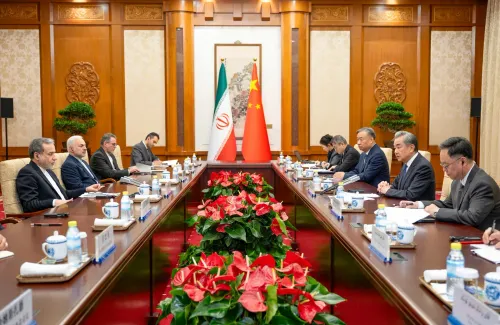
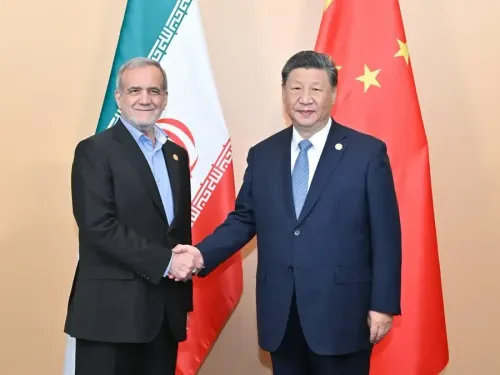
The 25-year Comprehensive Strategic Partnership signed between China and Iran — which Chinese state media once described as a “civilisational bond” — covers infrastructure, banking, energy, and “military-technical” cooperation. Critically, it contains no mutual defence clause, stopping well short of the ironclad commitments Beijing has extended to Pakistan or that Russia has pledged to North Korea.
Beijing’s Profitable Neutrality
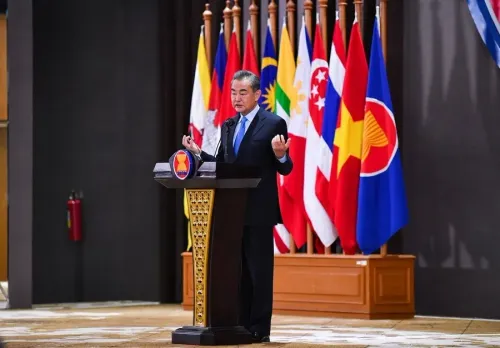
Chinese Foreign Minister Wang Yi condemned the killings during the West Asia conflict, calling it “a war that should never have happened and benefits no party” — a formulation that scholars at the Chicago Council on Global Affairs described as “not an outright condemnation of the United States or Israel, or indeed of Iran,” but rather “a more generalised statement of regret.”
Al-Azzawi characterised Beijing’s restraint as deliberate profit-seeking. China reportedly spent the better part of two years assembling one of the largest strategic petroleum reserves in its history — an estimated 1.2 billion barrels, equivalent to roughly 109 days of import cover — built substantially on sanctioned Iranian, Russian, and Venezuelan crude purchased at discounts of $5 to $15 a barrel below Brent. “Beijing’s caution was not cost-free neutrality; it was profitable neutrality,” Al-Azzawi noted.
Pakistan First: The Arms Data
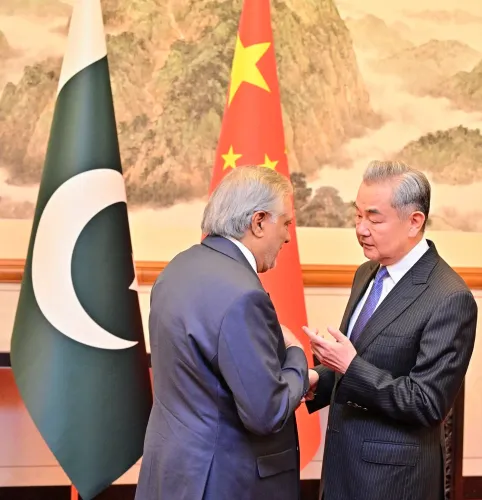
The disparity in China’s commitments is reflected in hard numbers. More than 60 per cent of all Chinese arms exports between 2020 and 2024 went to Pakistan, according to the report. Iran, by contrast, has been granted access to China’s BeiDou satellite positioning and navigation system, along with radar, electronic warfare, and intelligence support — significant, but well below the comprehensive military partnership Islamabad enjoys.
According to Hudson Institute analyst Can Kasapoglu, Iran is likely to seek J-10C fighters, HQ-9 strategic air-defence systems, YJ-12 anti-ship missiles, and components to rebuild the Islamic Revolutionary Guard Corps’ depleted ballistic missile arsenal from China in the aftermath of the conflict. However, even Chinese military commentators have publicly cautioned Tehran that the jets alone would be “sitting ducks” against Israel’s F-35I fleet without the broader sensor and battle-management network that makes the platform effective — a signal, Al-Azzawi argues, that Beijing calibrates every arms decision against the risk of provoking Israel and, above all, Washington.
Why Iran Still Matters to Beijing
Despite the hierarchy, China cannot afford to be indifferent to Iran’s fate. Iran sits at the geographic and ideological junction of two projects Beijing considers central to its global ambitions. Al-Azzawi warns that if Iran were to shift into a Western orbit, overland connectivity through the Belt and Road Initiative corridor would terminate at the Pakistani-Iranian frontier, cutting off land access to the oil-rich Gulf states. “For a project Xi Jinping has staked his legacy on, that is not an acceptable outcome,” he wrote.
The West Asia conflict has thus forced into the open a tension Beijing had long managed quietly: Iran is too strategically located to abandon, yet too costly to fully defend. How China navigates that contradiction in the months ahead will shape both its regional influence and its credibility as a security partner across the developing world.
Point of View
Expanded its strategic reserve to 1.2 billion barrels, and preserved its Washington relationship, all while Tehran burned. The 25-year partnership was always a commercial instrument dressed in civilisational language, and the absence of a mutual defence clause was the tell. What mainstream coverage misses is the implication for every other country in China’s ‘partnership’ portfolio: if Iran — with its oil, its geography, and its Belt and Road centrality — is not worth a single warship, the value of a Chinese security guarantee elsewhere deserves serious scrutiny.
NationPress
12 Jul 2026
Frequently Asked Questions
Why did China not intervene militarily when Iran’s Supreme Leader was killed?
China’s 25-year Comprehensive Strategic Partnership with Iran contains no mutual defence clause, meaning Beijing has no treaty obligation to fight on Tehran’s behalf. Analysts argue China’s posture toward Iran is a strategic hedge — focused on oil imports, satellite access, and diplomatic support — rather than a military alliance, with Beijing unwilling to risk its deeper relationship with Washington.
What is China’s Comprehensive Strategic Partnership with Iran?
It is a 25-year agreement covering infrastructure, banking, energy, and military-technical cooperation, signed between China and Iran and described by Chinese state media as a ‘civilisational bond.’ However, it stops short of a mutual defence commitment and does not carry the ironclad security guarantees China has extended to Pakistan or Russia has pledged to North Korea.
How does China’s relationship with Iran compare to its relationship with Pakistan?
Pakistan occupies a first-tier position in China’s strategic hierarchy, while Iran is considered a second-tier partner. More than 60% of all Chinese arms exports between 2020 and 2024 went to Pakistan. Iran has received satellite navigation access via BeiDou and some intelligence and radar support, but no comparable arms transfer volume or defence commitment.
What military equipment is Iran expected to buy from China after the conflict?
According to Hudson Institute analyst Can Kasapoglu, Iran is likely to seek J-10C fighter jets, HQ-9 strategic air-defence systems, YJ-12 anti-ship missiles, and components to rebuild the Revolutionary Guard’s ballistic missile arsenal. Chinese military commentators have nonetheless cautioned that the jets would be ineffective against Israel’s F-35I fleet without a broader battle-management network.
How did China benefit economically from the West Asia conflict?
China reportedly built one of the largest strategic petroleum reserves in its history during the period leading up to the conflict — an estimated 1.2 billion barrels, equal to about 109 days of import cover — by purchasing sanctioned Iranian, Russian, and Venezuelan crude at discounts of $5 to $15 per barrel below Brent. Analysts describe this as ‘profitable neutrality’ rather than genuine non-alignment.