Chinese AI firm MizarVision exposes Pakistan defence bases, naval assets
Synopsis
A Chinese commercial AI firm, MizarVision, has publicly released satellite imagery pinpointing Pakistan's air force base upgrades and the location of a stealth submarine docked at a Sri Lankan port — not as a leak, but apparently as a deliberate disclosure. That it remains accessible on Chinese platforms despite Beijing's censorship apparatus suggests this may be less a commercial stunt and more a calculated signal to Islamabad about who really holds the keys to Pakistan's operational secrecy.
Key Takeaways
MizarVision , a Chinese commercial AI and remote sensing firm, publicly released satellite imagery of Pakistani military installations and naval assets.
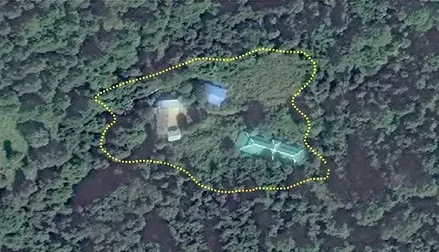
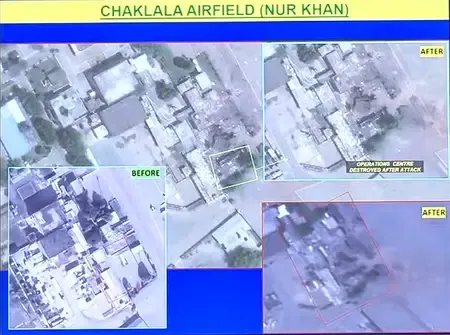
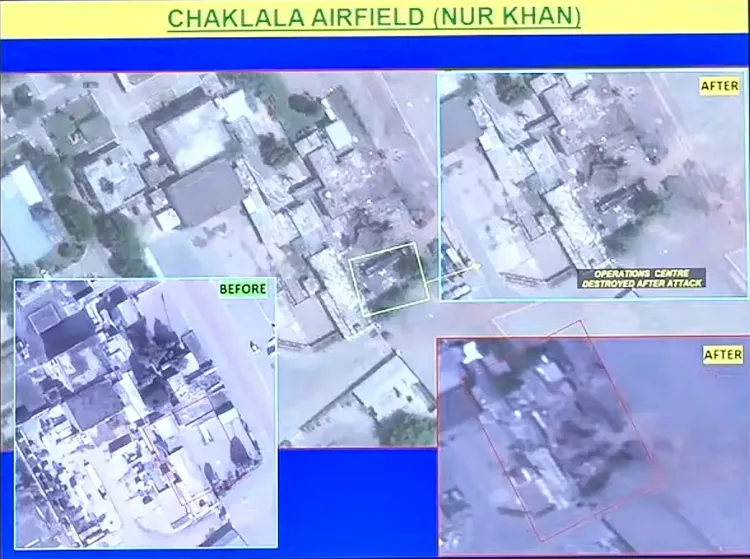
Overhead imagery captured on 15 April revealed a new reinforced concrete hangar at PAF Nur Khan base , sized to shelter 2–4 fighter aircraft including JF-17 Block III and J-10C jets.
Material dated 5 June exposed a Pakistani Agosta-90B submarine berthed at a Sri Lankan port , undermining the vessel's core operational advantage of stealth.
The hangar construction is reportedly adjacent to an Indian stand-off cruise missile impact point, indicating a reactive hardening measure.
Analysts note the disclosures remain accessible on Chinese platforms despite tight state censorship, suggesting possible alignment with Beijing's broader strategic objectives.
The episode signals to Islamabad that its defence assets 'possess little operational privacy,' raising questions about the terms of the China–Pakistan partnership.
A Chinese commercial AI and remote sensing firm has publicly released high-definition satellite imagery and automated intelligence assessments documenting sensitive Pakistani military installations and naval assets, in what a report published on Sunday, 14 June described as 'an extraordinary and highly calculated breach of operational security.' The disclosures, attributed to MizarVision, have surfaced in the global public domain — not through a Western intelligence operation or an Indian leak, but as a deliberate and granular disclosure originating from within China itself.
What MizarVision Released
MizarVision, a Chinese commercial remote sensing and AI intelligence platform, published overhead surveillance imagery and an automated AI object-detection assessment documenting 'sensitive developments' at two locations: the Pakistan Air Force (PAF) Nur Khan base and a Pakistan Navy task group berthed at a Sri Lankan port. The imagery was reportedly processed through an automated AI classification system capable of identifying and tagging individual military assets with precision.
PAF Nur Khan Base: Hangar Construction Flagged
Overhead surveillance captured on 15 April and processed through MizarVision's AI detection system revealed rapid construction activity at PAF Nur Khan base. According to the assessment, a reinforced concrete hangar measuring roughly 50–70 metres in length and 20–30 metres in width — designed to shelter between two and four medium multirole fighter aircraft — was under construction. The platform specifically identified the structure as intended to house Chinese-supplied JF-17 Block III and J-10C fighters, along with other high-value aviation assets. Notably, the construction site is reportedly adjacent to an impact point from an Indian stand-off cruise missile strike during recent hostilities, suggesting the hangar is a reactive hardening measure to reduce vulnerability.
Pakistan Navy Submarine Exposed at Sri Lankan Port
In material dated 5 June, MizarVision released high-resolution imagery showing a Pakistan Navy task group berthed at a Sri Lankan port. The platform's automated classification systems prominently identified a Pakistani Agosta-90B diesel-electric attack submarine operating alongside escort frigates — outlining and tagging the vessels with precision. The disclosure effectively exposed the submarine's location while deployed outside Pakistani waters, directly undermining its principal operational advantage: stealth. For a submarine force, public identification of position is a critical operational liability.
Why a Chinese Firm Is Exposing Pakistan's Vulnerabilities
The apparent paradox — a Chinese entity publicly revealing the vulnerabilities of Pakistan, widely described as Beijing's closest regional partner — has drawn significant analytical attention. According to the report, the most plausible explanation lies in the intense competition within China's military-industrial ecosystem, where commercial firms may be leveraging real-world demonstrations of capability to attract clients and contracts. However, the report also flags a more strategic dimension: 'The continued availability of these disclosures on Chinese platforms, despite China's tightly controlled information environment, suggests alignment with broader state objectives.' In other words, the fact that this content remains accessible within China's heavily censored digital landscape implies it has not been suppressed — and may serve a deliberate signalling purpose. The message to Islamabad, analysts suggest, is one of strategic vulnerability and technological dependence: that Pakistan's sensitive defence assets, including attack submarines, can be publicly located and identified, signalling that Islamabad 'possesses little operational privacy' vis-à-vis Beijing.
Broader Implications
This incident marks a rare instance of a commercial AI platform generating intelligence-grade assessments of a third country's military posture and releasing them publicly. It raises questions about the regulatory boundaries of commercial remote sensing, the dual-use nature of AI object-detection systems, and the extent to which state objectives can be pursued through nominally private firms. For Pakistan, the exposure arrives at a moment of heightened regional tension, compounding concerns about the reliability and terms of its defence partnership with China. The episode is likely to prompt fresh scrutiny of how commercial satellite and AI firms operate within authoritarian information environments.
Point of View
It would be — China's information controls are not accidental. The fact that satellite imagery of a Pakistani submarine's location and air force base construction is freely circulating on Chinese platforms is itself the message. This is coercive signalling dressed as commercial capability demonstration: Islamabad is being reminded, quietly but publicly, that its operational security is contingent on Chinese discretion. For Pakistan's military planners, that is a far more unsettling revelation than any Indian or Western intelligence disclosure could be, because it comes from the one partner they cannot afford to alienate.
NationPress
21 Sept 2026
Frequently Asked Questions
What did Chinese AI firm MizarVision expose about Pakistan?
MizarVision publicly released high-definition satellite imagery and AI-generated assessments documenting sensitive Pakistani military sites, including construction activity at PAF Nur Khan base and the location of a Pakistan Navy Agosta-90B submarine berthed at a Sri Lankan port. The disclosures were described as a deliberate and granular breach of operational security.
What was revealed about PAF Nur Khan base?
Satellite imagery captured on 15 April showed rapid construction of a reinforced concrete hangar measuring roughly 50–70 metres in length at PAF Nur Khan base, designed to shelter 2–4 fighter aircraft including Chinese-supplied JF-17 Block III and J-10C jets. The site is reportedly adjacent to an Indian cruise missile impact point, suggesting the hangar is a defensive hardening measure.
How was the Pakistan Navy submarine exposed?
In imagery dated 5 June, MizarVision's automated classification system identified and tagged a Pakistani Agosta-90B diesel-electric attack submarine berthed at a Sri Lankan port alongside escort frigates. The public disclosure of its location while deployed outside Pakistani waters directly undermined the submarine's primary operational advantage — stealth.
Why would a Chinese firm expose Pakistan's military vulnerabilities?
Analysts offer two explanations: intense commercial competition within China's military-industrial ecosystem, where firms demonstrate AI capabilities using real-world targets; and possible alignment with Chinese state objectives. The fact that the disclosures remain accessible on China's tightly censored platforms suggests the state has not moved to suppress them, implying tacit approval or deliberate signalling to Pakistan.
What does this mean for the China–Pakistan relationship?
The episode signals that Pakistan's sensitive defence assets — including submarines and air force infrastructure — can be publicly identified by Chinese commercial platforms, effectively communicating that Islamabad has limited operational privacy from Beijing. Analysts say this reflects a power asymmetry within the partnership that Pakistan may find difficult to address.