China's port expansion in Spain raises EU security alarms near NATO naval base
Synopsis
A Chinese state-owned carmaker's plan to build facilities at the access point for Spanish warships in Ferrol — home to the Spanish Navy and Navantia — has crystallised EU fears about Beijing's commercial port footprint doubling as a strategic lever. With COSCO already controlling terminals in Valencia, Bilbao, and Tarragona, the EU is racing to close a policy gap it arguably left open for years.
Key Takeaways
SAIC Motor , a Chinese state-owned carmaker, plans industrial facilities at the access point used by Spanish warships near the Ferrol naval base in Galicia .
COSCO acquired a majority stake in Spanish terminal operator Noatum in 2017 , gaining control of terminals in Valencia , Bilbao , and later Tarragona .
Port security expert Alberto Camarero Orive of Madrid's Polytechnic University called Ferrol 'a highly sensitive strategic zone' with direct NATO ties.
The European Commission is preparing guidelines for EU states to assess third-country influence over port operations.
27 EU transport ministers last week backed the Commission's Ports Strategy , flagging the need to prevent undue foreign control of critical port infrastructure.
China's expanding commercial presence in Spanish ports is drawing sharp scrutiny from European Union security experts, after a Chinese state-owned carmaker selected a site adjacent to the Ferrol naval base in Galicia for new industrial facilities, according to a report by Euractiv. Analysts warn that commercial infrastructure positioned near critical naval installations could be exploited for military or intelligence purposes in a future crisis.
Why Ferrol Is a Flashpoint
The Port of Ferrol is no ordinary commercial hub. It houses the headquarters of the Spanish Navy and national shipbuilder Navantia, and serves as a strategically vital node for NATO operations. The Chinese carmaker — identified as SAIC Motor — reportedly plans to build industrial facilities at the very access point used by Spanish warships, a detail that has alarmed defence analysts.
Alberto Camarero Orive, a port security and logistics expert at Madrid's Polytechnic University, described Ferrol as 'a highly sensitive strategic zone' given its naval facilities, active Navy operations, and deep NATO ties. 'In a scenario of international crisis, geopolitical tension, or hybrid conflict, a port terminal can become a point of vulnerability,' he said, calling for a strict precautionary approach.
COSCO's Grip on Spanish Terminals
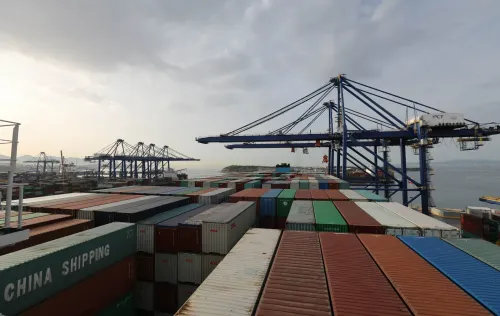
The Ferrol development is part of a broader pattern. In 2017, Chinese shipping giant COSCO acquired a majority stake in Noatum, a Spanish container terminal operator, securing control over critical terminals in Valencia and Bilbao. The company subsequently extended its reach to two inland rail terminals in Madrid and Zaragoza, and most recently added Tarragona — located approximately 100 km south of Barcelona — to its portfolio.
Camarero noted that by controlling key Spanish terminals, Chinese companies can integrate into global shipping networks, secure supply chains, and gain valuable 'bargaining power' over shipping lines, shippers, and regulators. The cumulative effect, experts argue, is a structural deepening of China's connectivity with Europe that goes well beyond commercial logic.
EU's Policy Response
The European Commission is now preparing guidelines to assist EU member states in assessing third-country influence over port operations. Last week, the EU's 27 transport ministers collectively welcomed the Commission's Ports Strategy, explicitly raising the need 'to avoid undue foreign ownership or control of critical port infrastructures and operations.'
This comes amid a broader EU-wide reckoning over critical infrastructure vulnerabilities, following years of concern about Chinese investment in European telecoms, energy grids, and logistics networks. The ports question, critics argue, has been addressed too slowly given how much ground has already been ceded.
What Happens Next
The Commission's forthcoming guidelines are expected to give EU capitals a clearer framework for screening and potentially restricting foreign acquisitions of port assets. Whether member states — some of which have actively courted Chinese investment — will apply those guidelines uniformly remains an open question. For Spain in particular, the decisions made around Ferrol in the coming months could set a precedent for how the bloc handles similar cases across its Atlantic and Mediterranean coastline.
Point of View
Not guardrails. The Ferrol case is more acute because the proximity to a NATO naval facility and a national shipbuilder removes the ambiguity that softer commercial cases carry. What is missing is enforcement teeth: the forthcoming Commission framework will only matter if member states are legally obligated to act on it, not merely invited to consider it. Spain's choices around Ferrol will reveal whether the EU's new ports rhetoric translates into actual strategic discipline.
NationPress
23 Sept 2026
Frequently Asked Questions
Why is China's presence in Spanish ports a security concern?
Security experts warn that Chinese commercial infrastructure near key naval facilities — such as the Port of Ferrol, which hosts the Spanish Navy and serves NATO operations — could be exploited for military or intelligence purposes during a geopolitical crisis. The concern is that commercial control of port access points gives a foreign state-owned entity potential leverage over critical military logistics.
What is COSCO's role in Spanish port infrastructure?
Chinese shipping giant COSCO acquired a majority stake in Spanish terminal operator Noatum in 2017, giving it control over major container terminals in Valencia and Bilbao, two inland rail terminals in Madrid and Zaragoza, and most recently the port of Tarragona, approximately 100 km south of Barcelona.
What is SAIC Motor planning near the Ferrol naval base?
SAIC Motor, a Chinese state-owned carmaker, reportedly plans to build industrial facilities at the access point used by Spanish warships near the Ferrol naval base in Galicia. Ferrol also hosts the headquarters of the Spanish Navy and national shipbuilder Navantia, making the site strategically sensitive.
How is the EU responding to Chinese influence over European ports?
The European Commission is preparing guidelines to help EU member states evaluate third-country influence over port operations. The EU's 27 transport ministers last week welcomed the Commission's Ports Strategy, which specifically calls for avoiding undue foreign ownership or control of critical port infrastructure.
Who raised the alarm about Ferrol's strategic sensitivity?
Alberto Camarero Orive, a port security and logistics expert at Madrid's Polytechnic University, described Ferrol as a highly sensitive strategic zone due to its naval facilities, active Navy operations, and NATO ties, and called for a strict precautionary approach to foreign commercial activity in the area.