Balochistan instability threatens China's CPEC, Gwadar investments: Report
Synopsis
A geopolitical analysis in the Times of Israel warns that Balochistan's increasingly sophisticated insurgency is no longer just Pakistan's internal problem — it directly threatens China's CPEC corridor and Gwadar Port, Beijing's gateway to the Arabian Sea. The author raises the striking possibility that China may eventually back a Baloch government over Islamabad to protect its investments.
Key Takeaways
Geopolitical expert Sergio Restelli warns in the Times of Israel that Balochistan 's insurgency is threatening China's CPEC investments and Gwadar Port .
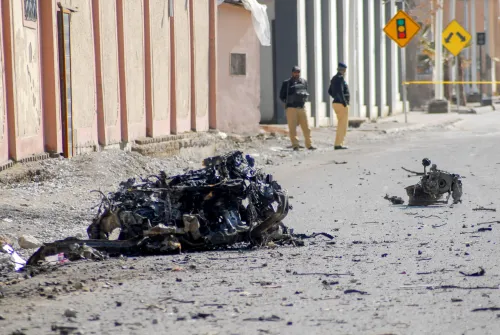
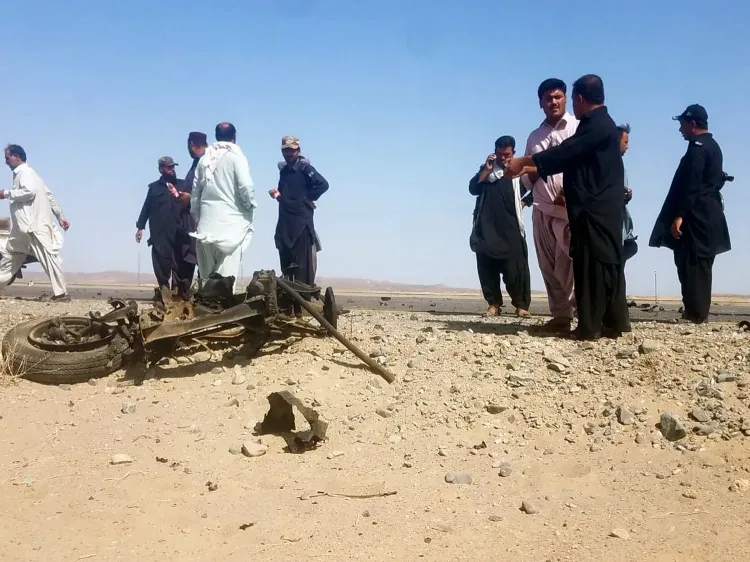
The Baloch insurgency has grown 'markedly more capable,' with large-scale coordinated attacks on security forces, infrastructure, and Chinese interests, according to the report.
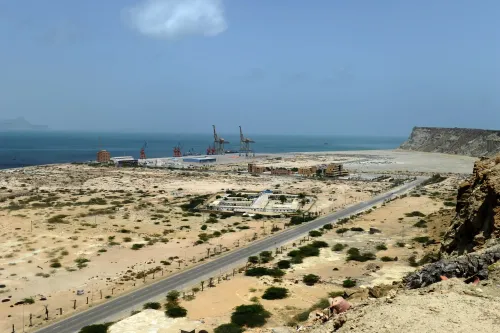
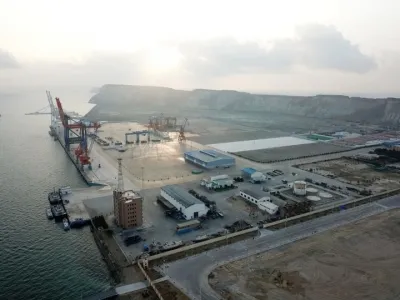
CPEC passes largely through Balochistan , making Gwadar Port — a flagship Belt and Road Initiative project — directly exposed to separatist disruption.
Restelli suggests China may eventually distance itself from Islamabad and tacitly support a Baloch government capable of guaranteeing its investments.
Field Marshal Asim Munir is described as consolidating control over Pakistani governance, with the Sharif family providing a 'token civilian government.' The conflict involving Iran adds a further layer of regional uncertainty, potentially compounding questions of sovereignty across the broader area.
Persistent instability in Balochistan is endangering one of China's most strategically significant overseas investments — the China-Pakistan Economic Corridor (CPEC) — as Pakistan simultaneously battles a deepening economic crisis, escalating ethnic tensions, and a markedly more capable Baloch insurgency, according to an analysis published in the Times of Israel. The assessment was authored by Sergio Restelli, an Italian political advisor, author, and geopolitical expert.
A State Under Simultaneous Pressure
Restelli's analysis paints a picture of a Pakistani state stretched thin on multiple fronts. A prolonged economic crisis has repeatedly pushed the country to the brink of insolvency, while deepening ethnic fault lines — particularly between the Punjabi-dominated state apparatus and communities such as the Pashtuns and the Balochs — continue to erode internal cohesion.
According to the report, the political structure itself is under strain. Field Marshal Asim Munir is described as attempting to consolidate control over all aspects of governance, with the Sharif family providing what Restelli characterises as a 'token civilian government.' The combination of economic constraints and political centralisation, the analysis argues, limits the state's room for manoeuvre at a critical juncture.
The Insurgency's Growing Operational Reach
'Much of the recent discussion has centred on reports circulating across social media and regional networks claiming that Baloch armed groups are exercising control over increasing stretches of territory inside Pakistan. These claims remain difficult to verify independently and should therefore be treated with caution. What is beyond dispute, however, is that the operational sophistication of the insurgency has increased markedly,' Restelli wrote.
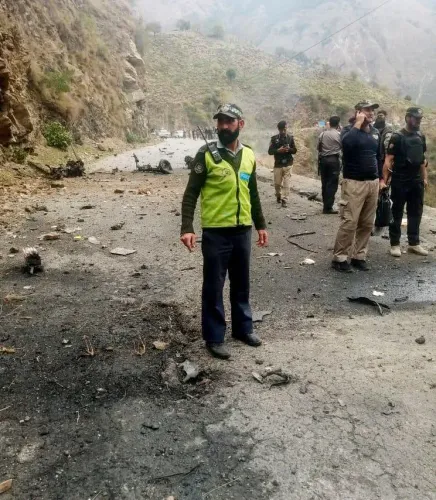
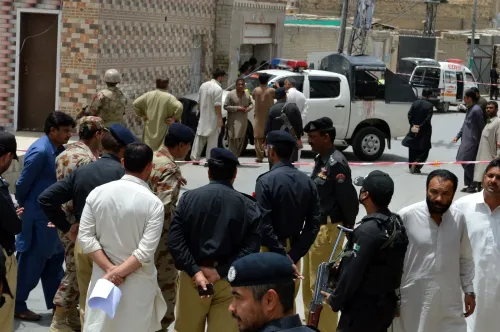
He pointed to large-scale coordinated attacks against security forces, infrastructure, and Chinese interests as evidence of a movement that is 'becoming more capable, more organised and more ambitious.' Separately, persistent sectarian tensions within the province add another layer of volatility to an already fragile security environment.
Restelli also noted that formal declarations of independence are not a prerequisite for insurgencies to reshape political realities. 'Sustained denial of government access, disruption of infrastructure, and parallel systems of influence can gradually erode the practical authority of the state even while international borders remain legally unchanged,' he argued.
CPEC and Gwadar: China's Strategic Exposure
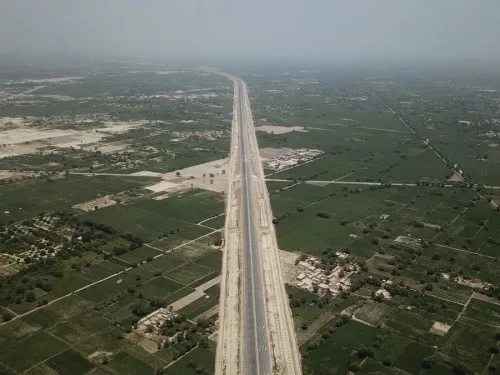
The stakes for Beijing are considerable. The CPEC passes largely through Balochistan, including Gwadar Port — China's gateway to the Arabian Sea and a flagship project under the Belt and Road Initiative (BRI). Separatist attacks on this corridor have intensified in recent years, directly threatening the viability of infrastructure that Beijing has invested heavily in.
'The persistent instability in the province endangers not merely Pakistan's internal security but one of China's most important strategic overseas investments,' Restelli noted. He went further, suggesting that Beijing may eventually recalibrate its position: 'China may, at some point, wish to distance itself from the toxicity Islamabad brings from its wheeling and dealing and tacitly support a Baloch government which can guarantee its investments.'
The Iran Factor and Regional Fragility
Restelli's analysis also introduces a broader regional dimension. The conflict involving Iran, he argues, has added a new layer of strategic uncertainty that extends well beyond Tehran. If a prolonged conflict weakens state authority in Iran's eastern provinces while Pakistan continues to struggle against the Baloch insurgency, the region could enter a period where questions of sovereignty and territorial control become more fragile than at any point in recent history.
This convergence of pressures — economic, ethnic, political, and geopolitical — positions Balochistan as a potential flashpoint with consequences that reach far beyond Pakistan's borders, and directly into the calculus of its most powerful partner.
Point of View
And mainstream coverage has largely missed it. Beijing's patience with Pakistani instability has limits, and Gwadar's repeated targeting by Baloch groups is eroding the corridor's commercial and strategic credibility. What the analysis does not fully address is China's own leverage — its ability to condition future BRI disbursements on security guarantees — which may prove a more immediate tool than any tacit political realignment.
NationPress
24 Oct 2026
Frequently Asked Questions
Why is Balochistan's instability a threat to China?
The China-Pakistan Economic Corridor (CPEC) passes largely through Balochistan, including Gwadar Port — Beijing's gateway to the Arabian Sea and a key Belt and Road Initiative project. Intensifying separatist attacks on this corridor directly endanger what the analysis describes as one of China's most important strategic overseas investments.
How has the Baloch insurgency changed in recent years?
According to the Times of Israel analysis by Sergio Restelli, the insurgency's operational sophistication has increased markedly, with large-scale coordinated attacks on Pakistani security forces, infrastructure, and Chinese interests. While claims of territorial control by Baloch armed groups circulate on social media, the report cautions these remain difficult to verify independently.
What is Pakistan's political situation according to the report?
The report describes Field Marshal Asim Munir as attempting to control all aspects of Pakistani governance, with the Sharif family serving as a token civilian government. This consolidation of power, combined with economic constraints, is said to limit the state's ability to respond effectively to the insurgency.
Could China shift its support away from Pakistan?
Restelli raises the possibility that China may, at some point, wish to distance itself from Islamabad's instability and tacitly support a Baloch government that can guarantee its investments. This remains speculative but reflects growing concern about the viability of CPEC under current conditions.
How does the Iran conflict factor into Balochistan's instability?
The analysis argues that conflict involving Iran introduces additional strategic uncertainty in the region. If prolonged conflict weakens state authority in Iran's eastern provinces while Pakistan struggles with the Baloch insurgency, sovereignty and territorial control across the broader region could become more fragile than at any recent point in history.