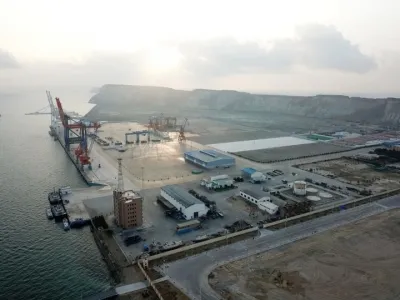
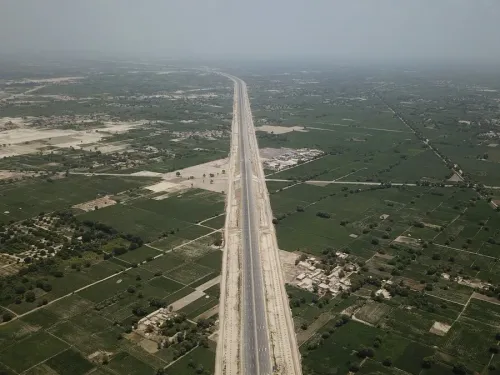
Gwadar port: China may retreat from CPEC jewel over security, costs
Synopsis
A new Lowy Institute report warns that Gwadar — the crown jewel of CPEC and China's intended Malacca bypass — is 'rapidly approaching a tipping point.' With insurgent strikes escalating, Pakistan's security forces failing, and commercial returns dismal, Beijing may quietly downgrade the port from a flagship trade hub to a minor naval refuelling stop, marking a significant blow to the Belt and Road narrative.
Key Takeaways
The Lowy Institute report forecasts China may retreat from Gwadar port due to escalating security costs and poor commercial returns.
Cargo from Xinjiang to Gwadar crosses three conflict-ridden regions and the Karakoram Highway at altitudes above 4,600 metres .
The Baloch Liberation Army's Majeed Brigade has escalated from guerrilla skirmishes to high-yield suicide strikes targeting Chinese personnel and infrastructure.
Pakistan's dedicated Special Security Divisions (SSD) have repeatedly failed to adequately protect Chinese assets at the port.
The report suggests China may downscale Gwadar to a minor naval refuelling station and potentially restructure the lease to cut losses.
A Chinese exit would carry major implications for the broader Belt and Road Initiative and Beijing's credibility with other partner nations.
China's prized Gwadar port in Pakistan's Balochistan province — the centrepiece of the China-Pakistan Economic Corridor (CPEC) and a flagship project of Beijing's Belt and Road Initiative (BRI) — is facing a confluence of security threats and economic headwinds severe enough to force a Chinese withdrawal, according to a new report by the Lowy Institute, an Australia-based policy think tank.
What the Report Found
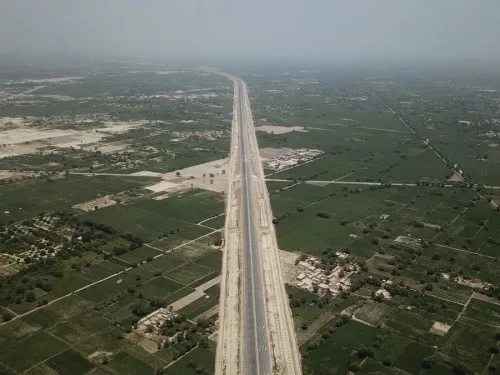
The Lowy Institute report forecasts that China may eventually abandon its operational footprint at Gwadar, citing the prohibitive costs of running the port and the near-impossible task of securing the supply route. Goods travelling from Xinjiang to Gwadar must cross Gilgit-Baltistan, Khyber Pakhtunkhwa, and Balochistan — regions beset by sectarian violence, Taliban activity, and entrenched local insurgencies.
The overland corridor also traverses the Karakoram Highway at altitudes exceeding 4,600 metres, a stretch prone to landslides, avalanches, and extreme weather that makes high-volume container traffic exceptionally difficult. According to the report, these structural geographic constraints compound the already formidable security challenge.
Insurgent Escalation Targets Chinese Assets
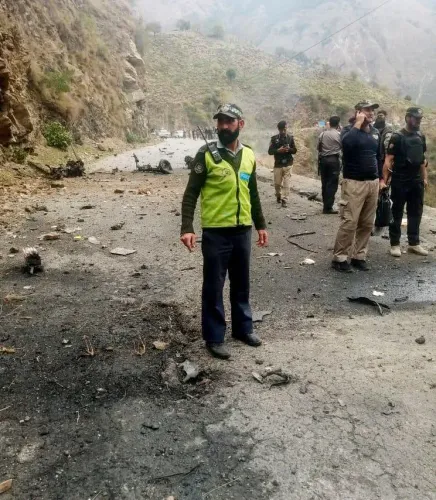
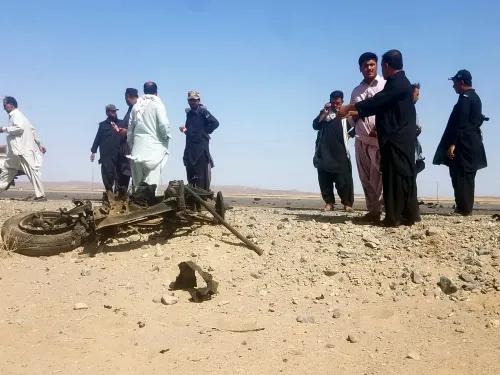
Gwadar has emerged as a frequent target for the Baloch Liberation Army (BLA), which regards CPEC as an exploitative mechanism designed to extract the region's natural resources at local communities' expense. The BLA's specialised Majeed Brigade has, according to the report, evolved from low-intensity guerrilla operations to high-yield suicide strikes explicitly aimed at maximising Chinese casualties.
'Consequently, Chinese engineering units, convoys, and infrastructure have become primary targets for sophisticated suicide bombings and guerrilla ambushes,' the report stated. Multiple such attacks have compelled Pakistan to raise dedicated Special Security Divisions (SSD), which the report says continue to fall short of adequately protecting Chinese infrastructure.
The Malacca Bypass Dream Turns Costly
Beijing's original strategic rationale for Gwadar was to create a maritime shortcut bypassing the Malacca Strait — a critical chokepoint through which the bulk of China's energy imports flow. That plan has not materialised as envisioned. The port has failed to become the vibrant commercial hub Beijing projected, and the cost of defending it — in capital and in Chinese lives — has reportedly grown increasingly difficult to justify.
'Gwadar is rapidly approaching a tipping point. Pakistan cannot afford to secure or maintain it, and China is growing weary of sacrificing both capital and the lives of its citizens to defend a commercial failure,' the Lowy Institute report noted.
What a Chinese Exit Could Look Like
The report does not forecast an abrupt Chinese departure, but rather a deliberate, quiet scaling down. Under this scenario, Gwadar would be reduced from an intended commercial mega-port to a minor, heavily fortified naval refuelling station. Beijing could also, according to the report, eventually restructure the lease arrangement entirely to limit further financial exposure.
With CPEC widely seen as a bellwether for the broader BRI model, a visible retreat from Gwadar would carry significant geopolitical signal value — not just for China-Pakistan ties, but for Belt and Road partner countries watching how Beijing handles failing strategic investments.
Point of View
And underestimated the BLA's ability to adapt and escalate. A quiet Chinese retreat, if it materialises, will be framed as a commercial restructuring, but it will read globally as a BRI retreat under fire. More significantly, it will test whether Beijing's credibility as a reliable infrastructure partner survives its first high-profile forced exit — a question that matters deeply for dozens of BRI signatory nations watching closely.
NationPress
26 Sept 2026
Frequently Asked Questions
What is the Lowy Institute report about Gwadar port?
The Lowy Institute, an Australia-based policy think tank, has forecast that China may abandon or significantly scale back its operations at Gwadar port in Pakistan's Balochistan province. The report cites mounting security threats from insurgent groups and the high economic costs of running the port as the primary reasons for a likely Chinese retreat.
Why is Gwadar port strategically important to China?
Gwadar was designed to serve as a maritime shortcut for China, bypassing the Malacca Strait — a critical chokepoint for Chinese energy imports. It is the centrepiece of the China-Pakistan Economic Corridor (CPEC) and a flagship project of Beijing's Belt and Road Initiative (BRI). However, the port has failed to achieve the commercial scale Beijing originally envisioned.
Who is attacking Chinese infrastructure at Gwadar?
The Baloch Liberation Army (BLA) and its specialised Majeed Brigade have been repeatedly targeting Chinese engineering units, convoys, and infrastructure at Gwadar. According to the Lowy Institute report, the BLA views CPEC as an exploitative project and has evolved from low-level guerrilla attacks to sophisticated suicide bombings aimed at maximising Chinese casualties.
What does the report say China might do next?
The report forecasts a quiet, deliberate Chinese drawdown rather than a sudden exit. Under this scenario, Gwadar would be reduced from a planned commercial mega-port to a minor, heavily fortified naval refuelling station. Beijing may also restructure the port lease to limit further financial losses.
What are the geographic challenges facing Gwadar's supply route?
Cargo from China's Xinjiang region must traverse Gilgit-Baltistan, Khyber Pakhtunkhwa, and Balochistan — all affected by violence and instability — before reaching Gwadar. The route also crosses the Karakoram Highway at altitudes above 4,600 metres, a stretch prone to landslides, avalanches, and extreme weather that makes high-volume container traffic extremely difficult.