Gujarat CM pitches Deendayal Port as Green Hydrogen Hub
Synopsis
Gujarat's Chief Minister invoked PM Modi's Ek Bharat Shreshtha Bharat vision while announcing that Deendayal Port in Kutch will be developed as a Green Hydrogen Hub under the National Green Hydrogen Mission, alongside the groundbreaking of an e-methanol project aimed at India's 2070 net-zero target.
Key Takeaways
Deendayal Port, Kutch is to be developed as a Green Hydrogen Hub under India's National Green Hydrogen Mission .
Gujarat's maritime capacity and Assam's industrial capacity are being linked at the port, framed as an Ek Bharat, Shreshtha Bharat initiative.
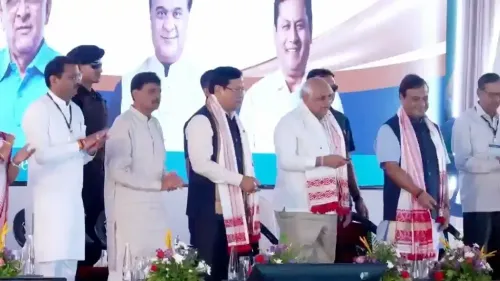
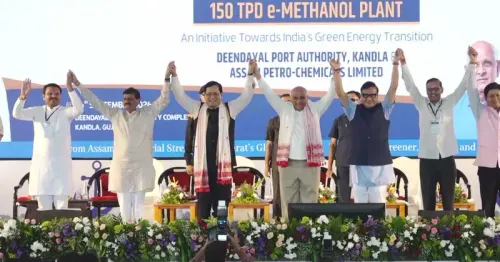
An e-methanol project's bhoomi pujan was held at Deendayal Port on 26 September 2026 .
The Chief Minister tied the green energy push to India's commitment to reach net-zero emissions by 2070 .
Kutch's post- 2001 earthquake industrial transformation was credited to PM Narendra Modi's tenure as Chief Minister.
Gujarat was positioned as a frontrunner in the Atmanirbhar Bharat to Viksit Bharat journey through clean energy leadership.
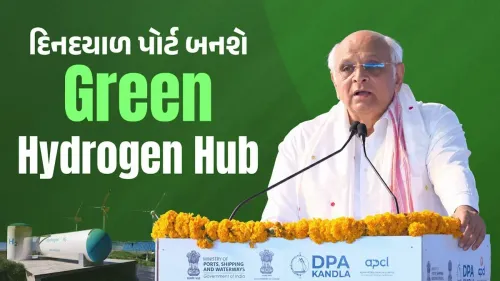
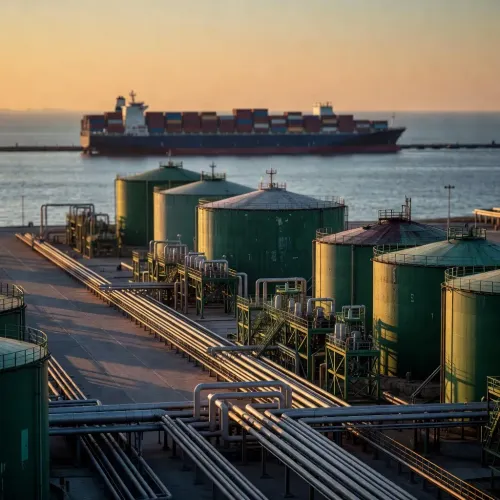
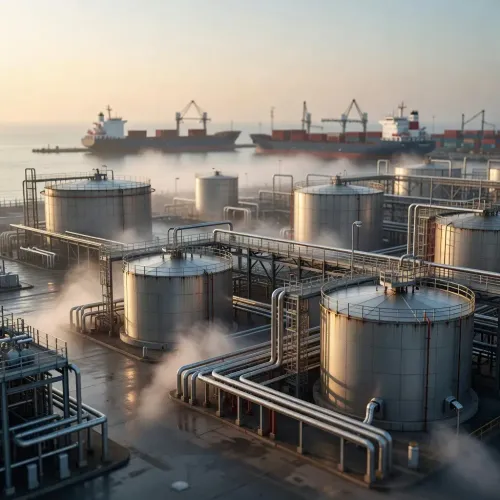
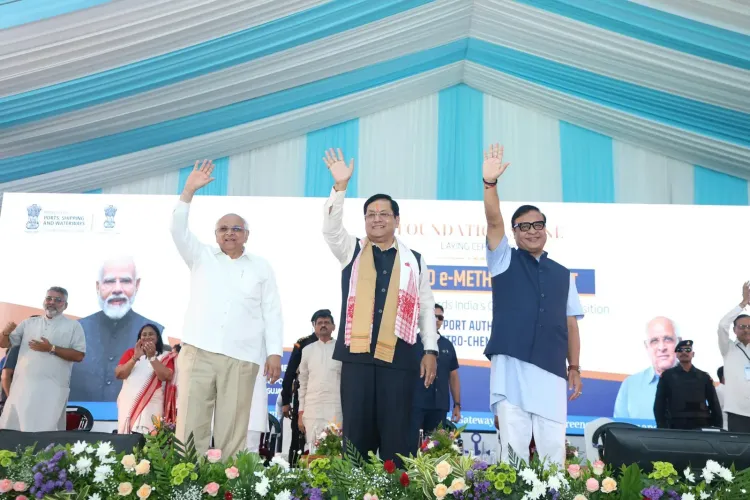
A port in the Rann's shadow is being asked to carry the weight of a nation's clean-energy future. At a groundbreaking ceremony for an e-methanol project at Deendayal Port, Kutch, Gujarat Chief Minister's Office on Saturday, 26 September 2026 quoted the Chief Minister declaring that the port — already India's largest by cargo volume — would be developed as a Green Hydrogen Hub under the National Green Hydrogen Mission.
Gujarat's maritime strength meets Assam's industrial muscle
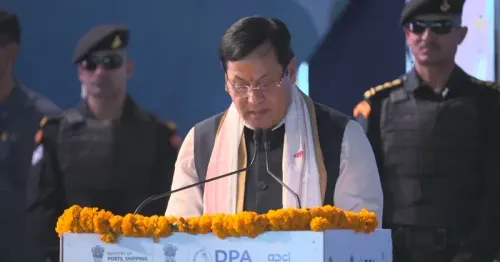
The Chief Minister framed the event as more than a sod-turning. Speaking at the bhoomi pujan, he described the pairing of Gujarat's maritime strengths with Assam's industrial capacity at Deendayal Port as a live demonstration of Prime Minister Narendra Modi's 'Ek Bharat, Shreshtha Bharat' ('One India, Best India') vision — the 2015 initiative designed to weave economic and cultural bonds between states that would otherwise orbit in separate regional universes. A port in Kutch anchoring an industrial partnership with a landlocked north-eastern state is exactly the kind of geography-defying synergy the framework was conceived to produce.
Deendayal Port's green hydrogen ambition — and what it rests on
Renamed from Kandla in 2017 and progressively upgraded under the Sagarmala programme since 2015, Deendayal Port already functions as a critical import-export artery for western India. The Chief Minister called it not merely Gujarat's gateway but a national maritime gateway — and now, he added, a future node for green fuel production. The plan sits within India's National Green Hydrogen Mission, launched in 2023, which targets scaling domestic green hydrogen output to position India as both a producer and exporter of the fuel.
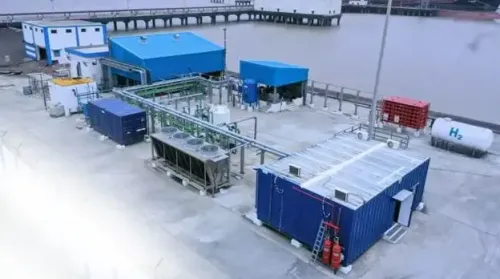
The e-methanol project whose groundbreaking took place at the port is pitched as one concrete step on that pathway. The Chief Minister stated that green-energy-based projects of this kind will play a critical role in realising India's pledge to reach net-zero emissions by 2070 — a commitment made at COP26 in 2021.
Kutch's post-earthquake transformation, and Modi's credited role
The Chief Minister drew a deliberate line from Kutch's catastrophic 2001 earthquake to its current industrial prominence, attributing the district's remarkable turnaround to Prime Minister Modi — who served as Gujarat's Chief Minister from 2001 and oversaw the reconstruction-to-reindustrialisation pivot. Today, Kutch hosts some of India's largest renewable energy installations and special economic zones, making it a credible location for a hydrogen hub rather than an aspirational one.
Closing with a broader frame, the Chief Minister expressed confidence that Gujarat would play a leading role in building a Viksit Bharat ('Developed India') from the foundation of an Atmanirbhar Bharat ('Self-Reliant India') — linking state-level green energy investment directly to the national economic transformation narrative.
What the e-methanol project signals for port-linked clean fuel
E-methanol — synthesised using green hydrogen and captured carbon — is increasingly seen as a viable marine fuel, positioning Deendayal Port to potentially supply the very ships that dock there. If the green hydrogen hub designation advances with central support and private investment, it could make Kutch one of the rare global examples where a major commercial port both generates and consumes clean fuel. Progress on the hub's commissioning timeline and any follow-up central-state investment announcements will be the real test of Saturday's ambition.
Point of View
And signals that Gujarat intends to replicate its renewables first-mover advantage in the emerging hydrogen value chain. The Gujarat–Assam partnership angle is also politically deft, weaving a north-eastern state into a western maritime story in a way that serves the Ek Bharat narrative ahead of any federal policy review cycles. Whether the green hydrogen hub gains traction will depend heavily on central capex commitments and private-sector offtake agreements that remain unannounced.
NationPress
26 Sept 2026
Frequently Asked Questions
What is the Green Hydrogen Hub at Deendayal Port?
Gujarat's Chief Minister announced that Deendayal Port in Kutch will be developed as a Green Hydrogen Hub under India's National Green Hydrogen Mission, making it a facility for producing and potentially supplying green hydrogen and derivative fuels such as e-methanol.
What is the e-methanol project at Deendayal Port?
The e-methanol project is a green energy initiative whose groundbreaking ceremony was held at Deendayal Port on 26 September 2026. E-methanol is produced using green hydrogen and is viewed as a clean marine fuel, aligning with India's net-zero target for 2070.
What is India's National Green Hydrogen Mission?
The National Green Hydrogen Mission was launched by the Indian government in 2023 to scale domestic production of green hydrogen, with the goal of making India a significant global producer and exporter of the fuel.
What is Deendayal Port and where is it located?
Deendayal Port, formerly known as Kandla Port, is located in Kutch district, Gujarat. Renamed in 2017, it is one of India's largest ports by cargo volume and has been upgraded under the Sagarmala programme since 2015.
How is Assam connected to the Deendayal Port green energy project?
The Gujarat Chief Minister described the pairing of Gujarat's maritime strengths with Assam's industrial capacity at Deendayal Port as an expression of PM Modi's Ek Bharat Shreshtha Bharat vision, linking a landlocked north-eastern state to a major western port's green energy ambitions.