Balochistan at 'point of no return' as security crisis deepens: Report
Synopsis
A new international report declares Balochistan has hit a 'point of no return' — with Pakistan's own senior politicians admitting the state has lost its writ there, China quietly pulling back from CPEC investments, and a string of brazen attacks exposing the limits of a purely military response. The crisis is no longer just a security story; it is an economic and governance collapse unfolding in plain sight.
Key Takeaways
The International Centre for Peace Studies report warns Balochistan has reached a 'point of no return' amid a rapidly deteriorating security environment.
JUI-F chief Maulana Fazlur Rehman publicly stated there is 'no writ of the Pakistani government' in Balochistan, directly rebuking Army Chief General Asim Munir .
A Ziarat district attack killed 9 police personnel including 2 SHOs ; 18 others were abducted and later found executed in the Zarghoon Ghar mountains .
China's Hangeng Group has permanently shut its Gwadar Free Zone CPEC operations; the Saindak Copper-Gold Project faces imminent shutdown due to insurgent blockades.
Districts including Awaran , Kohlu , Kech (Turbat) are described as effectively outside Pakistani state control, with security forces largely confined to barracks.
Pakistan's military launched Operation Shaban in response, though local communities and activists have disputed the official account of the Ziarat attack.
A new report by the International Centre for Peace Studies has warned that Balochistan has reached a 'point of no return', with Pakistan's security-first approach to the restive province accelerating instability rather than curbing it. The report, released amid a sharp surge in militant attacks across the region, concludes that decades of enforced disappearances, proxy militia use, and resource extraction without local benefit have entrenched the insurgency deeper than ever.
Key Developments on the Ground
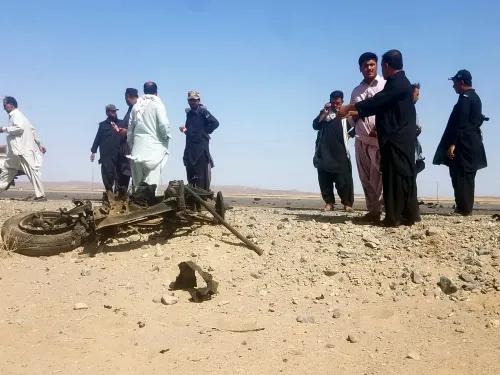
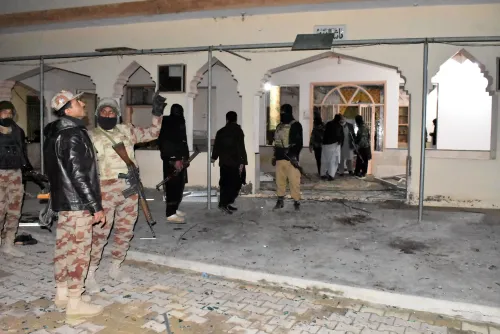
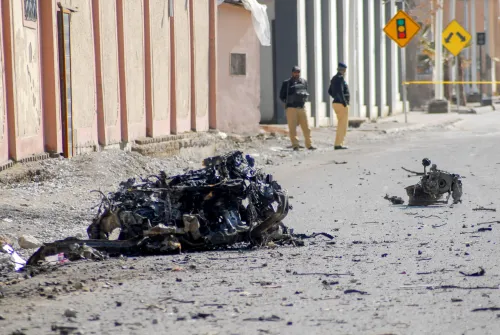
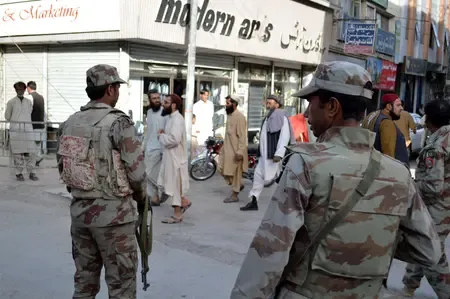
The report documents a rapid deterioration in the security environment, citing a string of recent incidents: an attack on a Pakistani military convoy in Mastung, a deadly assault in Ziarat district in which police personnel were killed and abducted, and multiple coordinated strikes around Quetta. It describes large swathes of the province — particularly the districts of Awaran, Kohlu, Kech (Turbat), and the Zarghoon Ghar mountains — as effectively beyond the Pakistani state's control, with security forces reportedly confined to their barracks.
Notably, senior Pakistani politician and Jamiat Ulema-e-Islam-Fazl (JUI-F) chief Maulana Fazlur Rehman publicly stated that 'even today, there is no writ of the Pakistani government there' — a rare and direct rebuke of Army Chief General Asim Munir that the report describes as a major public confirmation of the state's loss of control.
The Ziarat Attack and Its Aftermath
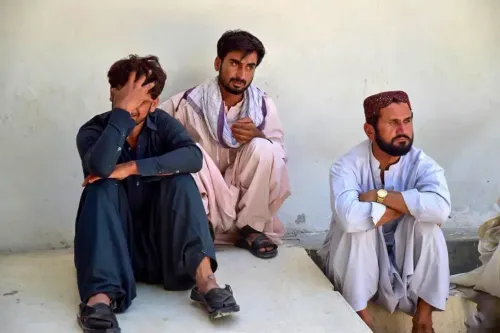
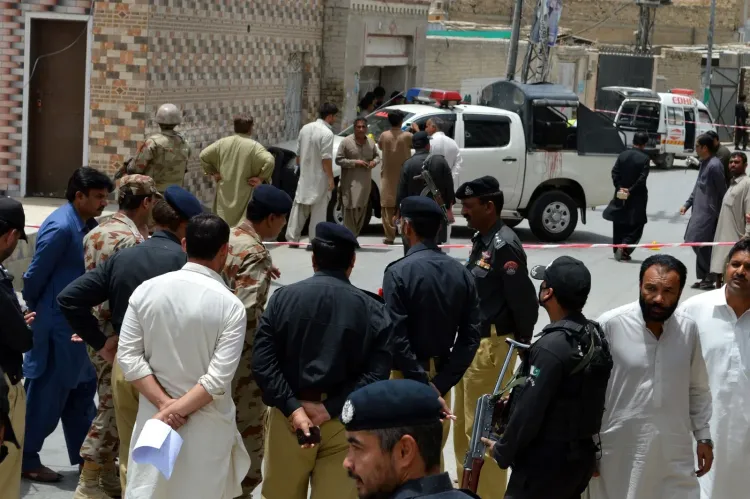
Among the most significant incidents detailed is the attack in Balochistan's Ziarat district, in which nine police personnel — including two senior Station House Officers (SHOs) — were killed after insurgents stormed a police checkpost guarding the Kuch Mangi Phase-III construction site of the Mangi Dam project. A further 18 local police personnel were abducted from the facility before being executed; their bodies were later recovered in the remote Zarghoon Ghar mountains.
While the Pakistani military has attributed the killings jointly to the Baloch Liberation Army (BLA) and Tehreek-e-Taliban Pakistan (TTP), sections of local communities, activists, and victims' families have alleged that the personnel were targeted by Pakistan-backed death squads. Critics argue the incidents were subsequently used to justify the launch of Operation Shaban, a large-scale military counter-insurgency sweep across the province.
China's CPEC Investments Under Threat
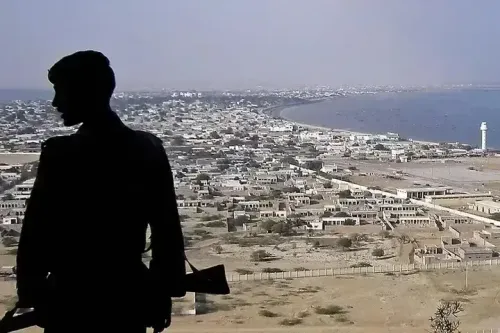
The report flags a significant economic dimension to the crisis: China is reportedly signalling a withdrawal from conflict-hit Balochistan. The Hangeng Group's industrial operations in the Gwadar Free Zone — part of the multi-billion-dollar China-Pakistan Economic Corridor (CPEC) — have been permanently shut down due to persistent security risks, according to the report. Separately, the managing director of the Saindak Copper-Gold Project has warned that operations are on the verge of a complete shutdown, citing continuous insurgent blockades and highway closures disrupting supply lines.
Root Causes: Governance Failures and Marginalisation
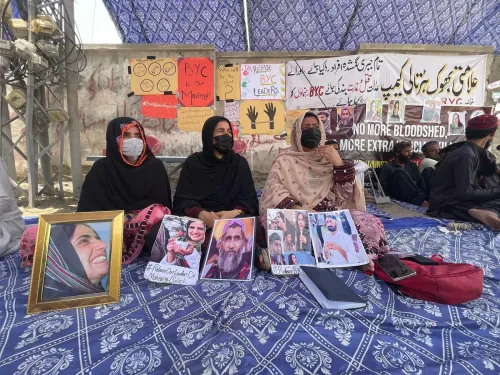
The report argues that the structural grievances driving the insurgency remain unaddressed. It points to Baloch households living adjacent to gas pipelines without access to gas, coastal communities displaced to facilitate foreign-backed port projects, and students who have gone missing under enforced disappearance policies — each, it contends, reinforcing the conviction among many Baloch that their future does not lie within Pakistan.
'The Pakistani state has increasingly relied on a militarised and security-centric approach in Balochistan, viewing the region primarily through the lens of security, terrorism, and counter-insurgency rather than governance, political engagement, and development. This approach is failing and has become increasingly counterproductive,' the report states.
What Comes Next
With CPEC investments under threat, senior Pakistani politicians openly questioning the state's writ, and no political engagement framework in sight, the trajectory in Balochistan points toward further entrenchment of the conflict. Whether Operation Shaban marks a turning point or merely another chapter in a decades-long cycle of military escalation and backlash remains to be seen.
Point of View
The narrative of a 'manageable insurgency' becomes untenable. The CPEC dimension is the real inflection point: if China — Pakistan's principal economic patron — begins withdrawing investments over security risk, the economic rationale for Islamabad's Balochistan strategy collapses entirely. A military operation named 'Shaban' will not fix pipelines that locals cannot access, students who have disappeared, or coastlines cleared for foreign port projects. The report's core finding is that Pakistan is applying a security solution to a governance problem — and that mismatch is the engine of the crisis.
NationPress
24 Oct 2026
Frequently Asked Questions
What does the 'point of no return' warning about Balochistan mean?
The International Centre for Peace Studies report argues that Pakistan's decades-long reliance on military force, enforced disappearances, and resource extraction without local benefit has pushed Balochistan to a stage where the insurgency is self-sustaining and deepening. The report warns that the Pakistani state's security-centric approach is now actively counterproductive, worsening instability rather than containing it.
Which areas of Balochistan are reportedly outside Pakistani state control?
According to the report, large parts of Balochistan — particularly the districts of Awaran, Kohlu, Kech (Turbat), and the Zarghoon Ghar mountains — are effectively beyond the Pakistani state's control. The report states that the Pakistan Army rarely ventures into these areas and that security forces are largely confined to their barracks.
What happened in the Ziarat attack described in the report?
Insurgents stormed a police checkpost guarding the Kuch Mangi Phase-III construction site of the Mangi Dam project in Ziarat district, killing nine police personnel including two senior SHOs. A further 18 local police personnel were abducted and later found executed in the Zarghoon Ghar mountains. The Pakistani military attributed the attack to the BLA and TTP, though local activists and victims' families have disputed this account.
How is the Balochistan crisis affecting China's CPEC investments?
China is reportedly signalling a withdrawal from conflict-affected Balochistan. The Hangeng Group has permanently shut its CPEC industrial operations in the Gwadar Free Zone due to security risks, and the managing director of the Saindak Copper-Gold Project has warned of an imminent complete shutdown caused by insurgent blockades and highway closures disrupting supply lines.
What is Operation Shaban and why is it controversial?
Operation Shaban is a large-scale Pakistani military counter-insurgency operation launched across Balochistan following recent attacks. It is controversial because local communities, activists, and families of victims in the Ziarat attack have alleged that the incidents used to justify the operation were carried out by Pakistan-backed death squads rather than by the BLA or TTP, as the military claims.