Chongqing landslide kills 8, leaves 34 missing along Wujiang River
Synopsis
A mountain collapse buried more than 10 residential buildings in Chongqing on Friday morning, killing 8 and leaving 34 unaccounted for. China activated a Level-II geological disaster emergency — one of its highest alert tiers — as President Xi Jinping personally directed rescue teams to prevent secondary disasters. With dozens still missing, the toll could rise.
Key Takeaways
A rainfall-induced landslide struck Hanjia sub-district , Pengshui County , Chongqing at approximately 9:08 a.m. on 17 July 2025 .
Eight people have been confirmed dead; 34 remain missing ; 10 have been rescued .
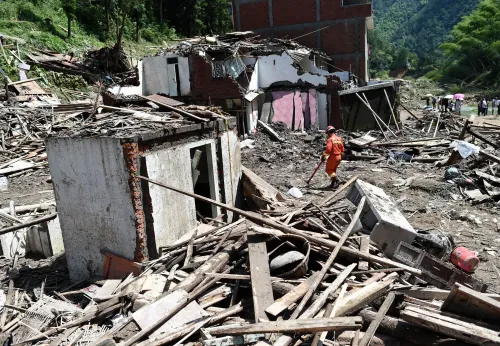
More than 10 residential buildings were buried by rock and soil debris.
China activated a Level-II national emergency response for geological disasters — among the country's highest alert levels.
President Xi Jinping directed authorities to conduct rescues 'in a scientific manner' and prevent secondary disasters.
The National Commission for Disaster Prevention, Reduction and Relief dispatched a work team to assist local authorities.
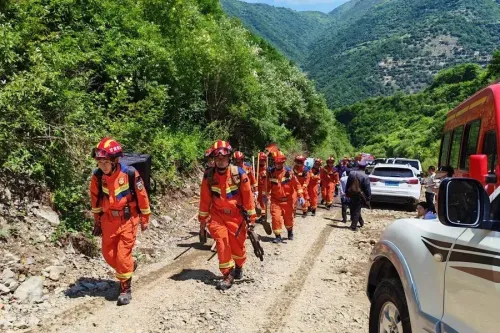
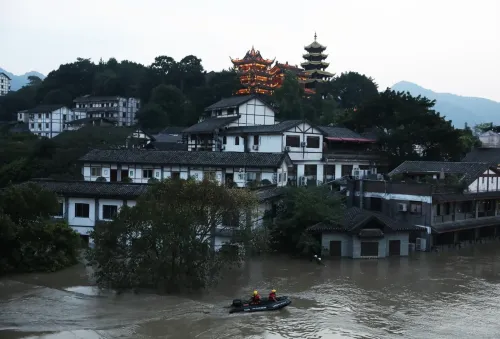
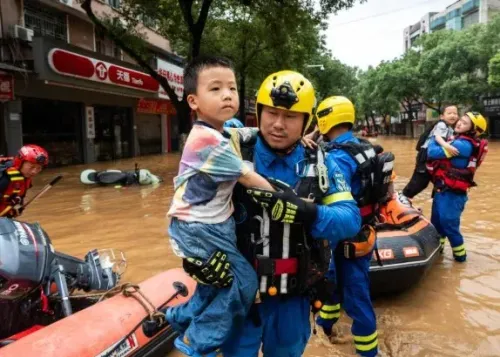
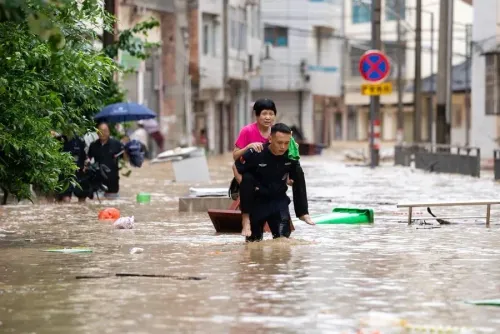
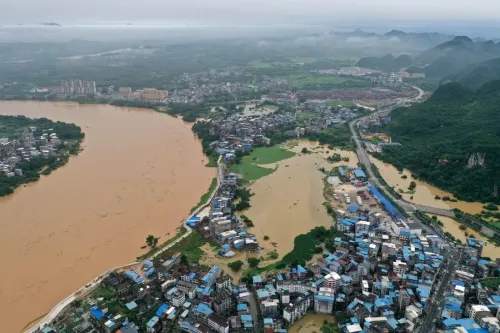
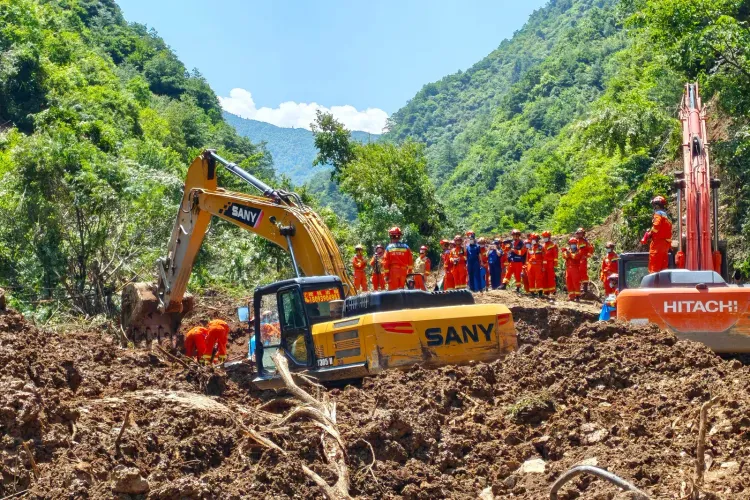
A rainfall-induced mountain collapse along the Wujiang River in Chongqing Municipality, southwest China, killed eight people and left 34 others missing on Friday, 17 July, local authorities confirmed. Ten people have been rescued, with search and rescue operations continuing as of Friday night.
How the Disaster Unfolded
Massive volumes of rock and soil cascaded downslope at approximately 9:08 a.m. on Friday, burying more than 10 residential buildings at the foot of the mountain in Hanjia sub-district of Pengshui Miao and Tujia Autonomous County. Residents were trapped and unaccounted for as the debris overwhelmed the hillside settlement. A separate account from local authorities placed the onset at 9:10 a.m., consistent with the same event.
National Emergency Response Activated
China's Ministry of Emergency Management activated a Level-II national emergency response for geological disasters — one of the country's highest alert tiers — following the collapse. Separately, the National Commission for Disaster Prevention, Reduction and Relief activated a Level-IV national disaster relief emergency response and dispatched a work team to the site to assess conditions and assist in meeting the basic needs of affected residents.
Xi Jinping Issues Directives
Chinese President Xi Jinping on Friday called for search and rescue operations to be conducted 'in a scientific manner,' according to state media. Xi stressed the urgency of preventing secondary disasters, ensuring proper medical treatment for the injured, and managing the aftermath effectively. He also directed authorities to identify the cause of the collapse, draw lessons from it, and conduct thorough inspections to eliminate further geological risks. 'All regions and relevant departments should strengthen risk monitoring, early warning and inspections to safeguard people's lives and property,' Xi said.
Context and Risk Pattern
The Chongqing region is geologically vulnerable, with steep river valleys and heavy monsoon rainfall creating persistent landslide risk each summer. This incident comes amid an active rainfall season across southwest China, where similar events have caused casualties in past years. The activation of a Level-II emergency response signals the central government's assessment that the situation could deteriorate further, particularly given the number of people still unaccounted for. Notably, the Wujiang River corridor has seen infrastructure and residential development in areas with known slope instability, raising longer-term questions about land-use planning in such zones.
Search Operations Continue
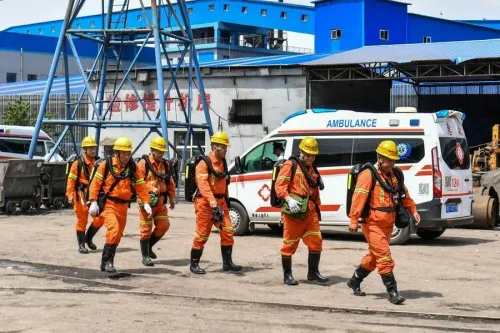
Rescue teams were working through Friday night to locate the 34 missing residents. Officials have not yet confirmed the total number of people originally in the affected buildings. The cause of the collapse is under investigation, with heavy rainfall cited as the primary trigger by local authorities.
Point of View
Yet residential construction in high-risk slope zones has continued. Xi Jinping's directive to 'identify the cause and draw lessons' is a standard formulation, but if past incidents are a guide, structural accountability for land-use decisions in geologically active corridors rarely follows. The real test is whether the post-disaster inspection regime translates into enforceable zoning reform, or remains another seasonal ritual.
NationPress
16 Oct 2026
Frequently Asked Questions
What happened in Chongqing on 17 July 2025?
A rainfall-induced mountain collapse struck Hanjia sub-district in Pengshui County, Chongqing, burying more than 10 residential buildings. Eight people have been confirmed dead, 34 remain missing, and 10 have been rescued as of Friday night.
What emergency level did China activate after the Chongqing landslide?
China's Ministry of Emergency Management activated a Level-II national emergency response for geological disasters, one of the country's highest alert tiers. The National Commission for Disaster Prevention, Reduction and Relief also activated a Level-IV disaster relief emergency response and sent a work team to the site.
What did President Xi Jinping say about the Chongqing disaster?
President Xi Jinping directed rescue teams to operate 'in a scientific manner' and stressed the need to prevent secondary disasters, provide medical treatment to the injured, and identify the cause of the collapse. He also called on all regions to strengthen geological risk monitoring and early warning systems.
Where exactly did the Chongqing landslide occur?
The collapse occurred in Hanjia sub-district of Pengshui Miao and Tujia Autonomous County in Chongqing Municipality, along a section of the Wujiang River in southwest China.
Why is Chongqing prone to landslides?
Chongqing sits in a region of steep river valleys and receives heavy monsoon rainfall each summer, creating persistent geological instability. The Wujiang River corridor in particular has seen recurring slope failures, and residential development in high-risk areas has heightened vulnerability.