Clinton's 2000 Pakistan decoy plane: Reporter breaks 26-year silence
Synopsis
A 26-year-old secret about presidential security theatre is now public — and it reframes the debate over Trump's undisclosed aircraft switch in Turkey. The key difference: Clinton's team told the press pool chief in advance; Trump's did not. That gap between the two operations is the story.
Key Takeaways
Susan Page , then president of the White House Correspondents' Association , was briefed off the record by the Clinton administration before a decoy plane operation during Clinton's March 2000 Pakistan visit.
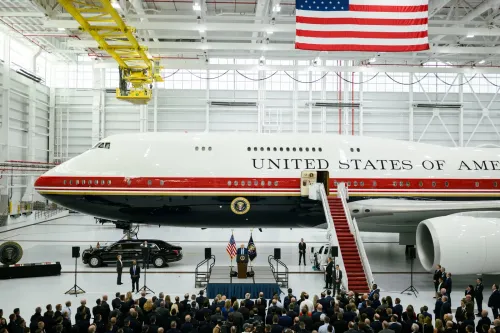
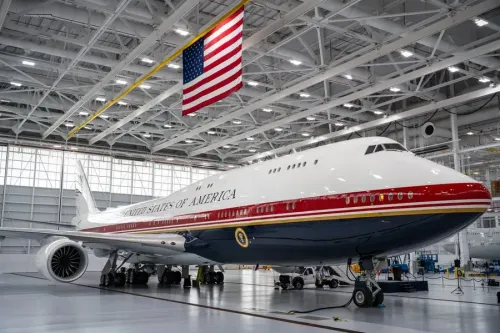
An aircraft with Air Force One markings landed first in Islamabad ; President Clinton arrived separately on an unmarked plane.
Page kept silent for over 26 years due to off-the-record ground rules, speaking out now because the ruse became publicly evident on arrival.
Her disclosure was triggered by a Washington Post report that President Donald Trump secretly switched to an unmarked Air Force C-32A while leaving Turkey amid a credible Iranian threat.
Unlike the Clinton operation, journalists aboard the Trump decoy flight were not informed and were told to keep window shades closed.
White House communications director Steven Cheung defended security measures but did not address the reported deception.
Veteran journalist Susan Page, now USA Today's Washington bureau chief, has broken a 26-year silence to reveal that the Clinton administration secretly briefed journalists before deploying a decoy aircraft during President Bill Clinton's high-risk visit to Pakistan in March 2000. Page, who was then president of the White House Correspondents' Association, said officials summoned her for an off-the-record briefing before Clinton flew from India to Pakistan, according to The Washington Post.
What Happened in March 2000
An aircraft bearing the markings of Air Force One landed before television cameras in Islamabad. A Secret Service agent resembling Clinton emerged from the plane. An unmarked aircraft then landed separately, and the president disembarked from it. The elaborate ruse was designed to protect Clinton amid what officials described as extraordinary security dangers associated with the Pakistan leg of the trip.
'They told me about the extraordinary security procedures being taken because of the dangers in flying there, including use of the decoy plane,' Page said. 'Of course, the dangers threatened the journalists covering the trip as well as President Clinton.'
Why Page Is Speaking Now
Page said she had kept silent for over two decades out of respect for the off-the-record ground rules of the original briefing. She decided to come forward now because more than a quarter-century had elapsed — and because the deception became self-evident the moment Clinton stepped off the unmarked plane in Islamabad.
'I haven't spoken about this episode before, because of the off-the-record ground rules of the discussion,' Page said. 'But since more than a quarter-century has passed — and since the ruse became evident as soon as President Clinton disembarked in Pakistan — I think it's OK for me to relay it now.'
The Trump Parallel That Triggered the Disclosure
Page's disclosure was prompted by a Washington Post report that President Donald Trump secretly changed aircraft last month while departing Turkey, following a credible threat from Iran. According to that report, Trump was moved via an airport catering truck to an unmarked Air Force C-32A, while the presidential aircraft carrying the press corps and staff served as a decoy. Journalists aboard the decoy plane had been instructed to keep their window shades closed throughout the flight.
Critically, unlike the Clinton-era operation, reporters were not informed about the aircraft change or the extent of the threat in the Trump case. The White House had publicly stated that Trump departed Turkey aboard the former Air Force One.
White House Response
White House communications director Steven Cheung defended the security measures without directly addressing the reported deception. 'As the President has said recently, there are many enemies of America who seek his demise, and we use every tool at our disposal to address those threats,' Cheung said. Trump himself later told reporters he faced a continuing threat from Iran, adding: 'But if I go, you go. Right? Perhaps someday you want to change professions.'
What This Means for Press Freedom
The White House press pool — a rotating group of journalists who travel with and report on the president on behalf of the broader news media — exists precisely to provide an independent account of presidential movements and activities when access is restricted. The contrast between the two operations has reignited debate about the boundaries of legitimate security secrecy and the press's right to account for the president's whereabouts. Notably, the Clinton administration chose to brief the pool chief in advance; the Trump administration did not extend the same courtesy, according to the Post's reporting.
Point of View
Whatever its other failings on transparency, judged that the pool chief had a right to know the journalists were also at risk. The Trump White House made no such calculation, instructing reporters to keep their shades down on a flight whose true purpose was concealed from them. That is a meaningful institutional distinction, and mainstream coverage has underplayed it. Presidential security will always require secrecy; the question is whether the press pool — whose entire function is independent accountability — can be treated as a prop in an operation it is not told it is part of.
NationPress
26 Sept 2026
Frequently Asked Questions
What is the Clinton decoy plane story about?
In March 2000, the Clinton administration used a decoy aircraft bearing Air Force One markings to land first in Islamabad, while President Bill Clinton arrived separately on an unmarked plane. A veteran journalist, Susan Page, has now revealed she was briefed about the operation in advance on an off-the-record basis.
Why did Susan Page speak about this now after 26 years?
Page said she stayed silent out of respect for the off-the-record briefing she received. She decided to speak after more than a quarter-century had passed and after a Washington Post report revealed that President Donald Trump had similarly switched aircraft secretly while leaving Turkey.
How was Trump's aircraft switch different from Clinton's?
The key difference is disclosure: the Clinton administration briefed the White House Correspondents' Association president before the operation. In Trump's case, journalists aboard the decoy plane were not told about the aircraft change or the Iranian threat, and were instructed to keep their window shades closed.
What threat prompted Trump's aircraft switch in Turkey?
According to reports, a credible threat from Iran prompted the security operation. Trump was moved via an airport catering truck to an unmarked Air Force C-32A, while the press and staff flew on the presidential aircraft as a decoy.
What is the White House press pool and why does this matter?
The White House press pool is a rotating group of journalists who travel with the president to provide an independent account of his movements and activities. Using the press pool as an unknowing decoy raises questions about the boundaries of legitimate security secrecy and journalistic independence.