Cuba urges UN General Assembly debate on US blockade, cites imminent threat
Synopsis
Cuba is taking its case against the US blockade to the UN General Assembly floor, with a senior diplomat warning the threat is 'not hypothetical' — it is immediate. Havana is framing fuel restrictions as a de facto naval blockade and calling Washington's measures an act of genocide, raising the diplomatic stakes well beyond routine UN posturing.
Key Takeaways
Cuba has called on the UN General Assembly to debate the US blockade , with the session set for Tuesday, 8 July .
Pedro Luis Pedroso of the Cuban Foreign Ministry said the threat Cuba faces 'is not a hypothetical situation of aggression.' The US decided in January to sanction countries supplying fuel to Cuba, which Havana says is equivalent to a naval blockade.
Cuban authorities characterise the blockade as an act of genocide, collective punishment, and a violation of international humanitarian law.
Havana wants the UNGA to reaffirm UN Charter principles including non-interference and rejection of the use of force.
Cuba has formally called on the UN General Assembly (UNGA) to convene a dedicated debate on the US economic blockade, with a senior Havana official warning on 7 July that the island faces an imminent and concrete threat — not a hypothetical one. The session is scheduled for Tuesday.
What Cuba Told the UN
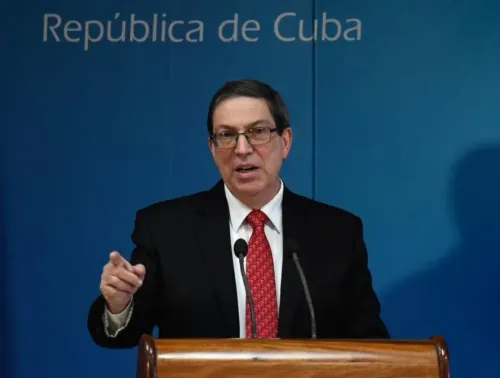
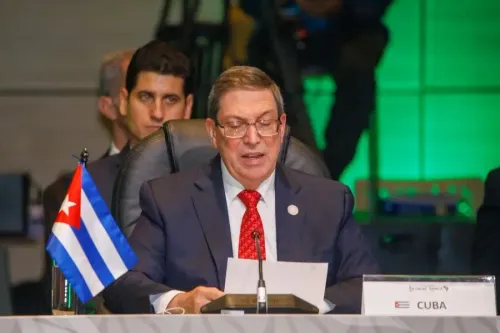
Pedro Luis Pedroso, Director General of Multilateral Affairs and International Law at the Cuban Foreign Ministry, addressed reporters ahead of the session, stating that the scenario presented to justify the debate 'is not a hypothetical situation of aggression. It is not based on a simple risk assessment.'
Pedroso said the debate would serve to expose 'the aggressive actions of the US government' against Cuba, including what he described as 'the threat of direct military aggression.'
The Blockade and Fuel Crisis
At the UNGA session, Havana intends to detail the impact of Washington's restrictions on fuel supplies alongside the broader tightening of the economic, trade, and financial blockade. Cuban authorities have characterised these measures as constituting an act of genocide, collective punishment, and a violation of human rights and international humanitarian law.
According to Pedroso, the restrictions on fuel deliveries are equivalent, 'in practical terms,' to a naval blockade. The US administration decided in January to sanction countries that supply fuel to Cuba — a nation heavily dependent on oil imports. Pedroso argued that this policy contravenes international law, including rules applicable during armed conflicts.
Scope of US Measures, According to Havana
The Cuban diplomat said restrictions on humanitarian aid deliveries also violate international law. He noted that Washington's actions against Cuba span economic, political, and information-related dimensions, and include the possibility of military aggression.
'Cuba is not, and could not be, as we have said time and again, a threat to the United States,' Pedroso stressed.
What Havana Hopes to Achieve
Cuba is seeking a 'broad, in-depth and substantive' debate at the UNGA that reaffirms core principles of the UN Charter — including sovereign equality of states, respect for territorial integrity, political independence, non-interference in internal affairs, rejection of the threat or use of force, and the peaceful settlement of disputes.
The UNGA debate will test whether multilateral pressure can meaningfully constrain unilateral economic measures — and whether Cuba can build the coalition it needs to shift the international narrative.
Point of View
Beyond the usual non-aligned bloc, are willing to put their bilateral relationships with Washington at risk to support a binding resolution.
NationPress
6 Oct 2026
Frequently Asked Questions
Why is Cuba requesting a UN General Assembly debate on the US blockade?
Cuba is seeking a UNGA debate to formally denounce what it calls the imminent threat posed by US economic, trade, and financial restrictions, including fuel supply sanctions imposed in January. Havana argues the measures violate international law and constitute collective punishment.
What did Cuban official Pedro Luis Pedroso say about the threat Cuba faces?
Pedroso, Director General of Multilateral Affairs and International Law at the Cuban Foreign Ministry, told reporters that the situation justifying the debate 'is not a hypothetical situation of aggression' and is not based on a simple risk assessment, signalling that Havana views the threat as immediate.
How do US fuel sanctions affect Cuba?
The US administration decided in January to sanction third countries that supply fuel to Cuba, which is heavily dependent on oil imports. Cuba's Foreign Ministry says this is equivalent, in practical terms, to a naval blockade, and argues it contravenes international law including rules applicable during armed conflicts.
What does Cuba want the UNGA to do?
Cuba wants the UNGA to hold a broad and substantive debate and to reaffirm UN Charter principles such as sovereign equality, territorial integrity, non-interference in internal affairs, and the peaceful settlement of disputes.
Has Cuba called the US blockade a violation of international law?
Yes. Cuban authorities have characterised the blockade, including restrictions on fuel and humanitarian aid, as an act of genocide, collective punishment, and a violation of human rights and international humanitarian law, according to statements made ahead of the UNGA session.