India at UN urges end to unilateral sanctions that breach sovereignty
Synopsis
India took a pointed stand at the UN General Assembly on 11 July, calling unilateral sanctions and embargoes a violation of sovereignty and a barrier to human rights — with the US embargo on Cuba squarely in the crosshairs. Coming just months after India itself faced Trump-era secondary sanctions over Russian oil purchases, the statement carries weight beyond diplomatic routine.
Key Takeaways
India called for an end to unilateral economic embargoes and sanctions at the UN General Assembly on 11 July .
Counsellor Eldos Mathew Punnoose of India's Permanent Mission said such measures impede human rights, including rights to food, education, and healthcare.
The statement was made in the context of the US embargo on Cuba , in place since 1961 , which the General Assembly has sought to lift annually since 1992 .
India argued that only the UN Security Council — not individual nations — has the legal authority under the UN Charter to impose sanctions.
US Permanent Representative Mike Waltz denied any blockade exists, citing $100 million in US aid to Cuba and humanitarian routes via the Catholic Church.
India itself recently faced Trump administration secondary sanctions over Russian oil purchases, which were later rescinded by the US Supreme Court .
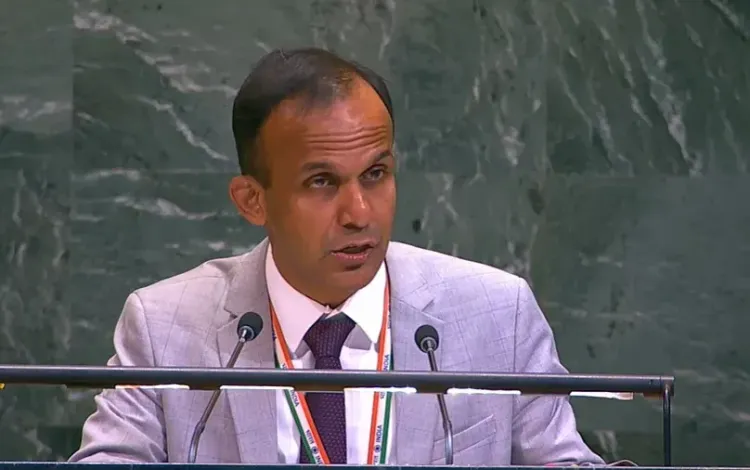
India on 11 July called on the United Nations General Assembly to end unilateral economic embargoes and sanctions, arguing they obstruct economic and social development and violate the sovereignty of affected nations. Eldos Mathew Punnoose, a counsellor at India's Permanent Mission to the UN, delivered the statement during the Assembly's annual debate on the issue.
India's Core Argument
Punnoose told the General Assembly that embargoes and sanctions 'impede the realisation of human rights, including the rights to development, food, education and healthcare.' He added that India joins others in calling for an end to such measures, which he said constrain 'the full enjoyment of economic and social development by the populations of affected countries, particularly women and children.'
Framing multilateralism as central to India's foreign policy, Punnoose stated: 'As the world's largest democracy, India regards multilateralism as an article of faith.' He pointed to repeated General Assembly resolutions — adopted annually since 1992 — that have rejected the imposition of laws with extraterritorial effects and coercive economic measures.
The Cuba Embargo in Focus
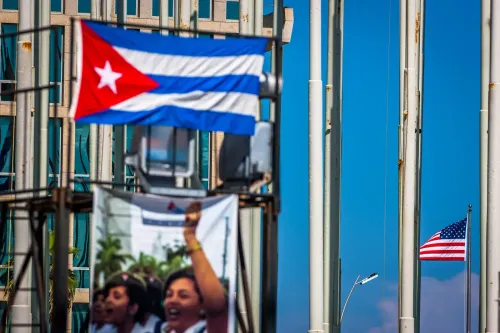
The statement came in the context of the United States embargo on Cuba, which has been the centrepiece of this annual Assembly discussion for over three decades. The US first imposed an arms embargo on Cuba in 1958, followed by a total trade embargo in 1961, with limited exceptions for medicines and food. The embargo has been tightened under President Donald Trump, who has pursued what his administration describes as a maximum pressure strategy against the Cuban government.
Punnoose characterised the unilateral embargo as being 'in contravention of the overwhelming opinion repeatedly expressed [in the UN] and with their obligations under the Charter of the United Nations and international law.' He also noted that Cuba's contributions to international healthcare — through the deployment of its medical personnel to countries in need — deserve recognition, and that the embargo must end to allow the Cuban people to contribute more fully to the international community.
US Position: No Blockade, It Says
Speaking earlier in the week, US Permanent Representative Mike Waltz rejected the characterisation of the measures as a blockade or embargo. 'There is no American blockade. The only embargo in Cuba is the guillotine the regime keeps over the heads of its people,' he said. Waltz cited shiploads of aid Cuba has received from multiple countries, and noted that the US itself was sending $100 million in aid to Cuba, working with the Catholic Church to route food and medicine to those in need.
India's Own Experience With Sanctions
India's position is informed by its own history with external economic pressure. Most recently, India faced secondary sanctions imposed by the Trump administration over its purchase of Russian oil — sanctions that were subsequently rescinded by the US Supreme Court. India has consistently maintained that only the UN Security Council, as authorised under the UN Charter, holds the legitimate power to impose embargoes and sanctions on member states.
What This Signals
India's intervention reinforces its long-standing foreign policy stance of opposing unilateral coercive measures by any single country, regardless of that country's geopolitical weight. As New Delhi deepens its engagement with the Global South, this position is likely to remain a consistent thread in its multilateral diplomacy. The General Assembly is expected to adopt its annual resolution on the Cuba embargo in the coming days.
Point of View
But the timing gives it sharper edges. Having faced secondary sanctions from Washington over Russian oil just months ago, New Delhi is not speaking in the abstract — it is speaking from recent experience. The broader pattern is consistent: India has never accepted the premise that any single power can unilaterally impose economic punishment on sovereign states. What is worth watching is whether this position, increasingly shared by the Global South, begins to shift the diplomatic cost calculus for countries that rely on unilateral sanctions as a foreign policy tool. The annual Cuba resolution has passed overwhelmingly for three decades with minimal effect; the question is whether India's growing geopolitical weight can eventually translate this consensus into something with real enforcement teeth.
NationPress
10 Oct 2026
Frequently Asked Questions
Why did India speak out against sanctions at the UN General Assembly?
India called for an end to unilateral economic embargoes and sanctions on 11 July at the UN General Assembly, arguing they violate national sovereignty and obstruct the realisation of human rights including food, education, and healthcare. India's statement was made during the Assembly's annual debate focused on the US embargo on Cuba.
What is India's position on the US embargo on Cuba?
India characterised the US embargo on Cuba as a violation of the UN Charter and international law, noting that the General Assembly has repeatedly rejected such unilateral coercive measures since 1992. India's representative said the Cuban people have much to contribute to the international community and the embargo must end.
What did the US say in response at the UN?
US Permanent Representative Mike Waltz denied that any blockade or embargo exists, arguing the only constraint on Cuba's people comes from its own government. He said the US was sending $100 million in aid to Cuba and working with the Catholic Church to deliver food and medicine.
How does this relate to India's own experience with sanctions?
India recently faced secondary sanctions from the Trump administration over its purchase of Russian oil, which were subsequently rescinded by the US Supreme Court. This experience has reinforced India's longstanding opposition to unilateral economic coercion by individual states.
Who has the legal authority to impose sanctions under international law?
Under the UN Charter, only the UN Security Council has the authority to impose binding sanctions and embargoes on member states. India's representative at the General Assembly stressed that unilateral sanctions imposed by individual countries fall outside this legal framework.