Indonesia earthquake death toll rises to 68 in East Nusa Tenggara

Synopsis
A 7.7-magnitude earthquake that struck Indonesia's East Nusa Tenggara on 15 August has killed 68 people across seven regencies, injured 213 more, and triggered over 1,500 aftershocks. With 914 houses heavily damaged and a 14-day emergency declared, the scale of destruction underscores Indonesia's chronic vulnerability on the Pacific Ring of Fire.
Key Takeaways
The 7.7-magnitude earthquake that hit East Nusa Tenggara, Indonesia on 15 August has killed 68 people and injured 213 others.
Fatalities span seven regencies , with Manggarai (26 deaths) and East Manggarai (24 deaths) worst affected.
At least 1,576 aftershocks have been recorded since the main quake.
The quake damaged 914 houses heavily , 93 educational facilities , 36 health facilities , and 38 government offices .
A 14-day emergency response is in effect from 15 to 28 August , declared by governor Melki Laka Lena .
Electricity restoration on Flores Island has reached 99.5% ; telecom services at 95.4% .
The death toll from the 7.7-magnitude earthquake that struck Indonesia's East Nusa Tenggara (NTT) province has climbed to 68, the National Disaster Management Agency (BNPB) confirmed on Monday, 17 August. A further 213 people sustained injuries across the seven affected regencies on Flores Island.
District-wise Fatalities
BNPB Deputy for Prevention Abdul Muhari told a press conference that the fatalities were distributed across multiple regencies: 26 deaths in Manggarai, 24 in East Manggarai, eight in Nagekeo, four in Sikka, and two each in Ende, West Manggarai, and Ngada. Officials confirmed no residents remain reported missing across all seven affected regencies.
Scale of Destruction
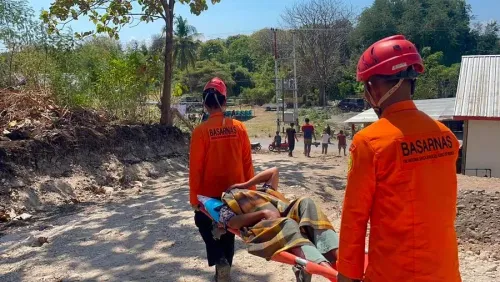
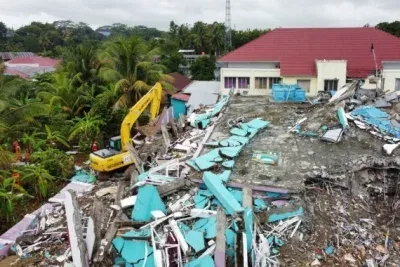
The quake, centred approximately 30 km northeast of Mbay in Nagekeo Regency at a depth of 15 km, damaged 914 houses heavily, 126 moderately, and 317 lightly. Infrastructure losses also include 93 educational facilities, 36 health facilities, and 38 government offices. At least 1,576 aftershocks have been recorded since the main tremor struck on 15 August.
Emergency Response and Relief Operations
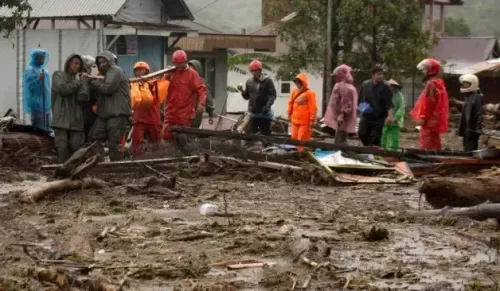
The East Nusa Tenggara provincial government declared a 14-day emergency response status — running from 15 to 28 August — under a decree issued by provincial governor Melki Laka Lena. The declaration is aimed at streamlining disaster response, evacuation, relief distribution, and recovery efforts. The Indonesian military has deployed personnel and equipment to accelerate aid delivery to hard-to-reach areas.
Health and Utilities Restoration
The Health Ministry has dispatched two field hospitals to Manggarai and Nagekeo, and deployed medical and crisis management teams to support health services in quake-hit zones. On the utilities front, electricity restoration across western and eastern Flores Island has reached 99.5 per cent, while telecommunications services across Flores have recovered to 95.4 per cent. Roads in the affected areas are generally passable, though some restrictions remain in place.
What Comes Next
With the emergency response window active until 28 August, authorities are focused on structural damage assessments and ensuring sustained medical access to isolated communities. Indonesia sits on the Pacific Ring of Fire and is among the world's most seismically active nations, making robust disaster-response infrastructure a persistent governance priority.
Point of View
While improving, is still tested acutely by geography. With over 1,500 aftershocks and damage spread across seven regencies on a rugged island, the logistical challenge of last-mile relief is immense. The 99.5% electricity restoration figure is encouraging, but 914 heavily damaged homes and 36 health facilities out of service mean the human cost will compound over weeks, not days. Indonesia's position on the Ring of Fire makes this not an exceptional event but a recurring governance stress test — one that demands permanent investment, not emergency improvisation.
NationPress
17 Aug 2026
Frequently Asked Questions
How many people have died in the Indonesia East Nusa Tenggara earthquake?
The death toll has risen to 68, according to the National Disaster Management Agency (BNPB) as of 17 August. A further 213 people were injured across seven affected regencies.
What was the magnitude of the Indonesia earthquake on 15 August?
The earthquake measured 7.7 in magnitude and was centred approximately 30 km northeast of Mbay in Nagekeo Regency at a depth of 15 km. It struck on 15 August and has since been followed by at least 1,576 aftershocks.
Which areas were most affected by the East Nusa Tenggara earthquake?
Seven regencies were affected: Manggarai (26 deaths), East Manggarai (24 deaths), Nagekeo (8 deaths), Sikka (4 deaths), and Ende, West Manggarai, and Ngada with two deaths each.
What emergency measures have been declared after the Indonesia earthquake?
The East Nusa Tenggara provincial government declared a 14-day emergency response status running from 15 to 28 August, under a decree signed by governor Melki Laka Lena. The Indonesian military has also deployed personnel to aid relief distribution.
What is the extent of infrastructure damage from the Flores Island earthquake?
The quake heavily damaged 914 houses, moderately damaged 126, and lightly damaged 317. It also affected 93 educational facilities, 36 health facilities, and 38 government offices across the impacted regencies.