Kumamoto earthquake death toll rises to 38, thousands displaced
Synopsis
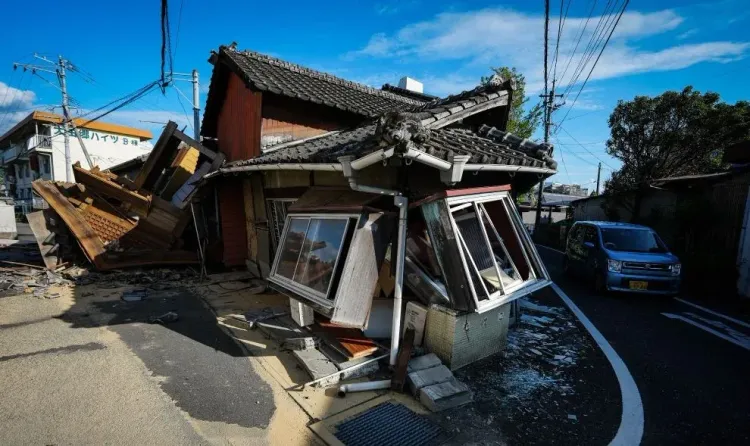
A magnitude 7.1 earthquake in Japan's Kumamoto Prefecture has killed at least 38 people, triggered a shopping mall explosion, and collapsed an industrial smokestack — leaving over 9,400 displaced and nearly 80,000 households without water. With no restoration timeline set, the scale of the disaster is still unfolding.
Key Takeaways
The death toll from the magnitude 7.1 Kumamoto earthquake has risen to 38 , the prefectural government confirmed on Sunday .
At a Nippon Paper factory in Yatsushiro City , a collapsed smokestack killed 8 and injured 2 out of 10 rescued.
An explosion at Aeon Mall Kumamoto in Kashima Town killed 7 and injured 5 ; search operations are ongoing.
More than 9,400 people are sheltering across 406 evacuation centres in the prefecture.
Approximately 79,700 households remain without water, with no restoration timeline announced.
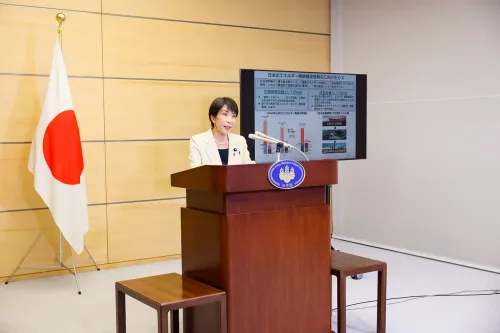
Prime Minister Sanae Takaichi chaired an emergency disaster response meeting on Wednesday , pledging swift government action.
The death toll from the magnitude 7.1 earthquake that struck Kumamoto Prefecture in southwestern Japan has climbed to 38, according to the prefectural government, which made the announcement at a disaster response headquarters meeting on Sunday morning. The figure includes individuals whose deaths are still being investigated to confirm whether the tremor was the direct cause.
Key Developments at Affected Sites
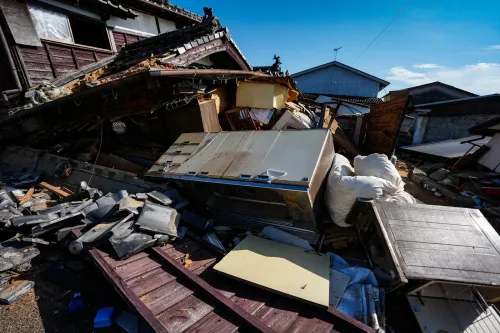
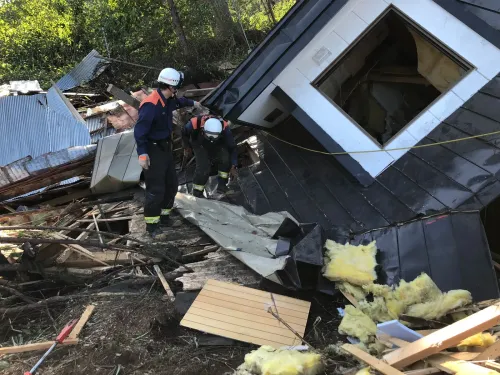
At a Nippon Paper factory in Yatsushiro City, the earthquake caused a smokestack to collapse, trapping workers inside. Rescue teams pulled 10 people from the debris — eight were confirmed dead and two sustained injuries. A person who had been reported missing was subsequently found in the rubble shortly after noon on Thursday, though officials have not yet disclosed that individual's condition.
At Aeon Mall Kumamoto in Kashima Town, a large explosion erupted in the aftermath of the quake, compounding the disaster. Rescue teams recovered 12 people from the site — seven were confirmed dead and five were injured. Police and firefighters are continuing search operations to determine whether any additional survivors or victims remain trapped within the structure.
Thousands Displaced, Utilities Disrupted
More than 9,400 people are currently sheltering across 406 evacuation centres throughout the prefecture, officials said. The earthquake has left approximately 79,700 households without water supply, and local authorities have stated there is no timetable for restoration in any of the affected municipalities.
Around 19,000 households remained without electricity as of Thursday afternoon. Kyushu Electric Power indicated that power restoration was expected by Friday evening, provided repair work proceeded as planned.
Government Response
Japanese Prime Minister Sanae Takaichi chaired the Second Extraordinary Disaster Countermeasures Headquarters Meeting for the Kumamoto earthquake on Wednesday. Kumamoto Prefecture Governor Kimura and Deputy Minister Tsushima of the Cabinet Office attended the meeting virtually.
Takaichi offered condolences to the victims and expressed sympathies to bereaved families, assuring that the government is working swiftly to assess damage while relevant ministries coordinate initial responses.
What Comes Next
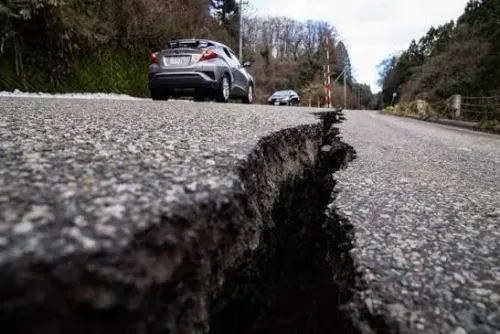
With no water restoration timeline in place for affected municipalities and search operations still ongoing at multiple sites, the humanitarian situation in Kumamoto remains acute. The scale of infrastructure damage — spanning utilities, commercial buildings, and industrial facilities — suggests the recovery phase will extend well beyond the immediate rescue effort.
Point of View
Yet the Kumamoto disaster exposes a persistent vulnerability: secondary hazards — industrial collapses, mall explosions — are claiming lives alongside the tremor itself. The absence of any water restoration timeline for nearly 80,000 households is a logistical alarm bell. Kumamoto was also struck by a devastating earthquake sequence in 2016, raising questions about whether infrastructure in the region has been adequately reinforced in the intervening years. The government's response machinery is moving, but the pace of utility restoration and the still-incomplete casualty count suggest the true scale of this disaster has not yet been fully reckoned with.
NationPress
2 Aug 2026
Frequently Asked Questions
How many people have died in the Kumamoto earthquake?
The death toll has risen to 38, according to the Kumamoto prefectural government as of Sunday. The figure includes individuals whose deaths are still being investigated to confirm a direct link to the magnitude 7.1 tremor.
What caused the explosion at Aeon Mall Kumamoto?
A large explosion occurred at Aeon Mall Kumamoto in Kashima Town following the earthquake. Seven people were confirmed dead and five were injured among the 12 rescued; the precise cause of the explosion has not been officially confirmed, and search operations are continuing.
How many people have been displaced by the Kumamoto earthquake?
More than 9,400 people are currently staying at 406 evacuation shelters across Kumamoto Prefecture, according to officials. The displacement is compounded by the loss of water and electricity services across tens of thousands of households.
When will water and electricity be restored in Kumamoto?
Kyushu Electric Power indicated electricity could be restored by Friday evening if repairs proceeded as planned. However, local authorities stated there is currently no timetable for restoring water service to the approximately 79,700 affected households.
How has the Japanese government responded to the Kumamoto earthquake?
Prime Minister Sanae Takaichi chaired the Second Extraordinary Disaster Countermeasures Headquarters Meeting on Wednesday, attended virtually by Kumamoto Governor Kimura and Deputy Minister Tsushima of the Cabinet Office. Takaichi offered condolences and assured that relevant ministries are coordinating emergency responses.