Japan earthquake death toll rises to 28 in Kumamoto Prefecture

Synopsis
A magnitude 7.1 earthquake has killed at least 28 people in Japan's Kumamoto Prefecture, with an explosion at an Aeon shopping mall adding to the toll. Over 10,000 are in shelters, 75,000 households lack water, and rescue teams — now numbering over 8,000 personnel — are still pulling survivors from collapsed sites including a paper mill and a shopping mall.
Key Takeaways
A magnitude 7.1 earthquake struck Kumamoto Prefecture, Japan on Tuesday at 4:27 pm local time at a depth of 10 km .
The death toll has risen to 28 , including disaster-related deaths, as of 30 July ; 17 deaths are confirmed.
Eight people died at the Nippon Paper Industries plant in Yatsushiro ; five at an Aeon mall in Kashima following a post-quake explosion.
Over 10,000 people are in evacuation centres; 23,000 households face power outages and 75,000 households lack water.
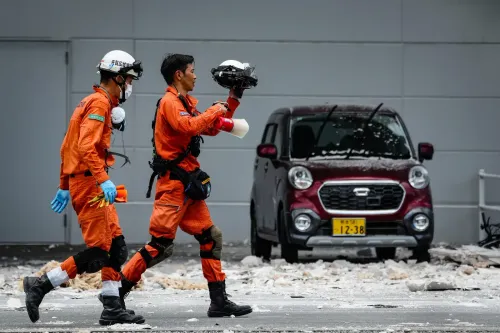
Rescue forces total over 8,000 personnel — 4,600 Self-Defence Forces, 2,000 police, 1,400 fire services.
Prime Minister Sanae Takaichi chaired an emergency disaster meeting on Wednesday and pledged swift infrastructure restoration.
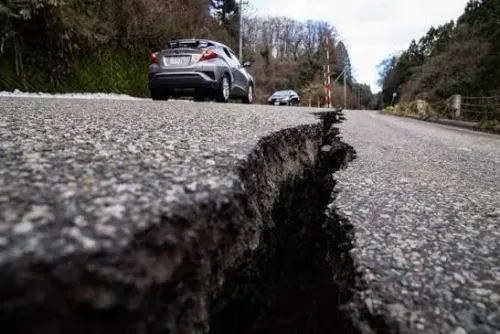
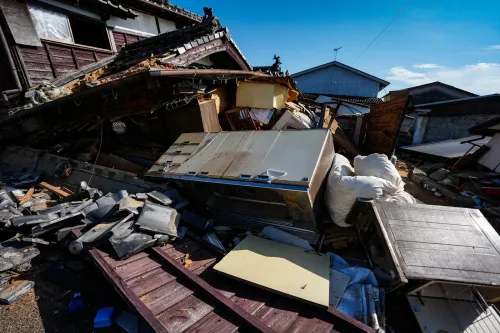
The death toll from the powerful magnitude 7.1 earthquake that struck Kumamoto Prefecture in Japan on Tuesday has climbed to 28, including those classified as disaster-related deaths, local media reported on Thursday, citing a government spokesperson. The earthquake struck at a depth of 10 kilometres at 4:27 pm local time, according to Japan's Meteorological Agency.
Confirmed Deaths and Missing Persons
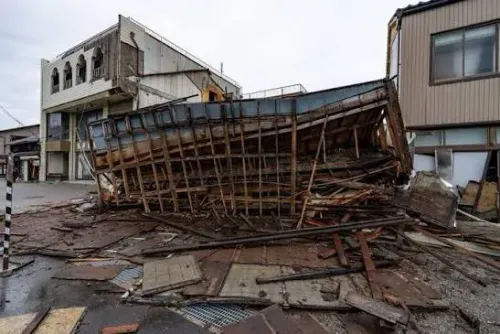
Of the 28 total fatalities, 17 have been confirmed, according to data released by the Kumamoto prefectural government. Among the confirmed dead, eight were killed at the Nippon Paper Industries Co. plant in Yatsushiro, and five perished at an Aeon shopping mall in Kashima, which was struck by an explosion in the aftermath of the quake. Search operations remain active at the Nippon Paper plant, where one person is still reported missing.
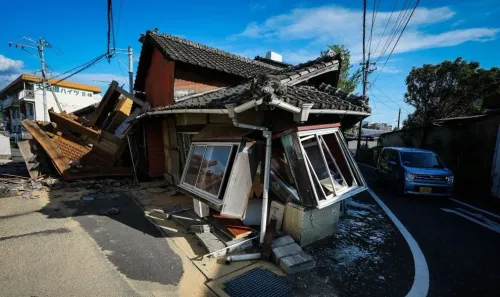
Notably, six other individuals showed no vital signs, according to the government tally. Authorities have warned that the casualty count is likely to rise further as several houses have collapsed across the affected region.
Discrepancy in Official Figures
Chief Cabinet Secretary Minoru Kihara, addressing a press conference, acknowledged a discrepancy between the central government's casualty figures and those reported by Kumamoto Prefecture. He explained that the central government relies on data from fire and police departments, while the prefecture compiles statistics reported directly by municipalities. The divergence underscores the logistical complexity of disaster accounting in the immediate aftermath of a major seismic event.
Humanitarian Crisis: Evacuations and Outages
The scale of displacement is significant. Over 10,000 people are currently sheltering in evacuation centres across the region. Approximately 23,000 households are facing power outages, while around 75,000 households remain without water supply, according to the prefecture. The Japan Self-Defence Forces have been deployed for water supply operations and patient transport.
Government Response and Rescue Operations
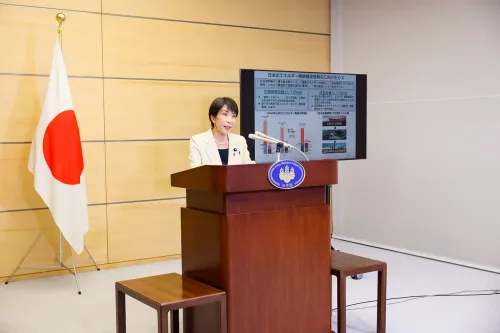
Japanese Prime Minister Sanae Takaichi on Wednesday chaired the Second Extraordinary Disaster Countermeasures Headquarters Meeting for the Kumamoto earthquake, attended virtually by Kumamoto Prefecture Governor Kimura and Deputy Minister Tsushima of the Cabinet Office. Takaichi offered condolences to the bereaved families and pledged swift action to restore essential infrastructure, including electricity and water supply.
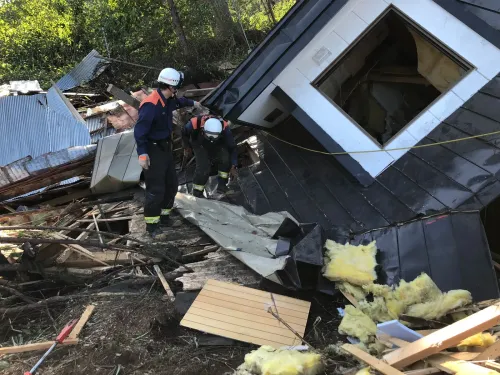
In a post on X following the meeting, Takaichi wrote, 'Regarding search and rescue operations, the Self-Defense Forces have been reinforced to approximately 4,600 personnel, the police to approximately 2,000, and the fire services to approximately 1,400, with tireless search and rescue activities underway.' She added, 'Search and rescue operations are a race against time. At sites including ION Mall Kumamoto and the Nippon Paper Yatsushiro Mill, there are still people awaiting rescue.'
With rescue teams racing against time and thousands still displaced, the full human cost of the Kumamoto earthquake is expected to become clearer in the coming days as access to collapsed structures improves.
Point of View
And its complexity — a paper mill collapse, a shopping mall explosion, and a data-reporting gap between the central government and the prefecture — points to systemic gaps in real-time disaster communication. The 75,000 households without water is the detail that should be driving urgency: in a modern G7 economy, prolonged water disruption after a quake is a secondary health crisis waiting to happen. With over 10,000 in shelters and rescue teams still at active sites, the official toll of 28 almost certainly undercounts the final figure. Japan's disaster response machinery is among the world's best, but the discrepancy in official casualty counts flagged by Chief Cabinet Secretary Kihara is a transparency problem that erodes public trust precisely when it is most needed.
NationPress
13 Sept 2026
Frequently Asked Questions
What is the current death toll from the Kumamoto earthquake in Japan?
The death toll from the magnitude 7.1 earthquake that struck Kumamoto Prefecture has risen to 28 as of 30 July, including those classified as disaster-related deaths. Of these, 17 are confirmed fatalities, according to the Kumamoto prefectural government.
When and where did the Japan earthquake strike?
The earthquake struck Kumamoto Prefecture on Tuesday at 4:27 pm local time, at a depth of 10 kilometres, according to Japan's Meteorological Agency. The magnitude was recorded at 7.1.
Why did an explosion occur at the Aeon mall in Kashima?
An explosion struck the Aeon shopping mall in Kashima following the earthquake, killing five people. The source of the explosion has not been detailed in official statements, and investigations are ongoing.
How many people are in evacuation centres after the Kumamoto quake?
Over 10,000 people are currently sheltering in evacuation centres across the affected region. Additionally, around 23,000 households face power outages and approximately 75,000 households are without water supply.
What is Japan's government doing in response to the Kumamoto earthquake?
Prime Minister Sanae Takaichi chaired the Second Extraordinary Disaster Countermeasures Headquarters Meeting on Wednesday and pledged swift restoration of electricity and water. Rescue forces of over 8,000 personnel — including Self-Defence Forces, police, and fire services — are conducting active search and rescue operations at multiple sites.