Kumamoto earthquake death toll climbs to 39, 6,500 still in shelters
Synopsis
Japan's Kumamoto earthquake, already one of the deadliest in the region since 2016, has claimed 39 lives with 6,500 people still displaced. A heat-stroke death linked to shelter conditions signals a second wave of disaster risk — one that relief operations are now racing to contain.
Key Takeaways
The 7.1-magnitude earthquake struck Kumamoto Prefecture , southwestern Japan, on 28 July .
The death toll has risen to 39 , with 36 deaths directly caused by the tremor.
More than 6,500 people remain in evacuation shelters as of 8 August .
Total casualties in the prefecture stand at 205 , including 23 with severe injuries.
An explosion at an Aeon mall in Kashima killed 7 ; a Yatsushiro paper plant collapse killed 9 .
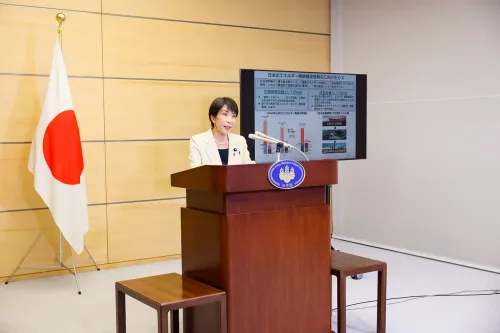
Prime Minister Sanae Takaichi visited affected areas on Monday , pledging full government support.
The death toll from the 7.1-magnitude earthquake that struck Kumamoto Prefecture in southwestern Japan on 28 July has risen to 39, with more than 6,500 people still displaced in evacuation shelters, the prefectural government confirmed on Saturday, 8 August. The disaster has left 205 casualties in total across the prefecture.
Breakdown of Fatalities
Of the 39 deaths, 36 were directly caused by the tremor. One additional fatality, apparently due to heat stroke, is believed to be disaster-related. The circumstances surrounding the remaining two deaths are still under examination for possible links to the earthquake, according to prefectural authorities.
A total of 23 people sustained severe injuries, contributing to the overall casualty count of 205 in the prefecture.
Scale of Destruction
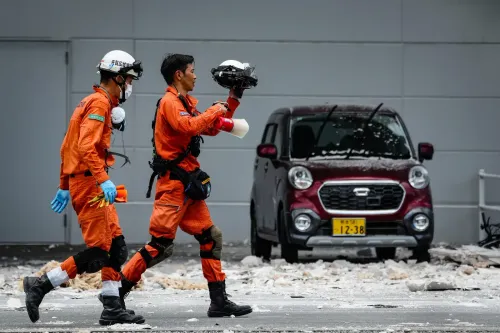
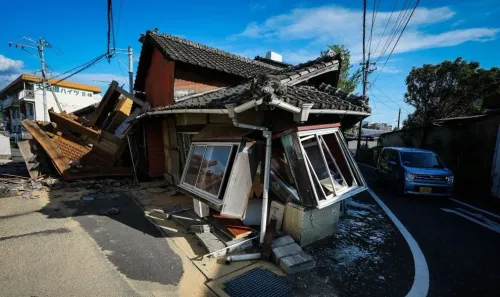
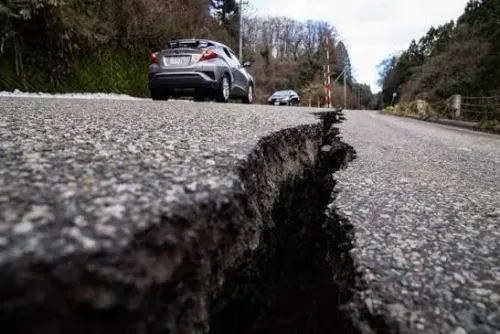
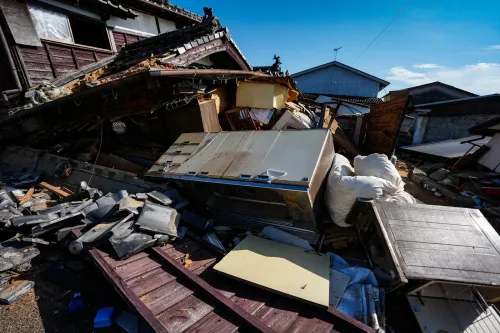
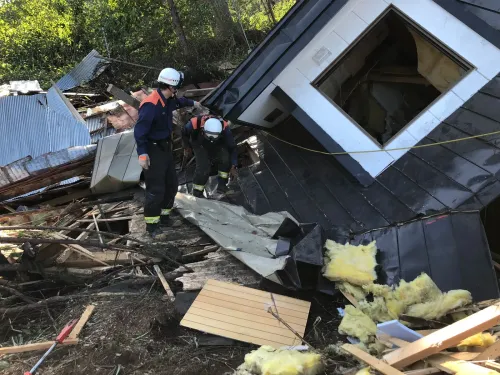
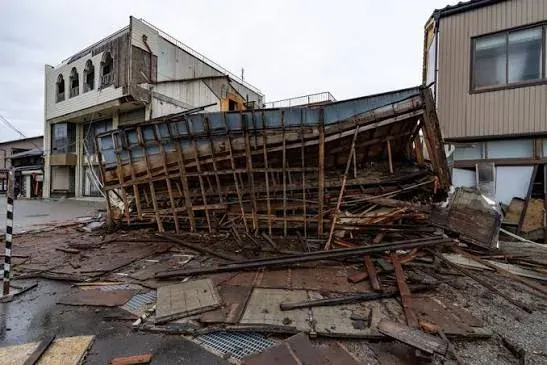
The earthquake registered a maximum of 7 on Japan's seismic intensity scale in the worst-affected zones — the highest level on the scale, at which people reportedly cannot remain standing and may be thrown through the air. Aerial footage captured by public broadcaster NHK on 28 July showed extensive structural damage, with exterior walls peeled away to expose steel framework, partial roof collapses, and a large hole visible on at least one rooftop.
Among the hardest-hit sites were an Aeon shopping mall in the town of Kashima, where an explosion following the quake killed seven people, and a paper plant in Yatsushiro, where nine people died.
Prime Minister Visits Affected Areas
Japanese Prime Minister Sanae Takaichi visited quake-hit areas on Monday, donning a disaster response uniform during a stop at an evacuation shelter in the town of Hikawa. She also conducted an aerial survey of the Kashima mall site by helicopter.
'The government will do everything that it can do,' Takaichi told residents, according to Kyodo News.
What Comes Next
With thousands still in shelters and investigations into multiple deaths ongoing, relief and rehabilitation efforts are expected to intensify in the coming days. The disaster has renewed focus on Japan's earthquake preparedness infrastructure, particularly in Kumamoto, which was also devastated by a major quake sequence in April 2016. Authorities have not yet issued an updated timeline for when displaced residents may return to their homes.
Point of View
Yet Kumamoto was struck hard in 2016 and remains structurally vulnerable. The fact that two deaths are still under investigation for quake linkage suggests the final toll could climb further. International attention tends to fade after the first 72 hours; the real test of response quality is measured in weeks, not days.
NationPress
22 Sept 2026
Frequently Asked Questions
What is the current death toll from the Kumamoto earthquake?
As of 8 August, the death toll from the Kumamoto earthquake stands at 39. Of these, 36 deaths were directly caused by the 7.1-magnitude tremor, one is linked to heat stroke in a shelter, and two remain under investigation.
When did the Kumamoto earthquake strike and how powerful was it?
The earthquake struck Kumamoto Prefecture in southwestern Japan on 28 July, registering a magnitude of 7.1. It reached the maximum intensity of 7 on Japan's seismic scale in the worst-hit areas.
How many people are still displaced after the Kumamoto earthquake?
More than 6,500 people remain in evacuation shelters as of 8 August, according to the prefectural government. Authorities have not yet given a timeline for when residents may return home.
What sites saw the worst casualties in the earthquake?
An explosion at an Aeon shopping mall in the town of Kashima killed seven people, while nine people died at a paper plant in Yatsushiro. Both sites were surveyed by Prime Minister Takaichi during her aerial inspection.
What has the Japanese government done in response to the disaster?
Prime Minister Sanae Takaichi visited quake-affected areas on Monday, touring an evacuation shelter in Hikawa and conducting a helicopter survey of damaged sites. She pledged that 'the government will do everything that it can do' for affected residents.