Democrats win Congress: 5 economic battles they must now fight
Synopsis
Democrats have flipped Congress on a blue wave powered by voter frustration over prices and economic pain — but governing is harder than campaigning. From tariff battles and AI regulation to healthcare cuts and immigration enforcement, the incoming majority faces structural limits on executive power, an internal divide on impeachment, and voters who expect fast results on issues that rarely move fast.
Key Takeaways
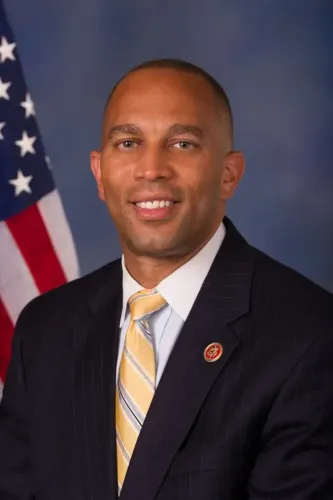
Democrats have captured Congress in a blue wave election, with Hakeem Sekou Jeffries expected to become House Speaker .
Formal Democratic legislative control begins in 2027 ; a lame-duck Republican -controlled Congress remains in charge for the next two months.
Democrats will have strong investigative powers — hearings, subpoenas, impeachment — but most legislation requires a 60-vote Senate threshold .
Kamala Harris and Hillary Clinton have expressed scepticism about pursuing full impeachment of President Trump ; Pete Hegseth has been identified as a potential individual target.
Top economic priorities include curbing tariffs , addressing rising electricity costs linked to data centres and AI , restoring healthcare funding, and easing immigration enforcement.
Democrats are expected to revive climate policies , protect reproductive rights , and restore scientific oversight of health policy.
Democrats have swept to control of Congress on the back of a decisive blue wave, but the harder work begins now — delivering on sweeping economic promises to voters who sent them to Washington with an unmistakable mandate. With Representative Hakeem Sekou Jeffries expected to serve as House Speaker, the party will assume formal legislative control in 2027, following a two-month lame-duck period under the outgoing Republican-controlled Congress.
A Lame-Duck Gap and What Democrats Do With It
Because the United States operates under a constitutional — not parliamentary — system, Democrats must wait until early next year before they can formally drive the legislative agenda. The intervening weeks are not idle time, however. Party strategists are expected to use the period to finalise priorities, brief incoming committee chairs, and begin building coalitions for the Senate's demanding 60-vote threshold on most major legislation.
The relatively more straightforward path lies in oversight. Democrats retain sweeping investigative powers: they can convene Congressional hearings, compel in-person testimony from administration officials, and issue subpoenas for government documents. Accountability actions of this kind do not require Senate supermajorities.
The Impeachment Question
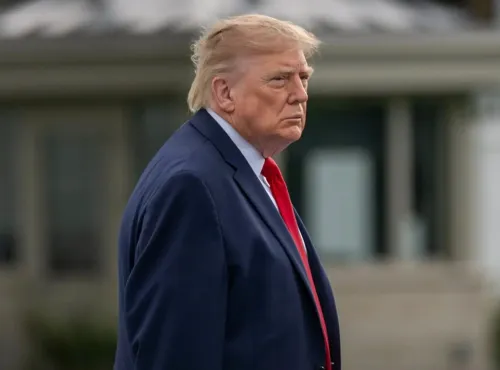
Democrats could move to impeach President Donald Trump — a step they took twice during his previous term — along with select cabinet officials. Secretary of Defense Pete Hegseth has already emerged as a potential target; Republican Representative Thomas Massie of the current House has reportedly prepared eight charges against Hegseth and introduced a resolution to impeach him.
Yet there is notable caution within Democratic ranks. Former presidential candidates Kamala Harris and Hillary Clinton have both expressed scepticism about a full impeachment drive, with Clinton reportedly advocating selective accountability actions against individual officials rather than a broad campaign. Without a two-thirds Senate majority to convict, critics within the party warn that impeachment proceedings could become, in their words, a 'fruitless spectacle' that distracts from economic governance.
Separately, Trump has indicated he may issue pre-emptive pardons for certain aides and tech entrepreneur Elon Musk, reportedly to insulate them from Democratic-led investigations.
Economic Priorities: Prices, Trade and Tech Power
The price spiral that reportedly drove the blue wave will be among the most difficult challenges for the incoming Democratic majority. Democrats' legislative powers on economic matters will frequently collide with Trump's executive authority, limiting the speed of action even when Senate hurdles are cleared.
Reining in the administration's tariff policy is flagged as a top priority. Economists have linked aggressive tariffs to higher consumer prices, and Democrats are expected to push for legislative checks on presidential trade authority. Additionally, by the time Democrats take office, the ongoing Gulf conflict — described as the most immediate economic risk — may have already de-escalated under pressure, potentially easing inflation. Democrats may also invoke the War Powers Act to constrain further military action, a move that could attract some Republican support.
A rising backlash against data centres is another emerging economic battleground. The rapid growth of such facilities, driven in large part by artificial intelligence expansion, is reportedly pushing up electricity costs for ordinary households — an issue Democrats say they will take up. The party is also expected to scrutinise the market power of major technology companies and regulate the proliferation of AI, even as the Trump administration has signalled strong support for the sector.
Healthcare, Social Services and Fiscal Tensions
Restoring cuts to healthcare and social services will require negotiation and trade-offs. Progressive Democrats are pushing for tax increases on high-income earners to close the deficit, shore up the Social Security system for retirees, and expand social programmes — but that agenda is unlikely to command uniform support within the caucus itself, according to reports.
Immigration enforcement is also on the agenda. Democrats are expected to challenge what they describe as excessive enforcement actions by federal agents, including incidents that reportedly affected US citizens, and to oppose policies deporting undocumented migrants to distant third countries.
Climate, Health Policy and Social Issues
Beyond economics, Democrats intend to restore green energy and climate policies rolled back under the current administration, return a scientific basis to public health decision-making, and protect reproductive rights including access to abortion.
Notably, during the campaign cycle Democrats adopted a more cautious approach to contentious social issues — including debates around transgender participation in women's sports and shared facilities — after finding those positions unpopular with many mainstream voters. Whether the party sustains that restraint while in power is a question that will define internal cohesion in the months ahead.
How well Democrats navigate the gap between their ambitious agenda and the structural limits of divided government will determine whether the blue wave translates into durable political capital heading into the next election cycle.
Point of View
While pragmatists like Clinton understand that a failed conviction could hand Trump another political victory. What voters actually sent Democrats to Washington for — lower prices, affordable healthcare, restrained tariffs — cannot be delivered through hearings alone, and the clock is already running.
NationPress
4 Nov 2026
Frequently Asked Questions
What does the Democratic takeover of Congress mean for US economic policy?
Democrats winning Congress means they will have legislative power to push priorities such as curbing tariffs, checking AI and data-centre expansion, restoring healthcare funding, and protecting social services. However, most major legislation requires a 60-vote Senate supermajority, and President Trump retains broad executive authority over trade and foreign policy, limiting how quickly or directly Democrats can act.
Who is expected to become House Speaker under the new Democratic majority?
Representative Hakeem Sekou Jeffries is widely expected to serve as House Speaker when Democrats formally take control of Congress in early 2027. He will lead the party's legislative agenda while navigating tension between progressive priorities and centrist pragmatism.
Will Democrats impeach President Trump or his officials?
Democrats have the power to impeach, as they did twice during Trump's previous term, but there is significant internal scepticism about doing so again. Former candidates Kamala Harris and Hillary Clinton have both expressed reservations, with Clinton reportedly favouring selective accountability actions against individual officials such as Secretary of Defense Pete Hegseth, against whom Republican Representative Thomas Massie has already drafted eight charges.
What economic issues are at the top of the Democratic agenda?
Democrats have flagged control of Trump's tariff policies, rising electricity costs driven by data-centre expansion and AI proliferation, restoration of healthcare and social service funding, immigration enforcement reform, and climate policy revival as their core economic and domestic priorities.
When do Democrats formally take control of Congress?
Democrats will formally assume legislative control in early 2027. For the next two months, a lame-duck Republican-controlled Congress remains in charge, giving Democrats time to finalise their agenda and build coalitions before taking office.