Democrats seize House and Senate in historic rebuke of Trump

Synopsis
The 2026 US midterms didn't just swing the House and Senate — they broke the myth of Trump's electoral dominance. Democrats are projected to hold 256 House seats and 54 Senate seats, flipping even Texas and Kansas. With hand-picked Trump candidates routed and reliable red states flipped, the final two years of his presidency may look very different from the first.
Key Takeaways
Democrats are projected to win approximately 256 seats in the House and at least 54 seats in the Senate , per NBC News projections.
In Kansas , Democrat Adam Hamilton ended a 95-year Republican Senate monopoly.
Hina Hinojosa was elected Texas Governor , ending a 36-year Republican run in the state.
Trump's handpicked Senate candidates, including Ken Paxton and Susan Graham , were defeated.
Trump shifted from threatening to be 'Mr Veto' to saying 'We're going to work with the Democrats' as results came in.
Hakeem Jeffries , the likely new House Speaker, vowed 'dramatic change' and a Congress that 'puts the American people first.'
Voters across the United States delivered a sweeping verdict against President Donald Trump and the Republican Party in the 4 November 2026 midterm elections, with Democrats capturing decisive control of both chambers of Congress by margins that far exceeded the most optimistic pre-election projections. According to NBC News projections, Democrats are on course for approximately 256 seats in the 435-member House of Representatives — a majority of 81 seats — and at least 54 seats in the 100-member Senate, a margin of four.
The Collapse in Trump Country
The scale of the rout was sharpest in states long considered reliably Republican. In Kansas, Democrat Adam Hamilton ended nearly a century of GOP dominance in the Senate, becoming the first Democrat elected to that seat in 95 years. In Texas, Hina Hinojosa was elected Governor, snapping a 36-year Republican hold on the state's highest office. These are not swing states — their fall signals a structural rupture, not a routine electoral correction.
Trump's Handpicked Candidates Routed
The defeats were made particularly personal for the President by the losses of several candidates he had personally championed. Among them was Ken Paxton, the former Texas Attorney General who had been impeached by the Texas House on bribery charges but was later acquitted by the Senate. Also defeated was Susan Graham, the sister of the late Senator Lindsey Graham. Their losses add a biographical dimension to what is already a historic repudiation.
Trump's Truth Social Post and the Veto Threat
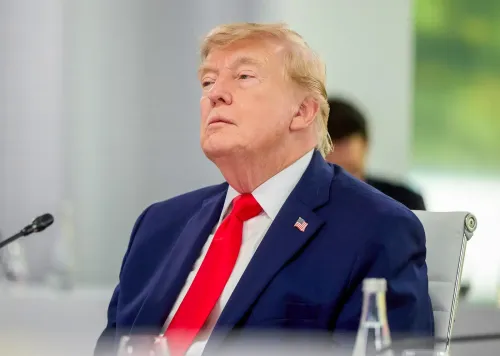
As results poured in, President Trump posted on Truth Social: 'I wasn't on the Ballot and if I was, we would have won IN A LANDSLIDE!' He had also told CBS News in an interview on Tuesday, while voting was still under way, that he intended to be 'Mr Veto' — blocking Democratic legislation and waiting for them to negotiate. However, speaking to Politico as the magnitude of the losses became clear, he struck a markedly different tone: 'I don't wanna be just sitting there for two years vetoing everything.' He added, 'We're going to work with the Democrats to make sure things go well for our country.'
Democrats Signal Confrontation, Not Compromise
Hakeem Jeffries, the Democratic leader in the House and widely expected to become Speaker, was unambiguous in his response. 'We understand as House Democrats we need to deliver dramatic change,' he said. 'Things are broken. We need a Congress that puts the American people first.' Trump claimed in his Politico interview that Democrats had 'already called and they want to work with' him — a claim Jeffries' remarks appeared to contradict in tone, if not in letter.
What Comes Next for Trump's Final Two Years
The result raises immediate questions about whether Republicans within the party will now feel emboldened to defy the President. Those who had shown even mild independence — including Texas Senator John Cornyn — were reportedly punished during the cycle. With the electoral myth of Trump's invincibility punctured, more members of his own party may feel freer to publicly oppose his positions on the tariff war, the conflict with Iran, and his diplomatic overtures toward Russian President Vladimir Putin. An early litmus test, analysts say, will be how Trump now handles Iran — a flashpoint he had previously threatened to 'annihilate.' While fears persist about an executive overreach in the lame-duck period, the size of the Democratic majority may serve as a meaningful constraint. The next two years are shaping up as a confrontation between an emboldened opposition and a president whose political capital, by most measures, has been significantly diminished.
Point of View
Iran, and Washington's aesthetics. The electorate's response was unambiguous. What mainstream coverage underweights is the Republican Party's long-term structural problem: by tying itself so completely to one personality, it has no independent brand to fall back on when that personality underperforms. The losses in Texas and Kansas are not anomalies — they are early data points in a realignment that the party has no clear strategy to reverse.
NationPress
4 Nov 2026
Frequently Asked Questions
What were the results of the 2026 US midterm elections?
Democrats are projected to win approximately 256 seats in the 435-member House of Representatives and at least 54 seats in the 100-member Senate, according to NBC News projections. The results hand Republicans their most significant electoral defeat in recent memory, with losses in traditionally safe states like Texas and Kansas.
Which Republican-held states did Democrats flip?
Democrats flipped two historically Republican strongholds: Kansas, where Adam Hamilton ended a 95-year Republican Senate run, and Texas, where Hina Hinojosa was elected Governor, ending a 36-year Republican hold on the office.
How did President Trump respond to the midterm losses?
Trump posted on Truth Social that he was not on the ballot and claimed he would have won 'IN A LANDSLIDE' if he had been. He initially threatened in a CBS News interview to be 'Mr Veto,' but later told Politico he did not want to spend two years vetoing everything and expressed willingness to work with Democrats.
Who is Hakeem Jeffries and what did he say after the results?
Hakeem Jeffries is the Democratic leader in the House of Representatives and is widely expected to become Speaker following the Democratic majority win. He said Democrats needed to 'deliver dramatic change' and called for a Congress that 'puts the American people first,' signalling a confrontational rather than conciliatory approach.
What do the midterm results mean for Trump's remaining two years in office?
With Democrats controlling both chambers, Trump faces significant legislative constraints and an empowered opposition. The results may also embolden Republicans within his own party to act more independently, particularly on contentious issues such as the tariff war, the Iran conflict, and relations with Russia.