21,951 Pakistanis deported from Gulf nations, exposing remittance dependency
Synopsis
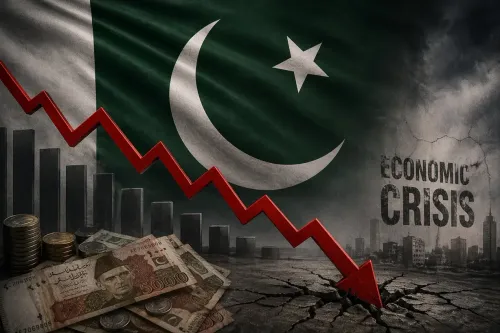
Over 21,951 Pakistanis were deported from Gulf nations in under five months — and the numbers tell a story bigger than visa violations. With six million Pakistanis employed in the Middle East generating 54% of the country's remittances, each deportation wave is also a macroeconomic shock. A potential USD 3–4 billion remittance drop could tip Pakistan's fragile external account into deeper deficit.
Key Takeaways
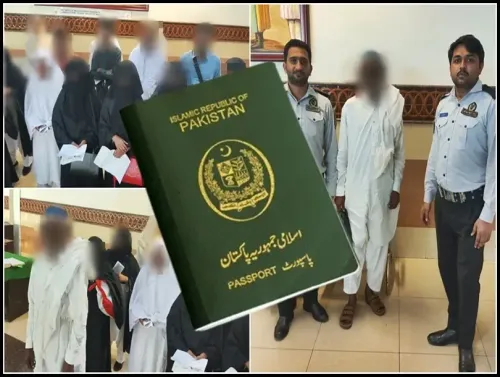
21,951 Pakistanis were deported from Gulf nations between 1 March and 13 July , according to data presented in the Pakistan National Assembly .
Saudi Arabia accounted for the largest share with 15,495 deportations, followed by the UAE ( 3,803 ) and Oman ( 1,606 ).
Approximately six million Pakistanis work in the Middle East, generating 54% of Pakistan's total remittances, according to PIDE economist Shujaat Farooq .
A prolonged West Asia conflict could cut remittances by USD 3–4 billion and strand up to half a million prospective migrant workers.
Pakistan's Defence Minister Khawaja Asif acknowledged in February that Gulf nations restricted Pakistani visas partly due to organised begging syndicates trafficking people to the region.
The deportation of 21,951 Pakistanis from Gulf nations between 1 March and 13 July has laid bare Pakistan's structural dependence on Middle East labour markets to absorb its domestic workforce and sustain its external account through remittances, according to data tabled in the Pakistan National Assembly and analysis by local media.
Deportation Numbers by Country
Saudi Arabia recorded the highest number of deportations at 15,495, followed by the UAE with 3,803 and Oman with 1,606. The stated grounds for deportation spanned a wide range of violations: 6,662 fell under an unspecified 'other' category, 4,628 were flagged for absconding, 2,811 for overstay or illegal entry, 1,294 for jail-related cases, 1,155 for lost passports, 968 for blacklisting, 728 for drug-related offences, and 689 for visa violations. The largest single category — 'other' — has not been further specified by authorities.
The Remittance Vulnerability
Shujaat Farooq, Professor of Economics at the Pakistan Institute of Development Economics (PIDE), has described this dependence as a 'critical vulnerability' in a policy paper titled 'The Middle East Conflict and Its Implications for Pakistani Migrant Workers'. According to his analysis, between 0.7 million and 0.8 million Pakistanis travel to the Middle East annually, with roughly six million currently employed across the region. These workers collectively generate 54 per cent of Pakistan's total remittance inflows.
Farooq warned that a prolonged conflict in West Asia could prevent around half a million Pakistani workers from securing Gulf employment in 2026, while a comparable number could be forced to return home — compounding pressure on an already strained domestic labour market, particularly in Punjab and Khyber Pakhtunkhwa provinces. Remittances, he cautioned, could fall by USD 3 billion to USD 4 billion, potentially widening Pakistan's current-account deficit and straining the exchange rate.
The Begging Syndicate Factor
In February, Pakistan's Defence Minister Khawaja Asif publicly acknowledged that Gulf countries had moved to restrict visa issuance to Pakistani nationals, attributing the decision to organised networks that reportedly traffic beggars — including children, women, and individuals posing as disabled persons — to the region. Asif shared a video on social media in which a Pakistani man describes how entire families participate in coordinated begging operations, with earnings reportedly sufficient to purchase property.
'There are formal contractors who recruit children, women, and fake disabled people and earn billions. This same mafia exports these beggars to Gulf countries in the thousands,' Asif said. He added that Gulf nations had grown 'fed up' with the practice, prompting the visa restrictions. The remarks were reported by Khaleej Times, the UAE-based daily.
A Cycle of Vulnerability
For many Pakistani families, Gulf employment represents a lifeline — a single job abroad can transform a household's financial standing. Yet the deportations underscore a harsh structural reality: workers who lose those positions return to the same weak domestic labour market that compelled them to seek work abroad in the first place. This is not an isolated episode; analysts note that Pakistan's exposure to Gulf labour market shifts has been a recurring pressure point for its external finances. How Islamabad addresses the underlying conditions — domestic job creation, migration governance, and diplomatic repair with Gulf partners — will determine whether this episode marks a turning point or a recurring crisis.
Point of View
Not the disease. Pakistan's failure to generate sufficient formal employment at home has made Gulf labour markets a de facto pressure valve — one that Gulf nations can close at will. The 54% remittance concentration in a single region is a sovereign financial risk that Islamabad has repeatedly acknowledged but never structurally addressed. The begging syndicate controversy adds a diplomatic dimension that could accelerate visa restrictions beyond what economic or security factors alone would justify. Without serious domestic labour market reform, Pakistan will remain hostage to policy shifts in Riyadh and Abu Dhabi.
NationPress
31 Aug 2026
Frequently Asked Questions
How many Pakistanis were deported from Gulf nations and when?
According to data presented in the Pakistan National Assembly, 21,951 Pakistanis were deported from Gulf nations between 1 March and 13 July. Saudi Arabia recorded the highest number at 15,495, followed by the UAE with 3,803 and Oman with 1,606.
What are the main reasons for the deportation of Pakistanis from Gulf countries?
The stated reasons include an unspecified 'other' category (6,662 cases), absconding (4,628), overstay or illegal entry (2,811), jail-related cases (1,294), lost passports (1,155), blacklisting (968), drug offences (728), and visa violations (689). The largest category, 'other', has not been further defined by authorities.
Why are Gulf remittances so critical to Pakistan's economy?
According to PIDE economist Shujaat Farooq, around six million Pakistanis are employed in the Middle East, and their remittances account for 54% of Pakistan's total remittance inflows. A significant disruption could reduce remittances by USD 3–4 billion, widening the current-account deficit and pressuring the exchange rate.
Why did Gulf countries reportedly restrict visas for Pakistani nationals?
Pakistan's Defence Minister Khawaja Asif stated in February that Gulf nations restricted visa issuance partly because of organised syndicates that traffic beggars — including children and women — to the region. He described the networks as 'formal contractors' earning 'billions' through coordinated begging operations.
Which Pakistani provinces are most at risk if Gulf employment declines?
According to the PIDE policy paper, Punjab and Khyber Pakhtunkhwa are the provinces most exposed to a decline in Gulf employment, as they supply the largest share of Pakistan's migrant workforce to the Middle East.