Pakistan Middle East exports fall 2% to $3.09 billion in FY26
Synopsis
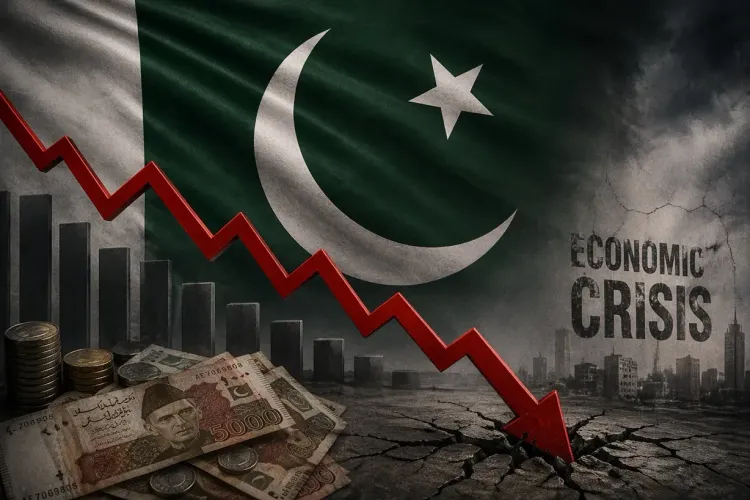
Pakistan's Middle East trade shrank on both ends in FY26 — exports down 2% to $3.09 billion, imports down 4% to $16.41 billion — but the structural story is unchanged: the UAE and Saudi Arabia supply 90% of Pakistan's regional energy needs, leaving Islamabad acutely exposed every time Gulf geopolitics flares.
Key Takeaways
Pakistan's Middle East exports fell over 2 per cent to $3.093 billion in FY26 , according to State Bank of Pakistan data.
Exports to Saudi Arabia dropped 3 per cent to $682.56 million ; Qatar , Bahrain , and Jordan also declined.
Imports from the Middle East contracted 4 per cent to $16.413 billion , driven by lower inflows from Bahrain , Qatar , and Kuwait .
The trade deficit with the Middle East narrowed 4.48 per cent to $13.32 billion in FY26 from $13.94 billion in FY25.
The UAE and Saudi Arabia together supply around 90 per cent of Pakistan's energy imports from the region.
June was the fourth month after March to record an import contraction, reflecting sustained geopolitical drag.
Pakistan's exports to the Middle East declined by over 2 per cent year-on-year to $3.093 billion in financial year 2025-26 (FY26), according to data published by Dawn citing the State Bank of Pakistan. The contraction reflects the mounting pressure of ongoing regional conflicts and geopolitical uncertainties on Pakistan's trade corridors.
Key Export Movements
Among major markets, exports to Saudi Arabia slipped 3 per cent to $682.56 million in FY26, down from $706.04 million in the previous year. Shipments to Qatar, Bahrain, and Jordan also recorded declines during the period. In contrast, exports to Kuwait increased, offering a partial offset. Exports to the United Arab Emirates (UAE) — Pakistan's single largest export destination in the region — remained largely flat.
Import Bill Also Contracts
Pakistan's imports from the Middle East fell by 4 per cent to $16.413 billion in FY26, compared with $17.097 billion in FY25. The decline was driven primarily by lower inflows from Bahrain, Qatar, and Kuwait. However, imports from the UAE, Saudi Arabia, and Jordan moved higher during the same period. Notably, June was the fourth month after March to record an import contraction, underscoring the sustained drag from regional instability.
Trade Deficit Narrows, But Structural Dependence Persists
Pakistan's trade deficit with the Middle East narrowed by 4.48 per cent to $13.32 billion in FY26, down from $13.94 billion in the prior fiscal year. This marks a reversal from FY25, when the deficit had widened by 7.37 per cent to $13.974 billion from $13.014 billion in FY24. Despite the narrowing, the structural imbalance remains pronounced. Pakistan continues to rely heavily on the Middle East for energy imports, with the UAE and Saudi Arabia together accounting for roughly 90 per cent of its energy supply from the region. Secondary suppliers — Qatar, Kuwait, Oman, and Bahrain — contribute meaningfully but remain well below their potential.
Geopolitical Sensitivity and What Lies Ahead
The data reinforces how acutely Pakistan's trade flows respond to geopolitical developments, particularly disruptions affecting energy corridors in the Gulf and broader West Asia. This is consistent with a pattern seen across multiple fiscal years, where regional conflict cycles have directly shaped Pakistan's import bill and, to a lesser extent, its export performance. Analysts and trade observers will be watching whether a stabilisation of regional conditions in FY27 can restore momentum, especially given Pakistan's ongoing balance-of-payments pressures and its dependence on Gulf remittances alongside energy imports.
Point of View
But it is largely a function of cheaper or lower-volume energy imports — not a structural improvement in Pakistan's export competitiveness. With the UAE and Saudi Arabia controlling 90 per cent of Pakistan's regional energy supply, Islamabad has almost no diversification buffer when Gulf geopolitics turns volatile. The flat UAE export number masks a deeper problem: Pakistan has not meaningfully grown its non-energy export basket to its largest regional partner. Until it does, every Gulf conflict cycle will produce the same chart — a blip down, a brief recovery, and the same structural deficit.
NationPress
28 Oct 2026
Frequently Asked Questions
By how much did Pakistan's Middle East exports fall in FY26?
Pakistan's exports to the Middle East declined by over 2 per cent year-on-year to $3.093 billion in FY26, according to State Bank of Pakistan data cited by Dawn. Regional conflicts and geopolitical uncertainties were identified as the primary drivers of the contraction.
Which Middle East markets saw a decline in Pakistani exports?
Exports to Saudi Arabia, Qatar, Bahrain, and Jordan all recorded declines in FY26. Saudi Arabia, one of the largest markets, saw a 3 per cent drop to $682.56 million. Exports to Kuwait increased, while shipments to the UAE remained largely unchanged.
How did Pakistan's trade deficit with the Middle East change in FY26?
The trade deficit narrowed by 4.48 per cent to $13.32 billion in FY26, down from $13.94 billion in FY25. This reversed the trend from FY25, when the deficit had widened by 7.37 per cent.
Why is Pakistan so dependent on Middle East imports?
Pakistan relies on the Middle East for a large share of its energy needs, with the UAE and Saudi Arabia together accounting for around 90 per cent of its regional energy imports. Qatar, Kuwait, Oman, and Bahrain are secondary suppliers. This concentration leaves Pakistan's import bill highly sensitive to Gulf geopolitical developments.
What does the import contraction in June signal for Pakistan's trade?
June was the fourth month after March to record an import contraction, suggesting that regional uncertainties are having a sustained — not one-off — impact on Pakistan's trade activity. Analysts will watch FY27 data to determine whether stabilisation of regional conditions can restore trade momentum.