Pakistan trade deficit surges 22% to $39.5 billion in FY2025-26
Synopsis
Pakistan's trade deficit hit $39.5 billion in FY2025-26 — a 22 per cent jump — as exports shrank 6 per cent while imports climbed 8 per cent. With textiles growing just 0.34 per cent and the SBP governor publicly raising the alarm, the structural rot in Pakistan's external account is no longer a background risk. It is front and centre.
Key Takeaways
Pakistan's trade deficit surged 22 per cent to $39.5 billion in fiscal year 2025-26 , per PBS data.
Imports rose 8 per cent to $69.6 billion ; exports fell 6 per cent to $30.1 billion .
In June alone, the monthly trade deficit widened 57 per cent to $4.53 billion .
Textile exports — Pakistan's largest category — earned $17.97 billion , up just 0.34 per cent year-on-year.
SBP Governor Jameel Ahmad and the FPCCI both flagged the widening gap as a threat to foreign exchange reserves.
Pakistan's trade deficit widened by 22 per cent to $39.5 billion in the financial year ended June 2026, as imports climbed and exports contracted, according to data compiled by the Pakistan Bureau of Statistics (PBS). The figures underscore a deepening structural imbalance in the country's external account at a time when the broader economy remains under significant stress.
Key Trade Figures
Pakistan's total imports rose 8 per cent to $69.6 billion during fiscal year 2025-26, while exports fell 6 per cent to $30.1 billion. The monthly picture was even starker: in June alone, the trade deficit ballooned 57 per cent to $4.53 billion, with exports dropping 10 per cent to $2.24 billion and imports surging 26 per cent to $6.77 billion.
Why the Deficit Is Structural
Muhammad Waqas Ghani, head of research at JS Global Capital Limited, described the imbalance as structural in nature. 'Pakistan's trade deficit is structural because the economy relies heavily on imported energy, machinery and industrial raw materials, while exports remain concentrated in low value-added products such as textiles,' he said.
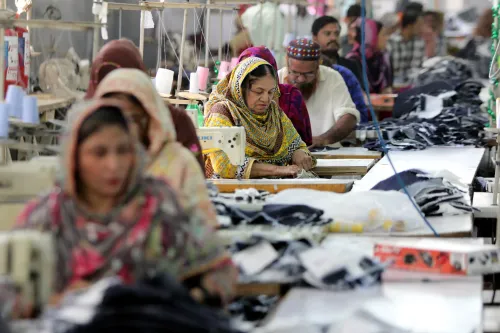
Textiles remain Pakistan's dominant export category, earning $17.97 billion in the last fiscal year — a marginal increase of just 0.34 per cent from $17.91 billion the previous year, according to data from the All Pakistan Textile Mills Association (APTMA). The near-stagnation of textile revenues, despite their outsized share of export earnings, highlights the limited diversification of Pakistan's export base.
Central Bank and Industry Sound the Alarm
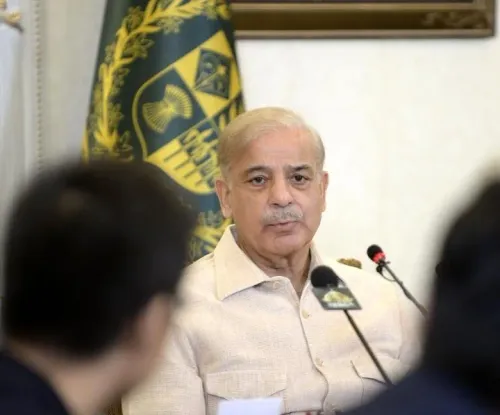
State Bank of Pakistan (SBP) Governor Jameel Ahmad flagged the widening trade deficit as a matter of serious concern during a media briefing in Karachi. His remarks came as business bodies also raised alarms over the trajectory of the trade gap.
The Federation of Pakistan Chambers of Commerce and Industry (FPCCI) termed the development a 'massive deterioration in Pakistan's trade balance.' FPCCI president Atif Ikram Sheikh warned: 'The effect of plunging exports poses a critical threat to the country's external account stability and foreign exchange reserves. It is a clear indicator that our export-oriented industries are being pushed to the wall.'
Demand Recovery Accelerating the Gap
Ghani noted that a partial recovery in domestic demand is compounding the problem. 'As domestic demand and growth are recovering, imports are rising much faster than exports, causing the trade gap to widen,' he said. This dynamic — where a demand-led recovery pulls in more imports without a corresponding export response — is a recurring pattern in Pakistan's economic cycles and risks straining its foreign exchange reserves further.
What Comes Next
With the SBP, industry federations, and independent analysts all flagging the same concern, pressure is mounting on Islamabad to accelerate export diversification and reduce dependence on energy imports. Analysts warn that without structural reforms — particularly in the energy sector and export product mix — the trade deficit could widen further if domestic demand continues to recover faster than export capacity.
Point of View
The political pressure for reform is building — but Pakistan has been here before, and structural diversification has consistently lost out to short-term stabilisation deals with the IMF. The real question is whether this cycle ends differently.
NationPress
5 Oct 2026
Frequently Asked Questions
What is Pakistan's trade deficit for FY2025-26?
Pakistan's trade deficit reached $39.5 billion in the financial year ended June 2026, a 22 per cent increase over the previous year, according to Pakistan Bureau of Statistics data. Imports rose 8 per cent to $69.6 billion while exports fell 6 per cent to $30.1 billion.
Why is Pakistan's trade deficit widening?
Analysts describe the deficit as structural: Pakistan depends heavily on imported energy, machinery, and industrial raw materials, while its exports are concentrated in low value-added goods like textiles. A partial recovery in domestic demand is also pulling in more imports without a matching rise in exports.
How did Pakistan's trade figures look in June 2026?
In June 2026, Pakistan's monthly trade deficit widened 57 per cent to $4.53 billion. Exports fell 10 per cent to $2.24 billion while imports surged 26 per cent to $6.77 billion, making it one of the worst monthly readings of the fiscal year.
What is the state of Pakistan's textile exports?
Textiles remain Pakistan's largest export sector, earning $17.97 billion in FY2025-26 — up just 0.34 per cent from $17.91 billion the previous year, according to APTMA data. The near-flat growth underscores limited diversification in Pakistan's export base.
Who has raised concerns about Pakistan's trade gap?
State Bank of Pakistan Governor Jameel Ahmad raised the issue at a media briefing in Karachi, while the Federation of Pakistan Chambers of Commerce and Industry called it a 'massive deterioration.' FPCCI president Atif Ikram Sheikh warned it poses a critical threat to external account stability and foreign exchange reserves.