Smriti Irani Champions Women MSMEs at Gujarat SPARK Bootcamp
Synopsis
BJP leader Smriti Irani spotlighted the first SPARK bootcamp in Gujarat on 5 July 2026, part of a 300-city initiative to equip women-led MSMEs with market access, credit, supply-chain resilience, and digital tools to scale globally.
Key Takeaways
BJP leader Smriti Irani highlighted the first SPARK bootcamp, held in Gujarat , on 5 July 2026 .
The event is part of the SPARK 100K Collective , which aims to take bootcamps to 300 cities across India .
The initiative focuses on five areas: market access, supply-chain resilience, formal credit, brand building, and digital engagement.
The bootcamp model aligns with existing government schemes including Mudra Yojana , Stand Up India , and Startup India .
Women entrepreneurs and MSME leaders are the primary target group, a segment critical to India's employment and export base.
Further rollout to other states and potential linkage with MSME budget announcements will be key milestones to watch.
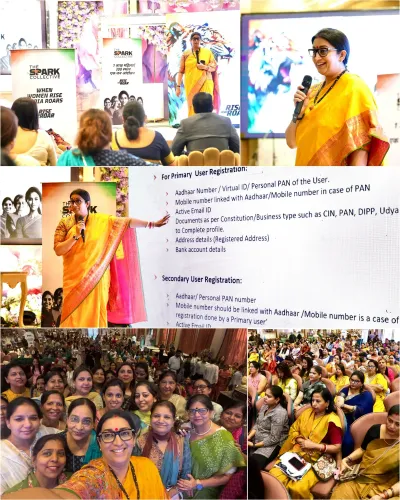
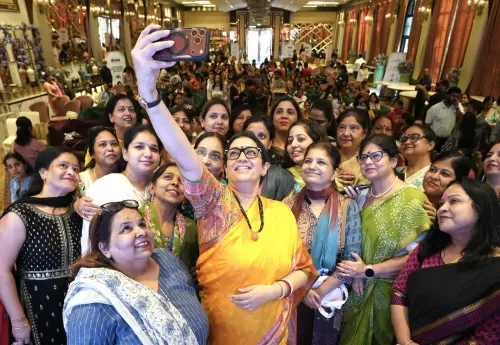
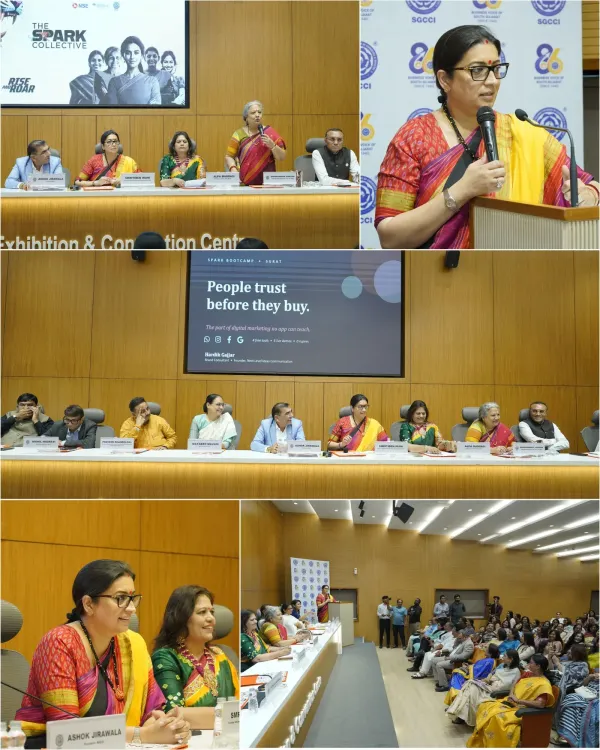
BJP leader Smriti Irani, former Union Minister of Women & Child Development, on Sunday, 5 July 2026, highlighted the first SPARK bootcamp held in Gujarat, calling it a demonstration of the 'incredible drive' of women entrepreneurs and MSME leaders. The event is part of the SPARK 100K Collective, an initiative that aims to carry similar bootcamps to 300 cities across India to help women-led enterprises scale globally.
Context
Irani's post underscores a growing push to bring structured, hands-on capacity-building programmes directly to women entrepreneurs outside metro centres. Gujarat, with its well-established industrial corridors and MSME clusters, served as the launchpad for this first bootcamp. The state has historically been a testing ground for enterprise-development models before their national rollout.
The SPARK 100K Collective frames its mission around five pillars: stronger market access, resilient supply chains, improved access to formal credit, strategic brand building, and digital and social engagement. Irani described the Gujarat bootcamp as a moment to 'leverage this momentum and shape India's next phase of growth.'
Policy Backdrop
The bootcamp model fits within a longer arc of central government programmes targeting women-led micro and small businesses. The Stand Up India scheme, launched in 2016, extended bank loans for greenfield enterprises to women and SC/ST entrepreneurs. The Pradhan Mantri Mudra Yojana, also from 2016, provides collateral-free credit to micro and small enterprises, a large share of which are run by women.
Startup India, announced in 2016, built a national ecosystem of incubators and tax incentives aimed at scaling small businesses. More recently, the Atmanirbhar Bharat framework has stressed supply-chain resilience and export readiness for small enterprises — themes that align closely with the SPARK Collective's stated objectives.
Regional bootcamps represent a decentralised delivery model for these national priorities, taking credit literacy, digital tools, and market-linkage support directly to entrepreneurs in Tier-2 and Tier-3 cities rather than expecting them to travel to large urban centres.
Stakeholders and Impact
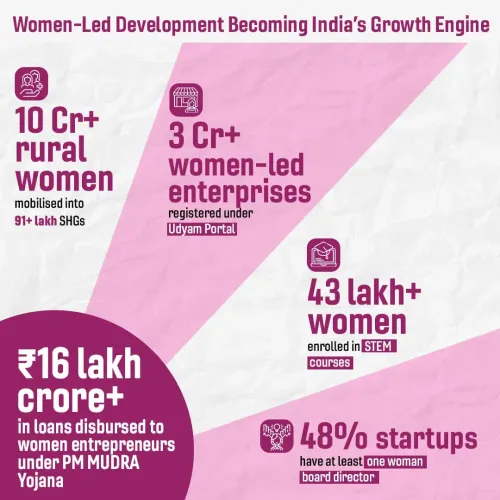
The primary beneficiaries are women entrepreneurs and MSME leaders across India, a segment that contributes substantially to employment and manufacturing output. MSMEs account for a significant share of India's exports and provide livelihoods to hundreds of millions of workers, making their formalisation and scaling a macroeconomic priority.
Access to formal credit remains one of the most persistent barriers for women-led enterprises. Bootcamps that combine financial literacy with brand-building and digital engagement address multiple constraints simultaneously, potentially improving both the survival rate and growth trajectory of participating businesses. Supply-chain resilience training is particularly relevant as small exporters navigate global disruptions.
What's Next
The stated goal of reaching 300 cities signals an ambitious national rollout. Observers will watch whether subsequent bootcamps are linked to formal government credit windows, export promotion councils, or the next Union Budget's MSME policy package. The Gujarat edition's success — or the metrics used to define it — may shape how future editions are structured and funded.
As India positions itself as a global manufacturing and services hub, the formalisation and scaling of women-led enterprises will be a key indicator of whether inclusive growth targets translate into ground-level outcomes.
Point of View
Now channelled into the economic rather than the social-welfare domain. The 300-city framing signals an intent to build visible, scalable outreach before any potential electoral cycle, giving the initiative both policy and political utility. The five-pillar model — credit, supply chains, market access, branding, digital — mirrors the language of mainstream MSME policy, suggesting an effort to align a civil-society or industry-led collective with the government's own economic priorities. Whether the Collective secures formal government backing or remains a parallel ecosystem will determine its long-term reach and credibility.
NationPress
5 Jul 2026
Frequently Asked Questions
What is the SPARK 100K Collective?
The SPARK 100K Collective is an initiative that conducts bootcamps for women entrepreneurs and MSME leaders, with a stated goal of reaching 300 cities across India to help women-led businesses scale globally through credit, supply-chain, and digital support.
What happened at the SPARK bootcamp in Gujarat?
The first SPARK bootcamp in Gujarat, highlighted by BJP leader Smriti Irani on 5 July 2026, brought together women entrepreneurs and MSME leaders to build capabilities in market access, formal credit, brand building, and digital engagement.
How does the SPARK bootcamp relate to government MSME schemes?
The bootcamp's focus areas — formal credit access, supply-chain resilience, and digital tools — align with existing central government programmes such as Mudra Yojana, Stand Up India, and the Atmanirbhar Bharat framework, though SPARK appears to operate as a separate collective.
Why is Gujarat significant for women MSME initiatives?
Gujarat has a strong industrial base and established MSME clusters, making it a natural launchpad for enterprise-development programmes before they are scaled nationally.
What are the main barriers for women-led MSMEs in India?
Access to formal credit, limited market linkages, weak supply-chain integration, and low digital presence are among the most persistent barriers for women-led micro and small enterprises in India.