Pralhad Joshi highlights 10 cr women in SHGs, 3 cr Udyam firms
Synopsis
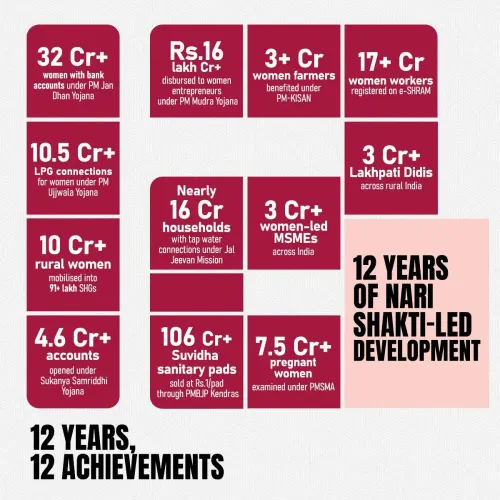
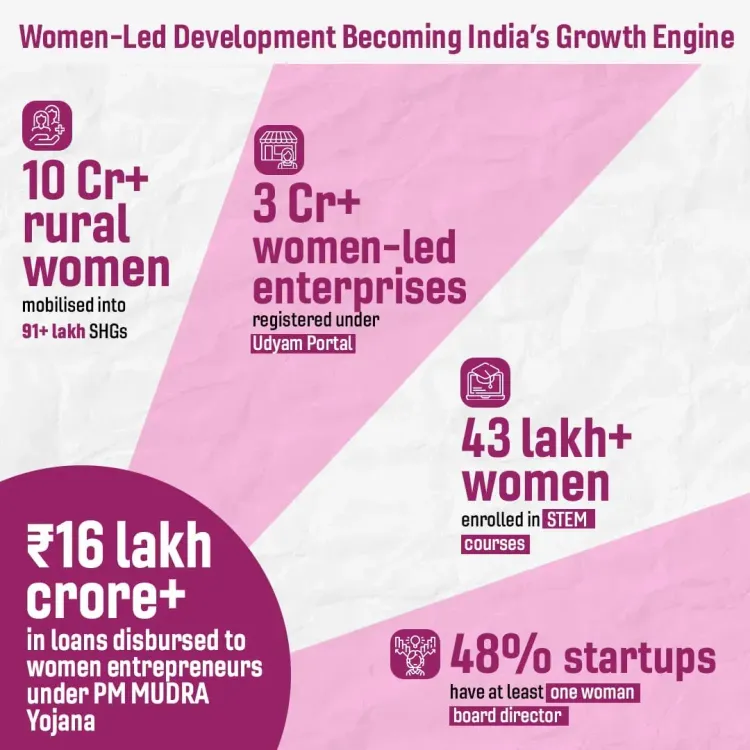
Union Minister Pralhad Joshi on June 12, 2026 cited over 10 crore rural women empowered through Self Help Groups and more than 3 crore women-led enterprises on the Udyam Portal, marking the occasion with #12YearsOfNariShakti and framing women as the drivers of India's development story.
Key Takeaways
Union Consumer Affairs Minister Pralhad Joshi posted on June 12, 2026 highlighting women's economic empowerment milestones.
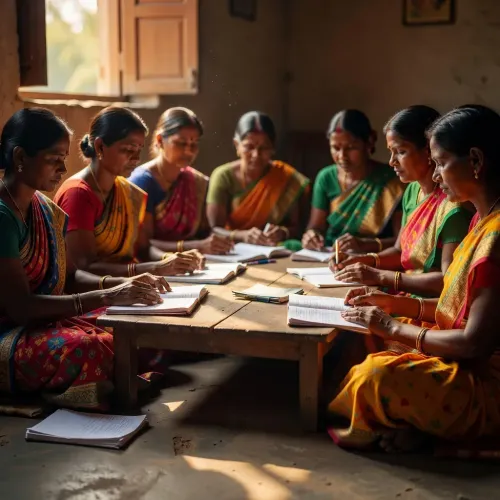
Over 10 crore rural women are stated to be empowered through Self Help Groups (SHGs) under the National Rural Livelihoods Mission .
More than 3 crore women-led enterprises have registered on the Udyam Portal , contributing to India's formal MSME ecosystem.
The post was tagged #12YearsOfNariShakti , situating the data within a broader government women's empowerment narrative.
Policy instruments cited include NRLM (2011) , the Udyam Portal (2020) , and the Stand-Up India scheme (2016) .
Gender-disaggregated Udyam figures and NRLM data are expected to face scrutiny in the upcoming monsoon parliamentary session .
Union Consumer Affairs Minister Pralhad Joshi on Friday, June 12, 2026, highlighted the scale of women-led economic participation in India, citing over 10 crore rural women empowered through Self Help Groups and more than 3 crore women-led enterprises registered on the Udyam Portal, marking the occasion with the hashtag #12YearsOfNariShakti.
Context
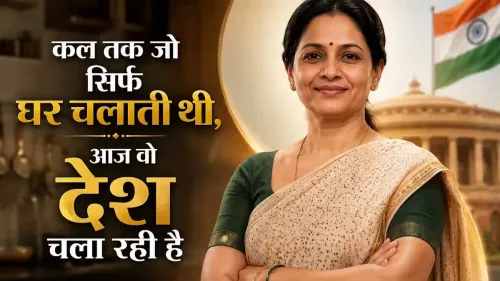
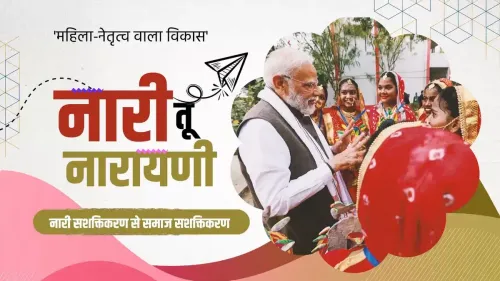
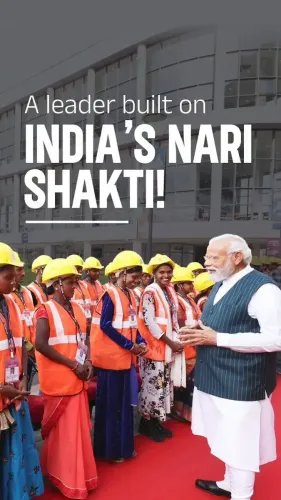
Posting in Kannada, Joshi wrote: 'ಭಾರತದ ಅಭಿವೃದ್ಧಿಯ ಯಶೋಗಾಥೆಯನ್ನು ಇಂದು ನಮ್ಮ ನಾರಿ ಶಕ್ತಿಯೇ ಮುನ್ನಡೆಸುತ್ತಿದೆ' ['Today it is our Nari Shakti that is leading India's story of development']. He credited Self Help Groups (SHGs) as the vehicle through which rural women have achieved economic agency, and pointed to Udyam Portal registrations as evidence of women's growing entrepreneurial footprint in the formal economy. The post was accompanied by an image and was shared from his official handle @JoshiPralhad.
The hashtag #12YearsOfNariShakti frames the post within a broader government communication arc that has positioned women's economic empowerment as a defining achievement of the current administration's tenure.
Policy Backdrop
The National Rural Livelihoods Mission (NRLM), launched in 2011, forms the backbone of SHG expansion in India. The mission organises rural women into community-based groups that access micro-credit, savings mechanisms, and livelihood support, with the explicit goal of financial inclusion for the rural poor. Successive governments have scaled NRLM coverage, and the present administration has consistently highlighted SHG membership numbers as a metric of female empowerment.
The Udyam Registration Portal was introduced in September 2020 by the Ministry of Micro, Small and Medium Enterprises, replacing the earlier Udyog Aadhaar system to simplify MSME registration and improve access to credit and government benefits. The Stand-Up India scheme, launched in 2016, further complemented these efforts by promoting bank loans above Rs 10 lakh to women and Scheduled Caste/Scheduled Tribe entrepreneurs, widening the pipeline of formally recognised women-led businesses.
Stakeholders and Impact
The figures cited by Joshi — if borne out by official data — would represent a significant milestone in India's female economic participation story. Rural women in SHGs gain access to institutional credit, collective bargaining power, and livelihood training that would otherwise be out of reach in remote areas. Their graduation into registered MSME status, tracked through the Udyam Portal, signals a progression from informal community savings to formal enterprise.
Women entrepreneurs registered on the Udyam Portal benefit from priority sector lending norms, government procurement preferences, and a range of MSME ministry schemes. The aggregation of over 3 crore such registrations, as stated by the minister, would place women-led MSMEs as a substantial segment of India's estimated 6 crore-plus MSME ecosystem.
What's Next
The #12YearsOfNariShakti framing suggests the government is building toward a larger communication or policy milestone, potentially tied to a programme anniversary or upcoming legislative session. Analysts and opposition lawmakers are likely to scrutinise the underlying data: the next Economic Survey and MSME ministry gender-disaggregated Udyam figures will be closely watched to verify the numbers cited.
Parliamentary questions on NRLM budget utilisation and SHG-bank linkage targets are expected to feature in the upcoming monsoon session, making the minister's figures a likely reference point in floor debates. How the government translates these headline numbers into deeper policy interventions — on credit access, market linkages, and skilling — will determine the long-term trajectory of the Nari Shakti agenda.
Point of View
Anchoring women's empowerment claims in two concrete, verifiable metrics — SHG membership and Udyam registrations — rather than in anecdote. The #12YearsOfNariShakti hashtag signals a coordinated milestone campaign, likely timed to a programme anniversary, that the party intends to amplify ahead of the monsoon session. By invoking both grassroots SHGs and formal MSME registration in the same breath, the post attempts to connect the rural-poor narrative with the aspirational entrepreneurship narrative, bridging two distinct voter segments. The credibility of the exercise will hinge on whether official data releases corroborate the figures cited, as opposition scrutiny during the monsoon session is virtually certain.
NationPress
27 Sept 2026
Frequently Asked Questions
What is the Nari Shakti scheme in India?
'Nari Shakti' is not a single scheme but an umbrella narrative used by the Indian government to describe a cluster of women's empowerment programmes, including the National Rural Livelihoods Mission's Self Help Groups, the Stand-Up India scheme, and Beti Bachao Beti Padhao, among others.
How many women are in Self Help Groups in India?
Union Minister Pralhad Joshi stated on June 12, 2026 that over 10 crore rural women are empowered through Self Help Groups; the National Rural Livelihoods Mission, launched in 2011, is the primary government vehicle for SHG formation and support.
What is the Udyam Portal and how does it help women entrepreneurs?
The Udyam Portal is an online MSME registration platform launched in September 2020 by the Ministry of MSME to replace Udyog Aadhaar; registered women-led enterprises gain access to priority sector lending, government procurement preferences, and a range of MSME ministry schemes.
What is #12YearsOfNariShakti about?
The hashtag #12YearsOfNariShakti appears to mark a 12-year milestone in the government's women's empowerment agenda, used by BJP leaders including Minister Pralhad Joshi to highlight data on SHG membership and women-led MSME registrations as of June 2026.
What is the Stand-Up India scheme?
The Stand-Up India scheme, launched in 2016 , facilitates bank loans between Rs 10 lakh and Rs 1 crore to at least one Scheduled Caste or Scheduled Tribe borrower and at least one woman borrower per bank branch, aimed at promoting entrepreneurship among underrepresented groups.