Balochistan mulls legal action against Sindh over canal water shortfall
Synopsis
Balochistan is receiving just 0.365 MAF of canal water against an allocated 0.678 MAF — a 46% shortfall that persists even as IRSA reports improved river flows. With diplomatic assurances from Sindh's CM broken and the IRSA Chairman pointing the finger squarely at Sindh's irrigation department, Balochistan is now weighing a legal challenge. The dispute is playing out against a province already in ecological freefall: 95% groundwater-dependent, population surging toward 35 million by 2050, and Quetta households rationing water for survival.
Key Takeaways
Balochistan is receiving 0.365 MAF of canal water against an allocated 0.678 MAF — a shortfall of 0.310 MAF or 46 per cent below its share.
Irrigation Minister Mir Muhammad Sadiq Umrani announced the province is considering legal action against the Sindh government.
IRSA has reportedly written to Sindh, clarifying that Punjab is not responsible for the reductions.
Sindh CM Syed Murad Ali Shah had reportedly assured Balochistan CM Mir Sarfraz Bugti that cuts would stop, but reductions continued, according to officials.
95 per cent of Balochistan's farmland depends on groundwater, with only 5 per cent connected to the Indus Basin canal network, according to the World Bank .
Balochistan's population has grown to 14.89 million and could exceed 35 million by 2050 , intensifying pressure on already strained water resources.
Balochistan's provincial government is considering legal action against Sindh over what it describes as the unfair distribution of canal water, after repeated diplomatic efforts — including direct talks between the two chief ministers — failed to secure the province its allocated share, local media reported on Sunday, 5 July 2025.
The Water Shortfall in Numbers
Pat Feeder Canal Superintending Engineer Mudassar Khoso said the Indus River System Authority (IRSA) had reported improved water availability in the river system, yet the Sindh Irrigation Department was still supplying Balochistan 46 per cent less water than its allocated share. According to Khoso, Balochistan is presently receiving just 0.365 million acre-feet (MAF) of water against an allocated share of 0.678 MAF — a shortfall of 0.310 MAF.
What the Balochistan Government Said
Balochistan's Irrigation Minister Mir Muhammad Sadiq Umrani said the continued reductions were making the water situation increasingly serious. He noted that the issue had been raised with Pakistan's Federal Water Resources Minister, the Sindh Irrigation Minister, the Sindh Irrigation Secretary, and the IRSA Chairman through both meetings and written communications — all without resolution.
Umrani said Balochistan Chief Minister Mir Sarfraz Bugti had personally consulted his Sindh counterpart, Chief Minister Syed Murad Ali Shah, who reportedly assured him that no further reductions would be made. Despite that assurance, officials of the Sindh Irrigation Department reportedly continued to cut supplies. The IRSA Chairman subsequently wrote to the Sindh government, reportedly clarifying that Punjab was not responsible for the deductions and that the reductions were being made by Sindh.
Umrani announced that the provincial government was now considering a legal route against Sindh, and that he would seek Chief Minister Bugti's formal approval before proceeding.
A Deeper Crisis: Water, Population, and Ecology
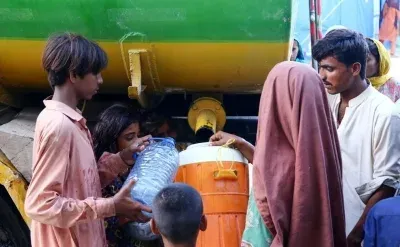
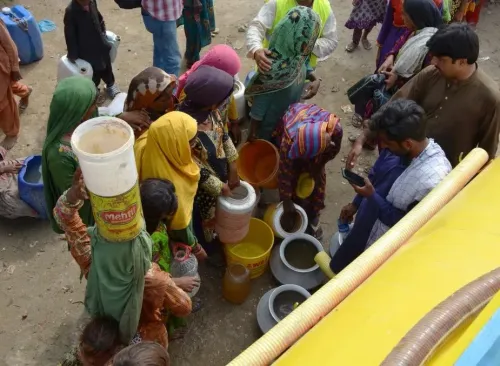
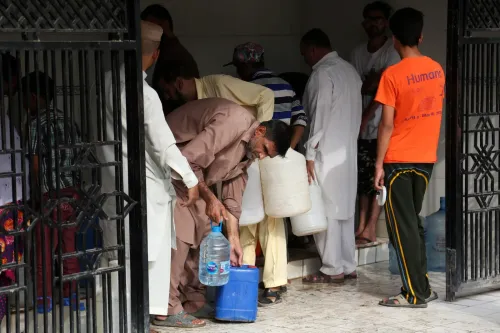
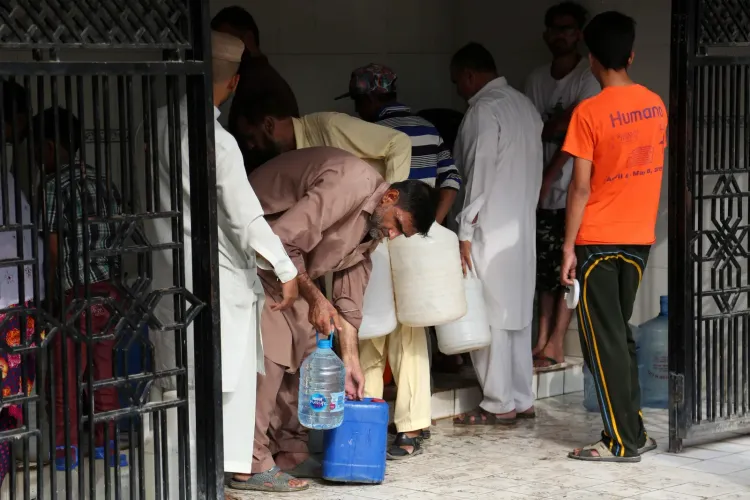
The canal water dispute is unfolding against the backdrop of a broader and worsening water crisis in Balochistan. A report from earlier this year described daily water anxiety in Quetta, with thousands of households rationing every drop for basic needs. According to reports, what was once a seasonal inconvenience has hardened into a defining feature of life across the province.
The World Bank has stated that 95 per cent of Balochistan's farmland depends on groundwater extraction, with only 5 per cent of the province connected to the Indus Basin's canal system. That over-dependence on groundwater has turned a historical lifeline into a mounting liability as water tables fall.
Population Pressure Compounds the Problem
According to Population Management and Communication Team (PMCT) Director Abdul Sattar Shahwani, Balochistan's population has grown to 14.89 million, up from 12.34 million in 2017, reflecting an average annual growth rate of 3.2 per cent. Official projections suggest the province's population will reach 18.57 million by 2030 and could exceed 35 million by 2050.
'If the population doubles while the water table halves, the math simply doesn't work. We are heading toward an impossibility,' a local urban planning consultant was quoted as saying. The convergence of shrinking water supply, rising demand, and stalled inter-provincial cooperation makes the canal dispute far more than a bureaucratic disagreement.
What Happens Next
Umrani is expected to meet Chief Minister Bugti to seek formal authorisation for legal proceedings against the Sindh government. Whether Balochistan pursues litigation or a negotiated settlement will likely depend on whether Sindh restores water flows in the near term. With the monsoon season approaching and agricultural demand rising, the window for a diplomatic resolution is narrowing.
Point of View
Yet its written findings — that Sindh is making unauthorised cuts — have not translated into corrective action, raising questions about the authority's enforcement teeth. What makes this more than a routine inter-provincial squabble is the ecological context: Balochistan is already running a groundwater deficit, its population is on a steep growth curve, and only 5% of its land is canal-irrigated. Legal action may force a hearing, but it will not refill an aquifer. The real accountability gap is the absence of a binding, time-bound mechanism to enforce IRSA allocations — and no government in Islamabad has moved to create one.
NationPress
5 Oct 2026
Frequently Asked Questions
Why is Balochistan considering legal action against Sindh?
Balochistan is considering legal action because Sindh has reportedly continued to supply canal water at 46% below Balochistan's allocated share, even after diplomatic assurances from Sindh's Chief Minister and repeated interventions through IRSA and federal authorities. The province is receiving 0.365 MAF against an allocated 0.678 MAF.
What is the role of IRSA in this dispute?
The Indus River System Authority (IRSA) is the body responsible for allocating river water among Pakistan's provinces. In this case, IRSA reportedly confirmed improved water availability in the river system and wrote to the Sindh government identifying it — not Punjab — as the party making unauthorised reductions to Balochistan's share.
How serious is Balochistan's overall water crisis?
Balochistan's water crisis is severe and worsening. The World Bank has noted that 95% of the province's farmland depends on groundwater extraction, and water tables are falling. With a population growing at 3.2% annually and projected to exceed 35 million by 2050, demand is outpacing supply at an accelerating rate.
What assurances were given and why did they fail?
Balochistan Chief Minister Mir Sarfraz Bugti consulted Sindh Chief Minister Syed Murad Ali Shah, who reportedly assured him that no further reductions would be made. However, according to Irrigation Minister Umrani, Sindh's irrigation officials continued to cut supplies despite that assurance, prompting Balochistan to consider legal escalation.
What happens next in the Balochistan-Sindh water dispute?
Irrigation Minister Umrani has said he will meet Chief Minister Bugti to seek formal approval for legal proceedings against Sindh. The outcome will likely depend on whether Sindh restores water flows voluntarily before any case is filed, with agricultural and monsoon pressures making an early resolution critical.