PPP rallies across Sindh over Indus water 'theft', warns of province-wide protests
Synopsis
The PPP took its Sindh water dispute to the streets on 25 July, staging demonstrations at 130 locations in a single day and accusing IRSA and the federal government of systematically denying the province its 1991 accord entitlements. With divisional-level mass rallies threatened as a next step, the long-running Sindh-Punjab water conflict is entering a sharper political phase.
Key Takeaways
PPP held rallies at 130 locations across Sindh on 25 July over alleged Indus River water 'theft.' PPP Sindh President Nisar Khuhro accused IRSA and the federal government of violating the 1991 Water Apportionment Accord.
The party alleged that the Chashma-Jhelum , Taunsa-Panjnad , and Jalalpur link canals are being operated beyond their flood-period mandate, diverting water from Sindh.
Khuhro warned of a third protest phase — divisional-level mass rallies — if grievances remain unaddressed.
The PPP framed the dispute as an economic crisis, citing crop damage and barren agricultural land in Sindh.
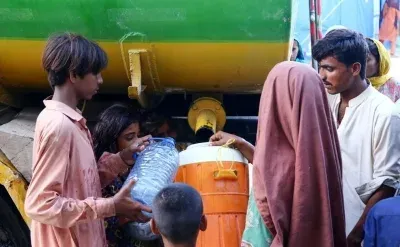
The Pakistan Peoples Party (PPP), the ruling party in Sindh, staged demonstrations at 130 locations across the province on Friday, 25 July, protesting what it described as the systematic 'theft' of Indus River water from Sindh. The party warned it would escalate agitation to divisional-level mass rallies if the federal government failed to address the province's water grievances, according to local media reports including Pakistani daily Dawn.
Key Developments
PPP Sindh President Nisar Khuhro led the rallies, which drew party leaders, workers, and women carrying placards bearing slogans such as 'No to theft of Sindh's water.' Khuhro announced that the demonstrations marked a phase of the party's ongoing protest campaign, with a third phase — divisional-level rallies across Sindh — threatened if 'injustices' over water distribution persisted.
'Water is life. Without water there is no life, and we will not allow anyone to deprive our people of their future,' Khuhro said, according to reports.
Allegations Against IRSA and the Federal Government
Khuhro alleged that Pakistan's Indus River System Authority (IRSA) and the federal government had failed to implement the 1991 Water Apportionment Accord fairly, repeatedly denying Sindh its constitutionally guaranteed share of Indus water while upstream provinces allegedly received preferential treatment.
He specifically accused authorities of operating the Chashma-Jhelum Link Canal, Taunsa-Panjnad Link Canal, and Jalalpur Canal beyond their intended scope. According to Khuhro, these link canals were designed to function only during flood periods but were reportedly being run regularly, diverting water away from Sindh.
'These diversions are turning Sindh's agricultural lands barren, damaging crops and inflicting heavy economic losses on the province. Punjab is benefiting at Sindh's expense by drawing water beyond its entitlement, while Sindh continues to face chronic shortages,' Khuhro alleged.
Impact on Sindh's Agriculture and Economy
The PPP's core argument centres on the economic toll of reduced water flows. Sindh's agrarian economy — heavily dependent on Indus irrigation — is reportedly suffering crop damage and land degradation as a direct consequence of alleged upstream diversions. Critics argue that without enforcement of the 1991 accord, the province's farming communities face mounting losses each season.
This is not the first time Sindh has raised the water-sharing dispute. The inter-provincial water conflict between Sindh and Punjab has been a recurring flashpoint in Pakistani federal politics for decades, with the 1991 accord remaining a contested instrument that all provinces claim entitles them to more.
What the PPP Has Warned
PPP South district president Javed Nagori struck a combative tone at the rally, stating: 'Our blood may flow, but we will not allow anyone to seize Sindh's water. The party would fight on every front to protect the province's legitimate water rights.'
Khuhro reiterated the escalation warning: 'If the injustices against Sindh continue, our protest movement will intensify and every division of Sindh will witness mass public gatherings.'
What Happens Next
The PPP has set a clear escalation path — divisional-level rallies across Sindh — if the federal government and IRSA do not respond to the province's water demands. With the party already holding demonstrations at 130 locations in a single day, the political pressure on Islamabad is likely to mount in the coming weeks.
Point of View
Yet the 1991 accord remains unenforced to every province's satisfaction — a structural failure of Pakistani federalism. What is notable here is the PPP's willingness to mobilise against a federal establishment it is simultaneously part of at the national level, suggesting the party sees electoral value in championing Sindhi grievance. The harder question — whether IRSA's allocation data actually supports the 'theft' framing or whether Sindh's water stress is also a product of internal inefficiency and seepage losses — is one that neither the party nor its critics have answered publicly.
NationPress
23 Oct 2026
Frequently Asked Questions
Why is the PPP protesting over Indus River water in Sindh?
The PPP alleges that Sindh is being denied its constitutionally guaranteed share of Indus River water under the 1991 Water Apportionment Accord, with upstream provinces — particularly Punjab — drawing water beyond their entitlements. The party staged rallies at 130 locations on 25 July to demand federal intervention.
What is the 1991 Water Apportionment Accord?
The 1991 Water Apportionment Accord is a federal agreement that allocates Indus River water shares among Pakistan's provinces. Sindh has long argued that the accord is not being implemented fairly, with IRSA accused of favouring upstream provinces in its distribution decisions.
Which canals is the PPP accusing authorities of misusing?
PPP Sindh President Nisar Khuhro specifically accused authorities of running the Chashma-Jhelum Link Canal, Taunsa-Panjnad Link Canal, and Jalalpur Canal beyond their intended flood-period operation, allegedly diverting water that should flow to Sindh.
What is the PPP threatening to do next?
The PPP has warned it will launch a third phase of its protest campaign, organising divisional-level mass rallies across Sindh if the federal government and IRSA do not address the province's water grievances.
How does this dispute affect Sindh's economy?
According to PPP leaders, the alleged water diversions are reducing irrigation flows to Sindh, causing crop damage and turning agricultural land barren. The party claims the province is suffering heavy economic losses as a direct result of upstream water use beyond entitlements.