Quetta water crisis: Balochistan residents go months without tap supply
Synopsis
Quetta residents have gone up to six months without tap water as WASA supplies collapse and groundwater plummets. Simultaneously, three Balochistan ministers stormed a Sukkur Barrage protest, accusing Sindh of siphoning the province's legally allocated river flows — a dispute that exposes the chronic failure to enforce Pakistan's 1991 Water Accord.
Key Takeaways
Quetta residents in at least 8 neighbourhoods have received no tap water for up to six months , with WASA supplies either halted or severely restricted.
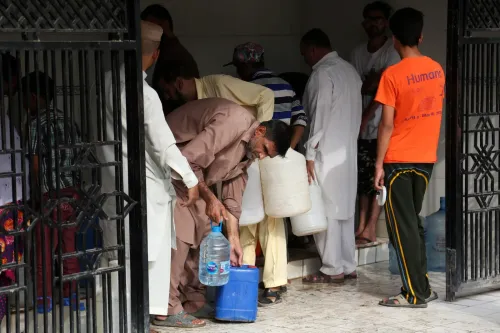
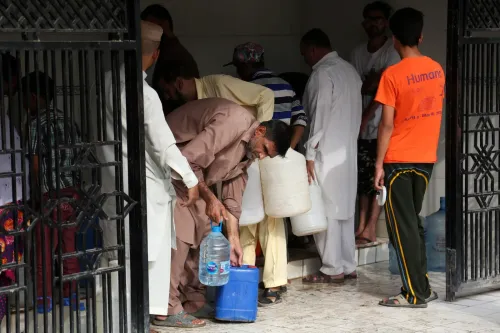
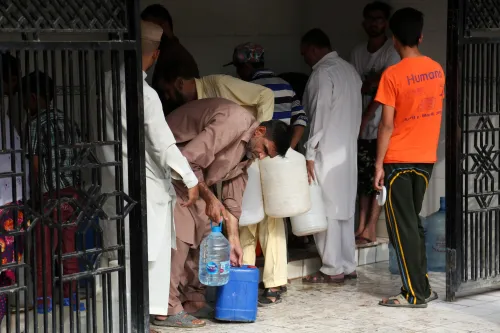
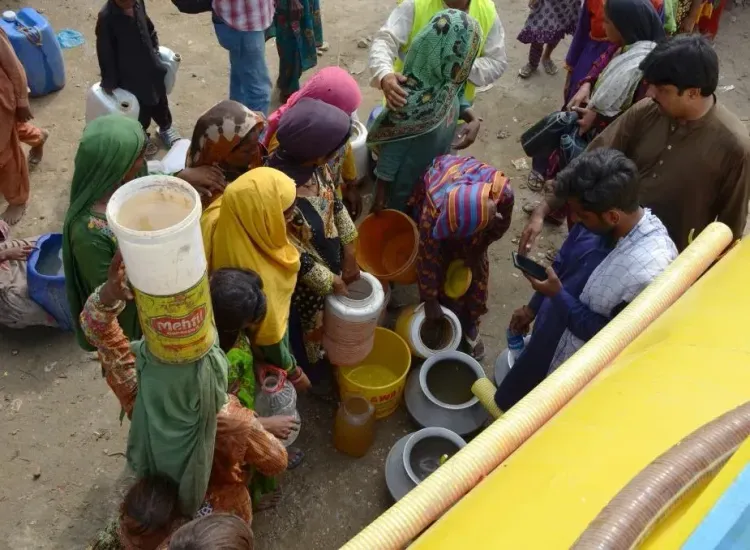
Elderly residents, women, and children are reportedly walking long distances to fetch water.
On 18 July , three Balochistan ministers joined a farmers' protest at Sukkur Barrage , accusing Sindh of diverting Balochistan's water share.
Balochistan claims it is not receiving its allocated 2,400 cusecs from Khirthar Canal and 6,700 cusecs from Pat Feeder under the 1991 Water Accord .
CM Sarfaraz Bugti has formed a ministerial committee — Umrani , Khoso , Lehri — to negotiate with the Sindh government.
Quetta, the capital of Pakistan's Balochistan province, is grappling with a deepening water crisis as groundwater levels fall to dangerously low levels and supplies from the Water and Sanitation Agency (WASA) have either ceased entirely or been severely curtailed across multiple residential areas, local media reported on Wednesday, 22 July. The crisis has forced elderly residents, women, and young children to walk long distances on foot to access drinking water.
Areas Hit Hardest
Neighbourhoods including Sariab, Sirki Road, Samungli Road, Jinnah Town, Qambarani Road, Satellite Town, Sabzal Road, and Khayaban-e-Agha are among the worst affected. According to reports from Pakistan's The Express Tribune, many households in Quetta have received no tap water for the past six months, severely disrupting daily life.
Residents told the publication that they continue to pay their WASA bills regularly yet receive no water in return. Despite multiple complaints filed with authorities, officials have reportedly offered only verbal assurances, with no tangible resolution in sight.
Inter-Provincial Water Dispute Escalates
The urban crisis in Quetta is compounded by a broader inter-provincial water conflict. On 18 July, three Balochistan ministers participated in a farmers' protest at Sukkur Barrage, accusing the neighbouring province of Sindh of diverting Balochistan's legally allocated share of river water. Farmers from several parts of Larkana division and Balochistan joined the demonstration over the alleged shortages.
The ministers demanded that the Sindh government take action against what they described as the unauthorised diversion of water through illegal channels. Sindh Irrigation officials, however, reportedly claimed that Balochistan was already receiving more than its allocated share — a claim the Balochistan committee flatly rejected, citing ground realities.
Government Committee Formed, 1991 Water Accord Invoked
Balochistan Chief Minister Sarfaraz Bugti has constituted a ministerial committee comprising Muhammad Sadiq Umrani, Saleem Ahmed Khoso, and Muhammad Khan Lehri to formally raise the province's water concerns with the Sindh government.
Addressing protesters, Umrani stressed that Balochistan was entitled to its share under the 1991 Water Accord and was not receiving its allocated 2,400 cusecs from the Khirthar Canal or 6,700 cusecs from the Pat Feeder. He warned that farmers were being hit hardest during critical crop-sowing periods, threatening widespread financial losses.
Khoso called for a permanent resolution, arguing that without structural intervention, the dispute would continue to trigger protests year after year.
What This Means for Balochistan
The twin pressures — urban groundwater depletion in Quetta and agricultural water shortfalls in rural Balochistan — paint a picture of a province under compounding hydrological stress. Notably, this is not a new fault line; inter-provincial water disputes in Pakistan have persisted for decades, with the 1991 Accord repeatedly cited but inconsistently enforced. Without a verifiable enforcement mechanism, critics argue, the accord risks remaining a paper guarantee.
With the ministerial committee now tasked with negotiating a resolution, the coming weeks will test whether institutional channels can deliver where annual protests have so far failed.
Point of View
Yet it is relitigated through protests almost every year. What is missing is not an agreement but an independent, real-time monitoring mechanism with teeth. Meanwhile, Quetta's urban groundwater crisis points to a separate structural failure: unchecked extraction and no credible recharge plan. Balochistan is Pakistan's largest province by area and among its most water-stressed — that combination, left unaddressed, carries consequences well beyond annual farmer protests.
NationPress
21 Oct 2026
Frequently Asked Questions
Why is Quetta facing a water crisis?
Quetta is facing a severe water crisis because groundwater levels have dropped to dangerously low levels and the Water and Sanitation Agency (WASA) has either stopped or drastically reduced supplies to many residential areas. Many households have reportedly received no tap water for up to six months despite paying their WASA bills.
Which areas of Quetta are worst affected by the water shortage?
The worst-affected neighbourhoods include Sariab, Sirki Road, Samungli Road, Jinnah Town, Qambarani Road, Satellite Town, Sabzal Road, and Khayaban-e-Agha. Residents in these areas are reportedly walking long distances to fetch water.
What is the dispute between Balochistan and Sindh over water?
Balochistan accuses Sindh of diverting its legally allocated share of river water through unauthorised channels. Under the 1991 Water Accord, Balochistan claims it is entitled to 2,400 cusecs from the Khirthar Canal and 6,700 cusecs from the Pat Feeder — allocations it says it is not receiving.
What action has the Balochistan government taken?
Chief Minister Sarfaraz Bugti has formed a ministerial committee comprising Muhammad Sadiq Umrani, Saleem Ahmed Khoso, and Muhammad Khan Lehri to formally raise the province's water concerns with the Sindh government and seek a permanent resolution.
What is the 1991 Water Accord and why does it matter?
The 1991 Water Accord is a Pakistani inter-provincial agreement that allocates fixed shares of river water to each province. Balochistan has invoked it to assert its right to specific water flows, but the accord's enforcement has been disputed repeatedly, with both Balochistan and Sindh presenting conflicting data on actual water deliveries.