Pakistan trade deficit hits $4.07 bn in April amid global oil shock

Synopsis
Pakistan's trade deficit hit a near three-year high of $4.07 billion in April, driven by a near-tripling of the oil import bill as Middle East conflict kept fuel prices elevated. With exports declining in rupee terms and multinational firms exiting, the country's balance-of-payments position looks set to worsen before it improves.
Key Takeaways
Pakistan's trade deficit reached $4.07 billion in April — the highest since June 2022 .
The deficit jumped 43.5 per cent month-on-month, driven by a near-tripling of the oil import bill.
Total imports surged 28.41 per cent from $5.10 billion in March to $6.55 billion in April.
Exports in the first three quarters of FY26 fell 7.14 per cent in rupee terms to Rs 6.39 trillion .
Pakistan's equity market has seen massive outflows amid the closure of several multinational firms.
The Middle East conflict, with no resolution in sight, is expected to keep fuel prices elevated and energy shortages persistent.
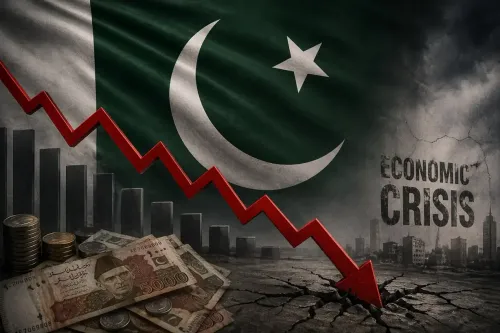
Pakistan's monthly trade deficit ballooned to $4.07 billion in April, the highest level since June 2022, as a global fuel price shock exposed the country's heavy dependence on imported energy and its fragile balance-of-payments position, according to a new report. The widening gap underscores the deepening economic stress gripping the South Asian nation amid unresolved Middle East conflict driving oil and gas prices sharply higher.
Scale of the Trade Gap
The trade deficit recorded a 43.5 per cent month-on-month jump in April, described in the report as "anticipated due to energy supply disruptions due to the Middle East conflict, sending oil and gas prices skyrocketing." Total imports climbed from $5.10 billion in March to $6.55 billion in April — a 28.41 per cent surge — with the oil import bill reportedly having nearly tripled.
The report stated that "this single data point explains much of the $1.45 billion month-on-month expansion in the total import bill," adding that "no demand-management toolkit could have contained" the scale of the increase.
Exports Offer No Relief
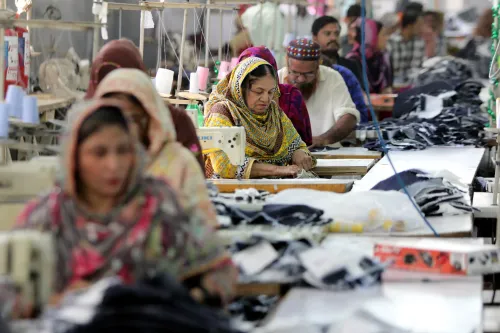
Pakistan's export side provided little cushion against the surging import costs. Exports in the first three quarters of FY26 reached Rs 6.39 trillion, a 7.14 per cent decline in rupee terms compared to the previous year, further widening the trade deficit. The report flagged that Pakistan's textile-heavy, capacity-constrained export base remains structurally ill-equipped to respond to such external shocks.
Notably, this is not the first time Pakistan's export engine has failed to offset an import surge — the country's export-to-GDP ratio has remained among the lowest in South Asia for over a decade, leaving it chronically exposed to commodity price volatility.
Outlook Remains Bleak
The report offered a stark forward assessment: "There is little basis for optimism. Energy shortages are expected to persist, and with the Middle East conflict showing no signs of resolution, fuel prices are likely to remain elevated." A slump in economic growth, compounded by the adverse regional situation, is expected to further pressure the balance of payments as the current fiscal year draws to a close.
Equity Market and Multinational Exits
Beyond trade, Pakistan's equity market has also witnessed massive outflows, compounded by the closure of several multinational firms. Annual imports continue to rise, driven by purchases of fuels, electrical equipment, and edible oils — categories that are largely inelastic and difficult to compress in the short term.
With no near-term resolution to the Middle East conflict in sight and structural export constraints unchanged, analysts warn that Pakistan's balance-of-payments position could deteriorate further before any stabilisation takes hold.
Point of View
Has never diversified its export base beyond textiles, and has repeatedly deferred energy sector reforms. The Middle East conflict is the trigger, not the cause. What this data really reveals is how little fiscal or monetary headroom Islamabad has to absorb external shocks: when oil moves, Pakistan bleeds. Unless structural reforms to the export base and energy mix are accelerated, each new commodity cycle will produce a fresh crisis — and the IMF bailout cycle will simply repeat.
NationPress
25 Sept 2026
Frequently Asked Questions
Why did Pakistan's trade deficit balloon in April 2025?
Pakistan's trade deficit surged to $4.07 billion in April 2025 — its highest since June 2022 — primarily because the global oil price shock nearly tripled the country's energy import bill. The Middle East conflict disrupted energy supplies and drove oil and gas prices sharply higher, pushing total imports up 28.41 per cent month-on-month.
How does Pakistan's April 2025 deficit compare to recent history?
The $4.07 billion deficit is Pakistan's largest monthly trade gap since June 2022, representing a 43.5 per cent jump from the previous month. It marks a significant deterioration in a balance-of-payments position that was already considered fragile.
What is happening to Pakistan's exports?
Pakistan's exports in the first three quarters of FY26 reached Rs 6.39 trillion, a 7.14 per cent decline in rupee terms compared to the previous year. The country's textile-heavy export base is considered structurally unable to respond quickly enough to offset surging import costs.
What is the outlook for Pakistan's economy?
The report offers little optimism: energy shortages are expected to persist, fuel prices are likely to stay elevated as the Middle East conflict remains unresolved, and a slowdown in economic growth is set to further strain the balance of payments before the fiscal year ends.
How is Pakistan's stock market being affected?
Pakistan's equity market has witnessed massive outflows, compounded by the closure of several multinational firms operating in the country. Rising imports of fuels, electrical equipment, and edible oils continue to put pressure on foreign exchange reserves.