Pakistan inflation hits 11.7% in May, stagflation risk rises: Report
Synopsis
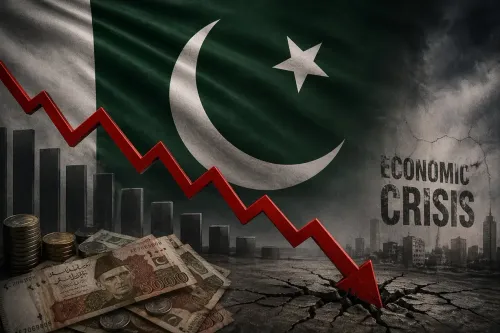
Pakistan's inflation has nearly doubled in two months — from 7.3% in March to 11.7% in May 2026 — and the central bank's rate hike is being called the wrong fix for the wrong problem. With oil import costs nearly tripling due to the US-Iran conflict and banks shunning private credit for government securities, the risk of stagflation is no longer theoretical.
Key Takeaways
Pakistan's annual inflation rose to 11.7 per cent in May 2026 , up from 10.9 per cent in April and 7.3 per cent in March.
The State Bank of Pakistan's inflation target range is 5–7 per cent — the current rate is nearly double the upper limit.
Transport costs and perishable food prices have each risen by approximately 15 per cent .
Prime Minister Shehbaz Sharif said the oil import bill surged from $300 million to $800 million following the US-Iran conflict .
The central bank raised its policy rate by 100 basis points to 11.50 per cent , but economists have called it 'wrong medicine for the wrong diagnosis.' Analysts warn the rate hike risks pushing Pakistan toward stagflation by suppressing investment without addressing supply-side inflation drivers.
Pakistan's economy is facing intensifying stress as annual inflation climbed to 11.7 per cent in May 2026, well above the State Bank of Pakistan's target band of 5–7 per cent, according to a new report by Morocco-based media house Assahifa. Economists have warned the country risks sliding into a damaging cycle of weak growth, rising prices, and prolonged financial strain.
Inflation Trajectory
The latest figure marks a sharp acceleration from 10.9 per cent in April and 7.3 per cent in March, reflecting a sustained upward trend over the past quarter. Transport costs and perishable food prices have each surged by approximately 15 per cent, according to the report, compounding pressure on household budgets. A severe foreign-exchange squeeze and a soaring oil import bill have further eroded purchasing power and weighed on economic activity.
External Shocks and Energy Costs
Pakistan's vulnerability to external disruptions has been laid bare by the US-Iran conflict, which has disrupted global supply chains. Analysts note that Pakistan is disproportionately exposed to such shocks given its heavy dependence on imported energy and its fragile balance-of-payments position. Prime Minister Shehbaz Sharif was cited in the report as saying the country's oil import bill had surged from $300 million to $800 million since the conflict began, effectively 'erasing all the economic progress the country had made over the past two years.'
Wrong Medicine, Wrong Diagnosis
In response to rising prices, the State Bank of Pakistan recently raised its policy rate by 100 basis points — from 10.50 per cent to 11.50 per cent. However, economists have criticised the move as 'wrong medicine for the wrong diagnosis.' They argue that higher interest rates are effective when inflation is demand-driven, but Pakistan's current inflation is rooted in supply-side distortions — making a rate hike counterproductive. The risk, analysts warn, is that tighter monetary conditions will choke investment and push the economy toward stagflation.
Credit Squeeze and Private Sector Strain
On the supply side, a troubling dynamic has reportedly emerged: commercial banks are increasingly preferring to lend to the government by investing in state securities rather than extending credit to private businesses. Low confidence and economic uncertainty are driving this shift, analysts say, further starving the private sector of capital at a time when it needs it most. This comes amid a broader pattern of Pakistan's economy lurching from one balance-of-payments crisis to another over the past decade, with structural reforms repeatedly deferred.
What Comes Next
With inflation well outside the central bank's target range and monetary policy tools yielding limited results, Pakistan faces difficult choices. Economists suggest that addressing supply-side bottlenecks — including energy import dependency and foreign-exchange fragility — is essential before monetary tightening can have any meaningful impact. Whether Islamabad can navigate this without triggering a deeper economic contraction remains an open question.
Point of View
But it does nothing to fix an energy import dependency or a foreign-exchange position made worse by a geopolitical conflict Islamabad had no hand in. More telling is the banking sector's retreat from private credit: when commercial lenders prefer government paper over business loans, it signals a confidence collapse that interest rates alone cannot reverse. Without structural energy reform and a credible forex strategy, Pakistan risks repeating the same crisis cycle it has been trapped in for much of the past two decades.
NationPress
3 Oct 2026
Frequently Asked Questions
What is Pakistan's current inflation rate in 2026?
Pakistan's annual inflation rose to 11.7 per cent in May 2026, up sharply from 10.9 per cent in April and 7.3 per cent in March. This is well above the State Bank of Pakistan's target range of 5–7 per cent.
Why is Pakistan's inflation rising so rapidly?
Economists attribute the surge to a sharp rise in transport costs and perishable food prices — each up about 15 per cent — alongside a severe foreign-exchange squeeze and a soaring oil import bill. The US-Iran conflict has disrupted global supply chains, hitting Pakistan especially hard due to its heavy dependence on imported energy.
What has the State Bank of Pakistan done to control inflation?
The State Bank of Pakistan raised its policy rate by 100 basis points to 11.50 per cent from 10.50 per cent. However, economists have criticised the move as 'wrong medicine for the wrong diagnosis,' arguing that Pakistan's inflation is supply-driven, not demand-driven, making rate hikes counterproductive.
What is stagflation and why is Pakistan at risk?
Stagflation refers to a combination of stagnant economic growth, high inflation, and rising unemployment — a particularly difficult condition to escape. Pakistan faces this risk because higher interest rates may suppress investment and growth without addressing the supply-side causes of inflation, potentially producing the worst of both outcomes simultaneously.
How has the US-Iran conflict affected Pakistan's economy?
According to Prime Minister Shehbaz Sharif, Pakistan's oil import bill surged from $300 million to $800 million following the US-Iran conflict, which has disrupted global supply chains. Pakistan's heavy dependence on imported energy makes it especially vulnerable to such external shocks, compounding its existing balance-of-payments fragility.