Pakistan inflation set to hit 12.2% in May 2026 as fuel, food costs spike
Synopsis
Pakistan's inflation is set to reaccelerate to 12.2% in May 2026 — reversing a fragile easing trend — as a projected 9.5% domestic fuel price jump drives energy inflation toward 39% year-on-year. With food prices climbing again on wheat and milk costs, and structural factors like IFEM adjustments keeping fuel dear despite softer global crude, the relief from lower electricity tariffs is unlikely to hold the line.
Key Takeaways
Pakistan's headline inflation is projected at 12.2 per cent year-on-year in May 2026 , per Optimus Capital Management .
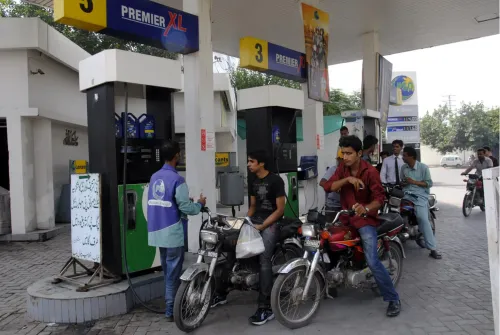
The transport index is expected to surge 6.9 per cent month-on-month , driven by an anticipated 9.5 per cent jump in domestic fuel prices.
Energy inflation is forecast to hit approximately 39 per cent year-on-year in May.
Food inflation is projected at nearly 9 per cent year-on-year , with wheat and wheat flour prices rising around 7 per cent .
A 1.2 per cent monthly decline in the housing index due to lower electricity tariffs offers only partial offset.
Core inflation is expected to remain elevated at 8.4 per cent year-on-year .
Pakistan's headline inflation is projected to surge to 12.2 per cent year-on-year in May 2026, driven by sharply rising fuel and food prices, according to a report by Optimus Capital Management. The data suggests that despite some relief from lower electricity tariffs, broad-based price pressures are intensifying across the Pakistani economy.
Key Projections
The Optimus Capital Management report projects Pakistan's National Consumer Price Index (NCPI) will rise approximately 1 per cent month-on-month in May. Core inflation is expected to remain elevated at 8.4 per cent year-on-year, indicating that price pressures are not limited to volatile categories alone.
The transport index is forecast to record a steep monthly jump of nearly 6.9 per cent, primarily on account of an anticipated 9.5 per cent rise in domestic fuel prices. Although international crude prices have eased marginally compared to the previous month, elevated premiums and Inland Freight Equalisation Margin (IFEM) adjustments are keeping domestic fuel costs high. As a result, energy inflation is projected to surge to approximately 39 per cent year-on-year in May.
Food Inflation Picking Up Again
Optimus analyst Yasin Iqbal Kodvavi noted that the easing trend in food inflation seen in earlier months is beginning to reverse. Food inflation is now expected to climb around 1.5 per cent month-on-month and nearly 9 per cent year-on-year.
The primary drivers are wheat and wheat flour prices, both projected to rise around 7 per cent during the month. Fresh milk and milk products are also expected to become costlier, with prices likely increasing around 2.7 per cent month-on-month. According to Kodvavi, higher transportation costs, expensive fertilisers, and fluctuating procurement policies are contributing significantly to the food price uptick.
Housing Offers Limited Relief
The housing index is projected to offer modest relief, with a decline of 1.2 per cent month-on-month owing to reduced electricity tariffs. However, the report cautions that this decrease is unlikely to offset the broader inflationary impact emanating from transport and food categories, leaving overall price pressure firmly to the upside.
What This Means for Pakistan's Economy
This comes amid Pakistan's ongoing macroeconomic fragility, with the country navigating IMF programme conditions and a fragile external balance. A renewed inflation spike at 12.2 per cent could complicate the State Bank of Pakistan's monetary policy stance, particularly if the central bank is under pressure to sustain rate cuts initiated earlier in the easing cycle. Critics argue that structural issues — including fuel subsidy distortions and supply-chain inefficiencies — continue to make Pakistan's inflation trajectory vulnerable to external shocks. The next official NCPI reading is expected to be released by Pakistan's Pakistan Bureau of Statistics in late May.
Point of View
Which insulates domestic fuel pricing from global crude softness, is structurally inflationary and reflects a policy choice, not an inevitability. More troubling is the food inflation reversal: wheat price volatility in Pakistan is rarely just a market phenomenon — it tracks procurement policy failures and supply-chain breakdowns that repeat with near-cyclical regularity. If the State Bank of Pakistan continues its rate-cutting cycle against a backdrop of re-accelerating inflation, it risks credibility damage at a moment when external confidence is still fragile.
NationPress
25 Sept 2026
Frequently Asked Questions
What is Pakistan's projected inflation rate for May 2026?
Pakistan's headline inflation is projected to reach 12.2 per cent year-on-year in May 2026, according to a report by Optimus Capital Management. This marks a sharp reacceleration driven by rising fuel and food prices.
Why are fuel prices rising in Pakistan despite softer global oil prices?
Although international crude prices have eased slightly, domestic fuel costs in Pakistan remain high due to elevated premiums and Inland Freight Equalisation Margin (IFEM) adjustments. These structural factors prevent global price relief from fully passing through to Pakistani consumers.
How much is food inflation expected to rise in Pakistan in May 2026?
Food inflation is projected to rise approximately 1.5 per cent month-on-month and nearly 9 per cent year-on-year in May 2026. Wheat, wheat flour, and milk products are among the key contributors, with wheat prices expected to climb around 7 per cent during the month.
Does lower electricity pricing offer any relief to Pakistani consumers?
The housing index is projected to decline 1.2 per cent month-on-month due to reduced electricity tariffs, providing limited relief. However, analysts note this is insufficient to offset the broader inflationary pressure from fuel and food categories.
What does this mean for Pakistan's monetary policy?
A renewed inflation surge to 12.2 per cent could complicate the State Bank of Pakistan's ongoing rate-easing cycle. If price pressures continue to build, the central bank may face pressure to pause or reverse rate cuts, adding to Pakistan's broader macroeconomic challenges.