Is Soaring Food Inflation Fueling Anger in Pakistan?

Synopsis
As food prices soar in Pakistan, citizens are expressing their anger towards the government's inability to manage the crisis. A recent report highlights the distressing impact of inflation on everyday lives, with wheat prices seeing a staggering rise. Will the government be able to address the mounting frustrations of its people?
Key Takeaways
Rising food inflation is a major concern in Pakistan.
Wheat prices have increased significantly in a short time.
The government faces criticism for its handling of the crisis.
Experts warn that inflation rates may exceed government estimates.
Floods have exacerbated agricultural challenges, impacting food prices.
New Delhi, Oct 18 (NationPress) Pakistan, currently grappling with economic stagnation, is enduring a significant food crisis due to skyrocketing prices, driven by the expanding gap between the demand and supply of essential goods, according to a recent report.
Wheat, the staple food for a majority of the population, has seen its price surge by 30–50 percent within just a month, as reported by Directus.gr.
“This situation has intensified the hardships faced by ordinary citizens in Pakistan, who are already struggling with rising living costs and economic instability. The Consumer Price Index (CPI) recorded a year-on-year increase of 5.6 percent in September 2025,” the report states.
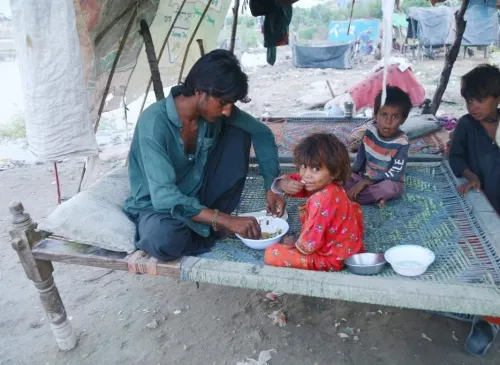
The escalating food inflation has adversely affected nutritional variety, reduced meat consumption, and led to decreased spending on costly items such as tomatoes.
Citizens are expressing their frustration over the government's inability to manage food inflation, which has severely impacted their livelihoods.
Experts predict that the overall inflation rates will surpass the estimates provided by the Islamabad government and the State Bank of Pakistan (SBP).
Notably, Pakistan's Finance Minister Muhammad Aurangzeb has claimed that the government is dedicated to achieving price stability.
However, many citizens argue that government actions are merely symbolic, failing to curb rampant overpricing, as highlighted in the report.
The Islamabad government has also attributed the rising food prices to the impact of floods, which have resulted in diminished agricultural output. Experts warn that food inflation is likely to remain elevated due to these floods and ensuing supply chain disruptions.
Pakistan's economy has suffered greatly due to devastating floods, affecting agricultural productivity, and inflation pressures are once again mounting. The World Bank projects only a 2.6 percent GDP growth for Pakistan in 2025-26.
Point of View
It's clear that the current food crisis in Pakistan demands urgent attention. The government's commitment to price stability must translate into tangible actions that alleviate the burden on citizens. The ongoing challenges call for effective strategies to ensure sustainable supply and equitable pricing of essential commodities.
NationPress
25 Sept 2026
Frequently Asked Questions
What is causing food inflation in Pakistan?
Food inflation in Pakistan is primarily driven by a significant gap between demand and supply, worsened by recent floods impacting agricultural output.
How much have wheat prices increased recently?
Wheat prices have surged by 30 to 50 percent in just one month.
What impact does food inflation have on citizens?
Food inflation has reduced nutritional diversity, increased hardship for families, and led to decreased consumption of meat and other costly items.
What are experts predicting for Pakistan's inflation?
Experts forecast that overall inflation rates may exceed the government's projections due to ongoing economic instability.
What has the government done to address food inflation?
The government claims to be committed to price stability, but many citizens believe their actions are merely symbolic and ineffective.