Pakistan's Short-Term Inflation Soars 6.44% Amid Fuel and Food Price Hikes

Synopsis
In a concerning economic trend, Pakistan's Sensitive Price Indicator has surged by 6.44% year-on-year, driven by rising fuel and essential food prices. This alarming inflationary trend highlights the need for urgent economic reforms.
Key Takeaways
6.44% year-on-year increase in Pakistan's SPI.
Petrol prices soared by 20.60% this week.
Food prices are also rising, impacting household budgets.
Remittances account for nearly 10% of GDP, masking economic issues.
Pakistan's reliance on foreign aid is increasing, with significant IMF participation.
New Delhi, March 14 (NationPress) The short‑term inflation measure in Pakistan, known as the Sensitive Price Indicator (SPI), has experienced a significant increase of 6.44 percent year-on-year for the week ending March 11, primarily fueled by notable hikes in both fuel and essential food prices, according to a recent report.
The SPI surged 1.89 percent compared to the previous week, reflecting escalating prices of critical household items, as reported by The Express Tribune, which referenced data from the Pakistan Bureau of Statistics (PBS).
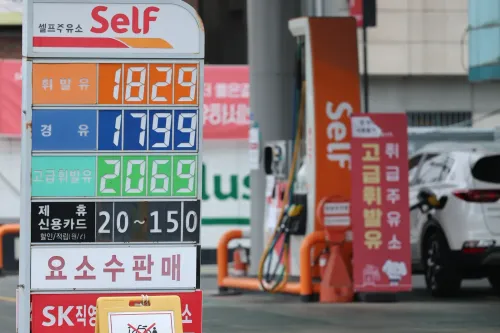
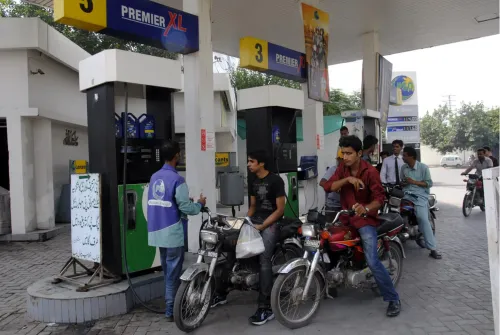
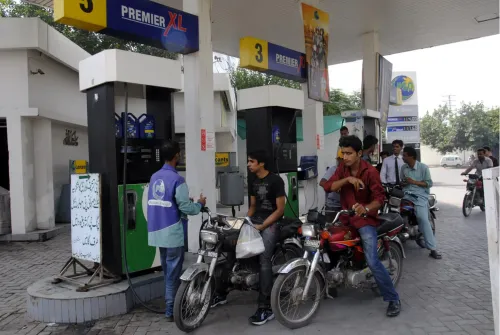
Petrol prices soared by 20.60 percent, while diesel climbed 19.54 percent week-on-week. Additionally, liquefied petroleum gas saw an increase of 12.13 percent, acting as significant contributors to the inflation of household goods, the report indicated.
Food prices also played a role in pushing the index upward, with onions increasing by 9.63 percent, bananas by 1.44 percent, and wheat flour by 1.28 percent on a weekly basis, as noted in the report.
Other commodities that recorded smaller price increases include chicken (0.66 percent), pulse mash (0.55 percent), firewood (0.38 percent), pulse gram (0.10 percent), fresh milk (0.08 percent), and cooked beef (0.02 percent), according to the findings.
Another recent analysis suggested that Pakistan has entrenched itself in a “dangerous economic trap” by favoring short-term foreign remittances and aid over sustainable development.
Currently, remittances comprise nearly 10 percent of the country’s GDP, competing with export revenues, which obscures systemic issues such as idle factories, rising unemployment, and underutilization of the workforce, the report highlighted.
According to the report, the future of Pakistan from 2026 to 2031 appears to be dictated by “debt ledgers, inflation metrics, and poverty thresholds,” indicating a forecast of sluggish growth and inflation diminishing household financial health.
Since 1958, Pakistan has participated in 26 IMF programs, the highest number globally, accumulating over $34 billion, with the latest $7 billion Extended Fund Facility in 2024 extended into 2025-26, underscoring the country’s increasing reliance on foreign aid.
aar/
Point of View
It's essential to highlight that the rising inflation in Pakistan poses significant challenges for families. The increased prices of essential goods and fuel not only strain household budgets but also indicate deeper economic issues that require immediate attention for sustainable growth.
NationPress
27 Sept 2026
Frequently Asked Questions
What is the Sensitive Price Indicator (SPI)?
The Sensitive Price Indicator (SPI) is a measure used in Pakistan to gauge short-term inflation based on the price changes of essential goods and services.
Why has inflation risen in Pakistan recently?
Inflation in Pakistan has risen primarily due to sharp increases in fuel prices, such as petrol and diesel, and essential food items.
How does remittance affect Pakistan's economy?
Remittances contribute nearly 10% to Pakistan's GDP, masking underlying economic issues like high unemployment and underutilization of resources.
What are the potential future implications of rising inflation?
Rising inflation may lead to slower economic growth and increased poverty, affecting the financial stability of households across Pakistan.
How many IMF programs has Pakistan participated in?
Pakistan has entered into 26 IMF programs since 1958, accumulating over $34 billion in financial assistance.