Pakistan SPI inflation hits 14.75% as energy costs surge on Middle East tensions
Synopsis
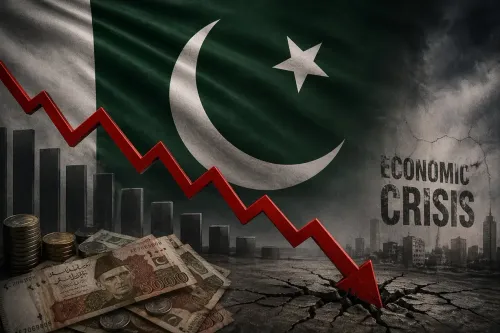
Pakistan's short-term inflation gauge has returned to double-digit territory — up 14.75% year-on-year — as Middle East tensions drove the country's weekly oil import bill from $300 million to nearly $800 million. With food prices spiking across Karachi, Lahore, and Islamabad, the episode exposes how structurally exposed Pakistan remains to any global energy shock.
Key Takeaways
Pakistan's SPI rose 14.75 per cent year-on-year for the week ending 4 June , marking a return to double-digit short-term inflation.
The primary driver was higher retail prices of perishable food items , compounded by surging energy costs .
Middle East tensions and instability around the Strait of Hormuz pushed Pakistan's weekly oil import bill from approximately $300 million to nearly $800 million .
Prices of onions , tomatoes , potatoes , and poultry products have risen significantly in recent weeks, according to market reports.
Residents in Karachi , Lahore , and Islamabad have reported higher commuting costs and grocery bills.
Analysts warn that Pakistan's structural dependence on fuel imports leaves it acutely vulnerable to further global energy price shocks.
Pakistan is once again contending with double-digit inflationary pressures, with the Sensitive Price Index (SPI) — a measure of short-term inflation — rising 14.75 per cent year-on-year for the week ending 4 June, according to official data cited in reports. The surge, driven by soaring food and energy costs, has reignited fears over the sustainability of the country's fragile economic recovery.
What the Data Shows
The SPI increase of 14.75 per cent marks a return to double-digit territory after a period of relative price stability. The primary driver, according to reports, has been a sharp rise in the retail prices of perishable food items, which have disproportionately burdened lower- and middle-income households. Long queues at utility stores, climbing public transport fares, and surging electricity bills have once again become visible features of daily life in Pakistan's major cities.
The Energy Trigger: Middle East Tensions
Analysts attribute the latest inflation spike largely to global energy market disruptions stemming from escalating tensions in the Middle East. Instability around the Strait of Hormuz has pushed international crude prices higher, hitting Pakistan's import-dependent energy sector particularly hard. Reports indicate that the country's weekly oil import bill climbed from approximately $300 million before the regional tensions to nearly $800 million in the aftermath — an increase of more than 160 per cent. This is not the first time Pakistan has faced such an externally-driven energy shock; similar pressures in 2022 contributed to a broader balance-of-payments crisis that required an IMF bailout.
Cascading Impact on Food and Transport
Higher fuel costs have had a cascading effect across supply chains. Increased transportation and production expenses have translated directly into sharply higher prices for essential goods and services. Residents in Karachi, Lahore, and Islamabad have reportedly noted noticeable increases in both commuting expenses and grocery bills. Market reports suggest that prices of onions, tomatoes, potatoes, and poultry products have risen significantly in recent weeks, compounding the food-inflation burden that has persisted through successive economic cycles.
Broader Economic Concerns
The resurgence of inflation arrives at a sensitive juncture for Pakistan's economy, which has been attempting to stabilise following years of turbulence, currency depreciation, and external debt stress. Critics argue that the country's structural dependence on fuel imports leaves it acutely vulnerable to any global energy price shock, with limited fiscal headroom to absorb the impact through subsidies. The latest data, according to reports, has renewed concerns among policymakers and ordinary citizens alike about the durability of any economic recovery built on such fragile foundations.
What to Watch
The trajectory of Middle East tensions and their effect on global oil markets will be the key variable in the weeks ahead. Any further escalation around the Strait of Hormuz could push Pakistan's import bill higher still, adding fresh pressure on the rupee and foreign exchange reserves. Policymakers will also face difficult choices between protecting household purchasing power and maintaining the fiscal discipline required under existing international lending arrangements.
Point of View
And each interruption erodes the household trust needed for any durable stabilisation. Until the country meaningfully diversifies its energy mix or builds adequate reserves, every Middle East flare-up will double as a Pakistani inflation event.
NationPress
25 Sept 2026
Frequently Asked Questions
What is the SPI and why does it matter for Pakistan?
The Sensitive Price Index (SPI) tracks short-term price changes for essential commodities on a weekly basis and is used as an early indicator of inflationary pressure on households. A 14.75% year-on-year rise signals that the cost-of-living burden on ordinary Pakistanis has intensified sharply.
Why has inflation surged in Pakistan in June 2025?
The primary trigger, according to analysts, is the spike in global energy prices linked to escalating Middle East tensions and disruptions around the Strait of Hormuz. Pakistan's weekly oil import bill reportedly jumped from around $300 million to nearly $800 million, pushing up fuel, transport, and food prices across the country.
Which food items have seen the sharpest price increases?
Market reports indicate that onions, tomatoes, potatoes, and poultry products have seen significant price increases in recent weeks. Rising fuel costs have pushed up transportation expenses across agricultural supply chains, feeding directly into higher retail food prices.
How does this inflation spike affect Pakistan's economic recovery?
The return to double-digit SPI inflation has renewed concerns about the sustainability of Pakistan's economic recovery, which has been fragile following years of currency depreciation and external debt stress. Critics argue the country's dependence on fuel imports leaves it with limited capacity to absorb global energy shocks without further straining household budgets and fiscal balances.
What will determine whether inflation eases in the coming weeks?
The trajectory of Middle East tensions and their effect on global crude oil prices will be the key variable. Any further escalation around the Strait of Hormuz could push Pakistan's import bill higher, adding pressure on the rupee and foreign exchange reserves, while a de-escalation could provide some relief.