Pakistan inflation jumps to 11.1% in August, rural areas hit hardest
Synopsis
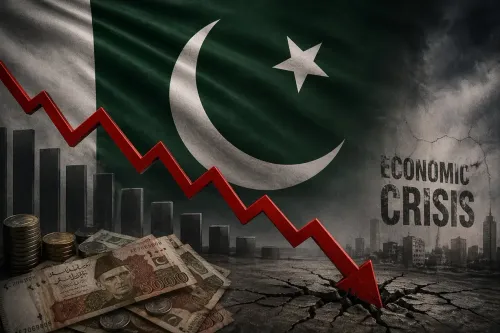
Pakistan's inflation has more than doubled year-on-year in a single year — from 3.1% in August 2025 to 11.1% in August 2026 — with rural communities facing an even steeper 12.2% rise. The acceleration arrives just as the State Bank of Pakistan has been attempting a cautious easing cycle, putting monetary policy in a difficult bind.
Key Takeaways
Pakistan's headline CPI inflation rose to 11.1 per cent year-on-year in August 2026 , up from 9.2 per cent in July.
Rural inflation hit 12.2 per cent year-on-year in August, outpacing urban inflation of 10.4 per cent .
The Sensitive Price Indicator (SPI) eased to 9.5 per cent year-on-year in August, down from 12 per cent in July.
Pakistan's current account deficit narrowed to $328 million in July 2026, from $814 million in June.
Goods exports reached $3 billion in July — the highest monthly level in 19 months — rising 9 per cent year-on-year.
Workers' remittances stood at $3.6 billion in July 2026, providing a key support to the current account.
Pakistan's headline inflation climbed to 11.1 per cent year-on-year in August 2026, accelerating sharply from 9.2 per cent in July, according to data released by the Pakistan Bureau of Statistics (PBS). The Consumer Price Index (CPI)-based inflation had stood at just 3.1 per cent in August 2025, underscoring how rapidly price pressures have built over the past year.
Month-on-Month Trends
On a month-on-month basis, inflation rose 1.2 per cent in August — unchanged from July's monthly reading — but a stark reversal from the 0.6 per cent decrease recorded in August 2025. Urban CPI inflation climbed 10.4 per cent year-on-year in August, up from 8.7 per cent in July, while the month-on-month urban increase came in at 0.9 per cent, easing from 1.2 per cent in July.
Rural Inflation Outpaces Cities
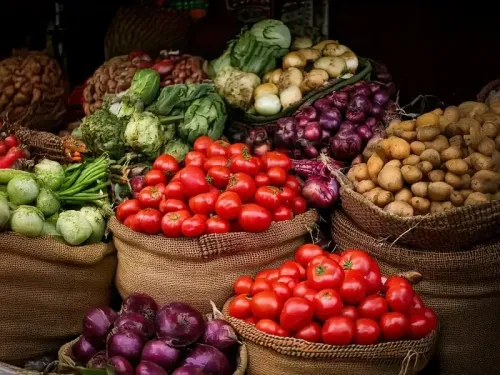
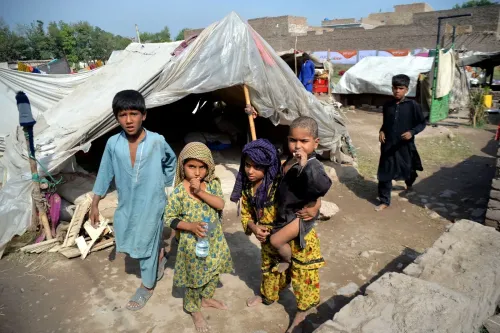
Rural Pakistan is bearing a disproportionate share of the price burden. Rural CPI inflation surged 12.2 per cent year-on-year in August, compared with 9.9 per cent in July and a modest 2.5 per cent in August 2025. On a monthly basis, rural prices rose 1.6 per cent in August, faster than the 1.2 per cent recorded in July. The urban-rural divergence — nearly 2 percentage points — suggests supply-chain constraints and food price pressures are hitting lower-income, agriculture-dependent communities harder.
Sensitive Price Indicator Eases Slightly
The Sensitive Price Indicator (SPI)-based inflation, which tracks essential commodities, rose 9.5 per cent year-on-year in August, down from 12 per cent in July. On a monthly basis, SPI inflation increased 0.9 per cent, a notable deceleration from 2.4 per cent in July and 3.2 per cent in August 2025. The SPI moderation offers a partial silver lining, suggesting that the most volatile food and fuel prices may be stabilising at the margin.
Current Account and Trade Snapshot
Separately, Pakistan recorded a current account deficit of $328 million in July 2026, narrowing significantly from $814 million in June and $529 million in July 2025, according to data from the State Bank of Pakistan (SBP). Goods exports rose 17 per cent month-on-month and 9 per cent year-on-year to $3 billion — the highest monthly level in 19 months — supporting the improvement. However, the overall trade deficit in goods and services widened to $3.37 billion during July, as services imports of $1.16 billion outpaced services exports of $927 million. Workers' remittances remained a critical buffer at $3.6 billion in July, with other current transfers adding a further $252 million.
What This Means Going Forward
The acceleration in headline inflation complicates the State Bank of Pakistan's monetary policy calculus, particularly as the central bank has been navigating a cautious easing cycle. Critics argue that without sustained fiscal consolidation, inflationary pressures — especially in rural areas — could erode real incomes and undercut recent gains in the current account. The next PBS inflation release and any SBP policy response will be closely watched by markets and international creditors alike.
Point of View
The current account improvement is real but fragile, resting heavily on remittances rather than structural export gains. With the SBP caught between stubborn inflation and a growth imperative, the risk is that any premature rate cut reignites price pressures before they are durably tamed.
NationPress
18 Oct 2026
Frequently Asked Questions
What is Pakistan's headline inflation rate in August 2026?
Pakistan's headline CPI inflation rose to 11.1 per cent year-on-year in August 2026, up from 9.2 per cent in July, according to data from the Pakistan Bureau of Statistics. This compares with a much lower 3.1 per cent in August 2025.
Why is rural inflation higher than urban inflation in Pakistan?
Rural CPI inflation reached 12.2 per cent year-on-year in August, compared with 10.4 per cent in urban areas. The gap is attributed to food price pressures and supply-chain constraints that disproportionately affect agriculture-dependent rural communities.
What does the Sensitive Price Indicator show for August 2026?
The SPI-based inflation, which tracks essential commodities, rose 9.5 per cent year-on-year in August — down from 12 per cent in July — suggesting some easing in the most volatile food and fuel prices on a monthly basis.
How did Pakistan's current account perform in July 2026?
Pakistan's current account deficit narrowed to $328 million in July 2026, down sharply from $814 million in June and $529 million in July 2025, supported by a 19-month high in goods exports of $3 billion and remittances of $3.6 billion.
What is the outlook for Pakistan's inflation and monetary policy?
The sharp year-on-year acceleration in inflation complicates the State Bank of Pakistan's ongoing easing cycle. Analysts and critics argue that without sustained fiscal consolidation, price pressures — especially in rural areas — could persist, limiting the central bank's room to cut rates further.