Nepali Congress splits deepen as rival factions hold separate conventions
Synopsis
Nepal's Nepali Congress is holding two separate general conventions — a sign of how badly fractured the country's grand old party has become. With 37 seats in a 275-member parliament, a president who lost his own seat, and a rival faction planning its own December meet, the party's scramble to rebrand as 'Congress 2.0' faces its most fundamental test: can it even stay in one piece?
Key Takeaways
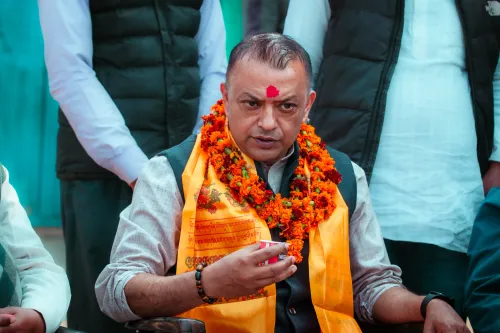
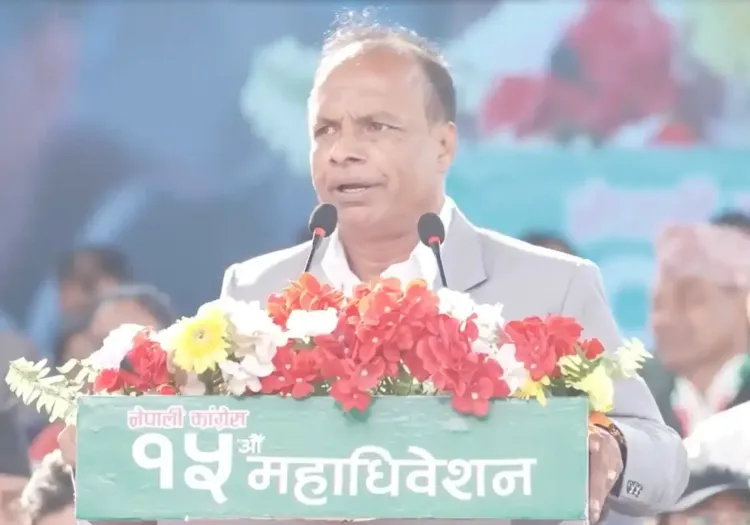
Nepali Congress party President Gagan Kumar Thapa began the party's 15th General Convention in Kathmandu on 4 October 2026 .
A rival faction led by former Prime Minister Sher Bahadur Deuba is scheduled to hold its own convention from 7 to 9 December .
Thapa's removal of Deuba as party president at a January special convention is currently under Supreme Court review.
The Nepali Congress won only 37 seats in the 275-member House of Representatives in the March elections, finishing second to the RSP's 182 seats .
Thapa himself lost his Saptari-4 parliamentary seat to an RSP candidate.
The party has introduced statutory guarantees for under-35 leaders and a minimum one-third women's representation in its Central Working Committee.
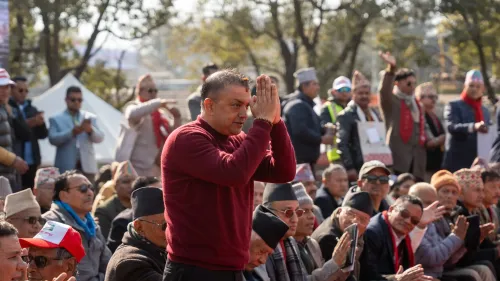
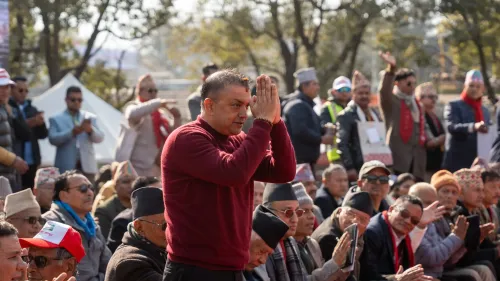
Nepal's Nepali Congress, once the country's dominant democratic force, is visibly fractured as two rival factions prepare to hold separate general conventions — the first organised by party President Gagan Kumar Thapa in Kathmandu on Sunday, 4 October 2026, and the second scheduled by former Prime Minister Sher Bahadur Deuba's faction from 7 to 9 December. The parallel conventions underscore a deepening internal crisis that has already cost the party electorally and is now testing its organisational survival.
Two Conventions, One Party
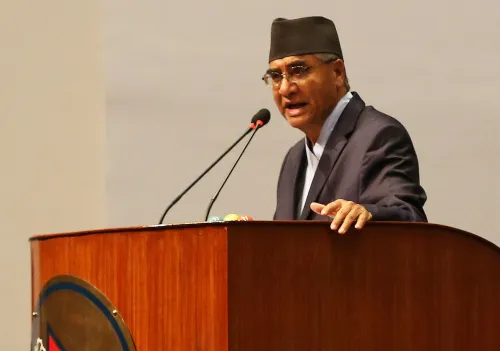
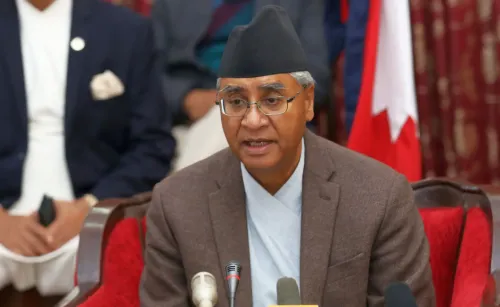
The Thapa-led faction is conducting what it calls the party's 15th General Convention, building on a special general convention held in January this year that removed Deuba as party president and elevated Thapa to the top post. That special convention remains legally contested — the Supreme Court is currently reviewing the legality of Deuba's removal. Nevertheless, the Election Commission of Nepal recognised the Thapa-led faction ahead of the March 5 elections, allowing it to field candidates under the party banner.
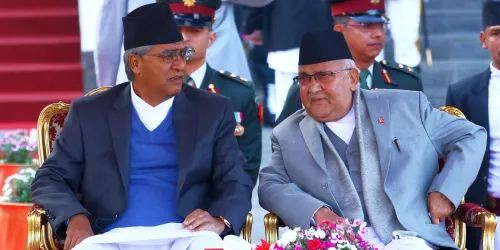
Deuba, though invited to inaugurate the 15th General Convention, was notably absent from Sunday's inaugural session. Former Prime Minister KP Sharma Oli of the Communist Party of Nepal (Unified Marxist-Leninist), or CPN-UML, also skipped the event, even as leaders from several other parties attended.
Electoral Collapse and Leadership Crisis
The March elections proved devastating for established parties. The newly emerged Rastriya Swatantra Party (RSP) became the largest political force, securing 182 seats in the 275-member House of Representatives — approaching a two-thirds majority. The Nepali Congress managed only 37 seats, while the CPN-UML won 25. Former Prime Minister Pushpa Kamal Dahal's Nepali Communist Party also suffered losses.
Thapa himself suffered a crushing personal defeat, losing in the Saptari-4 constituency to an RSP candidate. The loss has deepened questions about his standing and fuelled discontent within rival factions of the party.
What Thapa Said at the Convention
Speaking at Sunday's inaugural session — where he is widely expected to contest for the party presidency again — Thapa acknowledged the party's failures and called for a fundamental reset. “The party that can answer citizens’ questions is the new one. The party that can work with citizens is the new one,” he said.
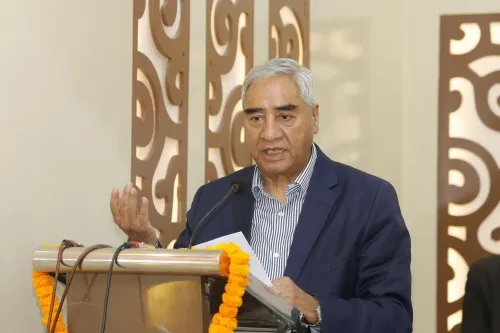
He argued that the Nepali Congress must overhaul its working methods, language, thinking, and political culture while remaining anchored to the values of its founding leaders, BP Koirala and Ganesh Man Singh. On the question of reunification, he said efforts were underway to bring Deuba back into a unified party structure, adding: “Honouring Sher Bahadur Deuba is not about how many times you salute at his doorstep; it is about how much you have strengthened and elevated the party he built.”
RSP and Opposition Voices Weigh In
Rabi Lamichhane, president of the ruling RSP, said many Nepali Congress supporters had switched to his party, noting that several RSP leaders had previously been associated with the Congress. He suggested that a lack of space for younger leaders within the Congress had driven many of them — and potentially himself — towards forming or joining new political forces.
Former Prime Minister Dahal urged the Thapa faction to pursue unity: “Let all Nepali Congress leaders and cadres be united and brought together to build a formidable force,” he said, adding a wish for success in reconciliation efforts.
Reform Agenda and What Comes Next
This convention carries an unusually sharp reform agenda. The party has adopted a statutory provision ensuring representation of people under 35 in its leadership structure — a direct response to last year's Gen Z-led protests that reshaped Nepal's political landscape and brought Prime Minister Balendra Shah to power. The party statute also guarantees a minimum one-third representation for women and greater inclusion of marginalised and minority communities in the Central Working Committee.
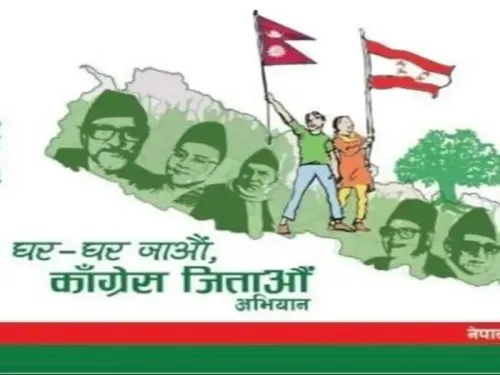
Slogans like “The Congress has changed, we will change the country” and “Congress 2.0” have been deployed to signal a generational shift. Whether the two factions can reconcile before the upcoming local elections — expected early next year — will be a decisive test of whether the rebranding is substance or slogan.
Point of View
And the 'Congress 2.0' branding risks sounding like repackaging in the absence of structural unity. The more consequential question is whether Nepal's democratic space can sustain an effective opposition at all, given that the two largest traditional parties together hold fewer than 65 seats between them.
NationPress
5 Oct 2026
Frequently Asked Questions
Why is the Nepali Congress holding two separate general conventions?
The Nepali Congress is split between two rival factions — one led by party President Gagan Kumar Thapa, which began its 15th General Convention in Kathmandu on 4 October 2026, and another led by former Prime Minister Sher Bahadur Deuba, which plans its own convention from 7 to 9 December. The split stems from a January special convention in which Thapa's faction removed Deuba as president, a move currently under Supreme Court review.
How did the Nepali Congress perform in the March 2026 elections?
The party performed poorly, winning only 37 seats in the 275-member House of Representatives. The newly formed Rastriya Swatantra Party (RSP) dominated, securing 182 seats. Party President Thapa himself lost his Saptari-4 parliamentary seat to an RSP candidate.
What is the Rastriya Swatantra Party and why did it surge?
The RSP is a newly emerged political party led by Rabi Lamichhane that became Nepal's largest political force in the March elections, securing 182 of 275 House seats. Its rise has been linked to widespread disillusionment with established parties, including voter anger over alleged corruption and the lack of space for younger leaders in older political organisations.
What reforms is the Nepali Congress introducing at this convention?
The party has adopted statutory provisions ensuring representation of people under 35 in its leadership structure, a minimum one-third representation for women, and greater inclusion of marginalised and minority communities in the Central Working Committee. The convention is also discussing the party's future political direction and organisational reform under the 'Congress 2.0' banner.
What happens next for the Nepali Congress?
The immediate priority is whether the two factions can reunify ahead of local elections expected early next year. The Supreme Court's verdict on the legality of Deuba's removal will also shape the party's legal and organisational status. Thapa has indicated efforts are ongoing to bring Deuba back into a unified party structure.